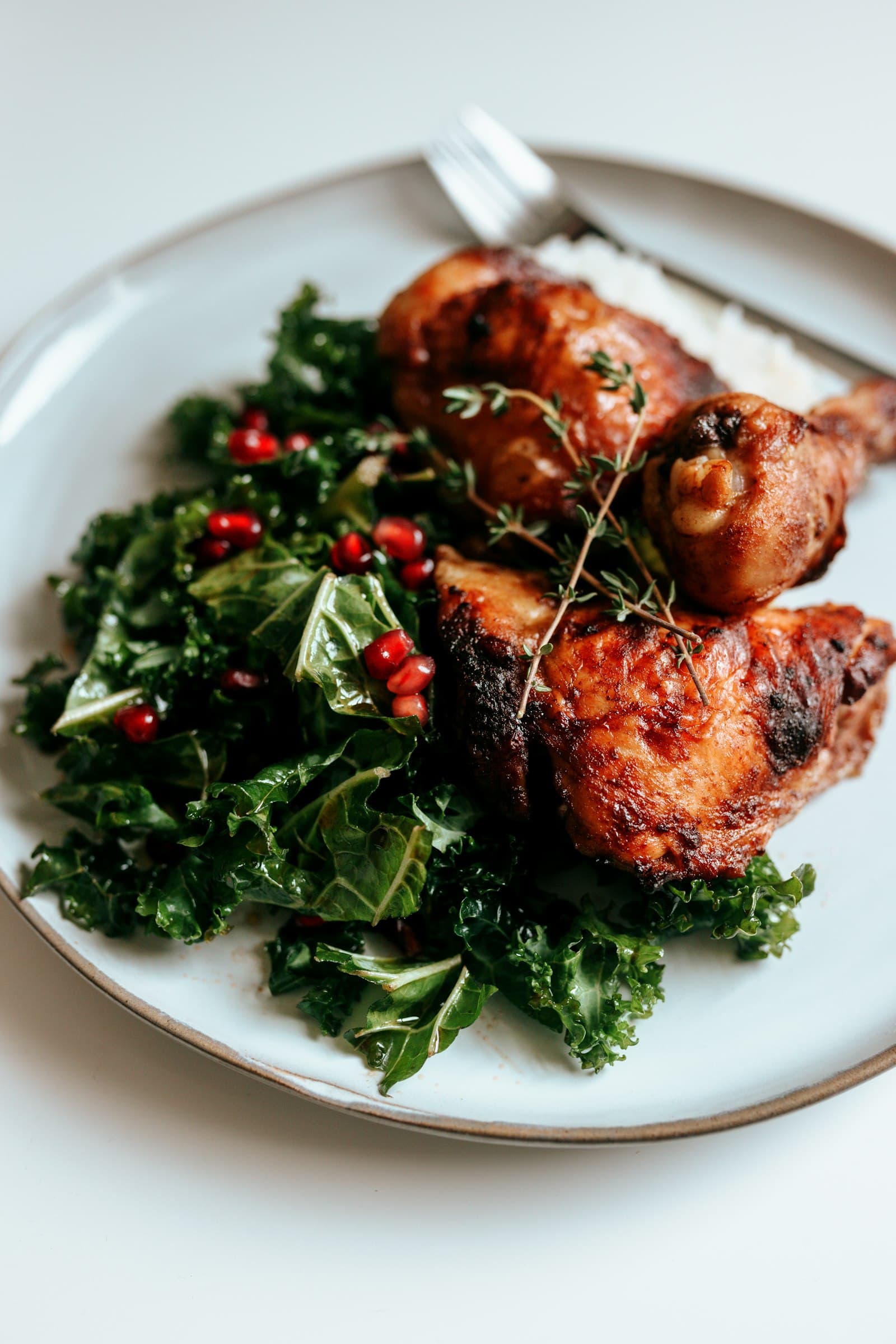
Crispy Baked Chicken Thighs
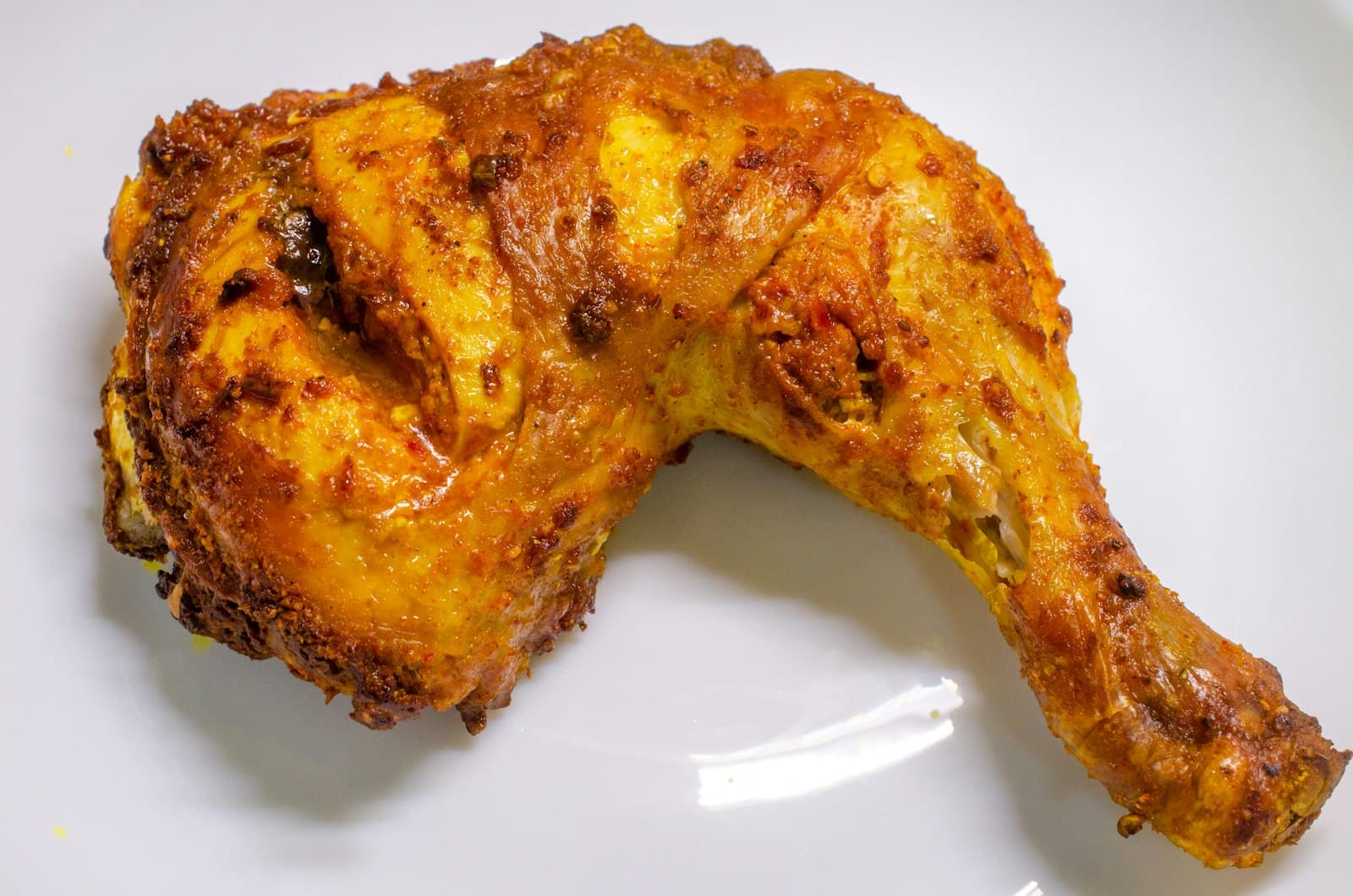
These crispy baked chicken thighs need just a simple spice rub and a hot oven. Drying the skin well and roasting the thighs on a rack at 220°C (425°F) lets the fat render out, so the skin crisps while the meat underneath stays juicy. Thighs are also forgiving, so a few extra minutes won't dry them out.
By Priya Raman
Published
- Prep Time
- 10 mins
- Cook Time
- 40 mins
- Total Time
- 50 mins
- Servings
- 4 servings
How do you make Crispy Baked Chicken Thighs?
Pat 8 bone-in, skin-on chicken thighs dry, rub with 1 tbsp olive oil, salt, garlic powder, smoked paprika, onion powder, thyme and pepper, and set them skin side up on a rack in a lined baking sheet. Bake at 220°C (425°F) for 35-45 minutes, until the skin is crisp and the thickest part reads at least 74°C (165°F). Rest 5 minutes.
- Total time
- 50 mins
- Calories
- 400 per serving
- Protein
- 37 g
- Yield
- 4 servings
- Difficulty
- Easy
- Method
- Baking
Ingredients
Chicken
Spice rub
Equipment
Rimmed baking sheet · Oven-safe wire rack · Foil or parchment paper · Paper towels · Instant-read thermometer
Quick Directions
Heat the oven
Heat the oven to 220°C (425°F) with a rack in the upper middle.
Dry and season the chicken
Pat the chicken thighs very dry on all sides with paper towels; dry skin is what makes it crisp.
Arrange on the rack
Lay the thighs skin side up on the rack, leaving a little space between them so hot air can circulate.
Bake
Bake for 35-45 minutes, without flipping, until the skin is deep golden and crisp and the juices run clear.
Rest and serve
Rest the thighs on the rack for 5 minutes so the juices settle, then serve with parsley and lemon wedges, if you like.
Step-by-Step Instructions
Follow these detailed steps to make the perfect crispy baked chicken thighs.
Heat the oven
Heat the oven to 220°C (425°F) with a rack in the upper middle. Line a rimmed baking sheet with foil and set an oven-safe wire rack on top.
Dry and season the chicken
Pat the chicken thighs very dry on all sides with paper towels; dry skin is what makes it crisp. Mix the salt, garlic powder, smoked paprika, onion powder, thyme and pepper in a small bowl. Rub the thighs with the olive oil, then season them all over, lifting the skin to get some of the rub underneath.
Arrange on the rack
Lay the thighs skin side up on the rack, leaving a little space between them so hot air can circulate. Tuck any loose skin over the meat so it covers the top.
Bake
Bake for 35-45 minutes, without flipping, until the skin is deep golden and crisp and the juices run clear. The thickest part, not touching the bone, must read at least 74°C (165°F). Thighs are most tender at 80-85°C (175-185°F), so there's no harm in leaving them a few minutes longer.
Rest and serve
Rest the thighs on the rack for 5 minutes so the juices settle, then serve with parsley and lemon wedges, if you like.
Recipe Tips
- For the crispiest skin, season the thighs and refrigerate them uncovered on the rack for 4-24 hours before baking. The salt draws moisture out of the skin.
- No wire rack? Bake straight on a parchment-lined sheet. The skin on top still crisps, and you can spoon off the rendered fat halfway through.
- Don't cover the pan with foil. Trapped steam softens the skin.
Variations
- Lemon herb: add the zest of 1 lemon and 1 tsp dried oregano to the rub, and squeeze the lemon over the thighs before serving.
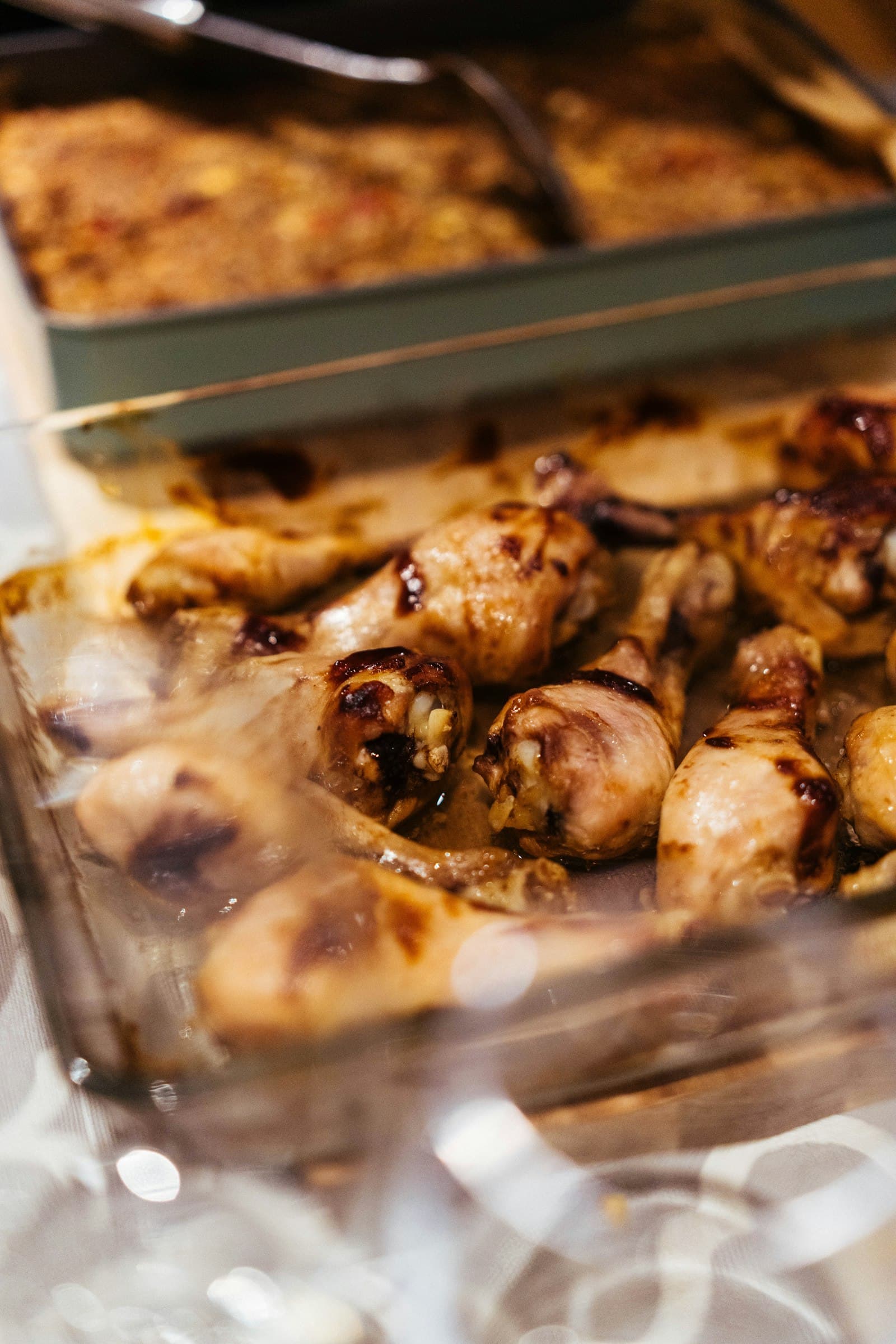
- Honey garlic: in the last 5 minutes, brush the thighs with 3 tbsp honey mixed with 1 tbsp soy sauce and 1 grated garlic clove. Use tamari to keep it gluten-free.
- Use boneless, skinless thighs and bake them on the lined sheet for 20-25 minutes, until they reach 74°C (165°F).
Nutrition (per serving)
| Calories | 400 |
|---|---|
| Protein | 37 g |
| Carbs | 2 g |
| Fat | 27 g |
| Saturated fat | 7.5 g |
| Fibre | 0.5 g |
| Sugar | 0.3 g |
| Sodium | 710 mg |
Estimated from the listed ingredients; values vary by brand.
Related Recipes
Storing & Reheating
- Fridge
- Refrigerate within 2 hours in an airtight container for up to 4 days.
- Freezer
- Freeze cooked thighs for up to 3 months. Thaw overnight in the fridge.
- Reheat
- Reheat on a baking sheet in a 200°C (400°F) oven for 10-15 minutes, or in an air fryer at 180°C (350°F) for 6-8 minutes, until hot to 74°C (165°F) and the skin crisps again.
Crispy Baked Chicken Thighs FAQs
How long do you bake chicken thighs at 220°C (425°F)?
Bone-in, skin-on chicken thighs take 35-45 minutes at 220°C (425°F), depending on their size. Boneless, skinless thighs take 20-25 minutes. Either way, check that the thickest part reads at least 74°C (165°F).
What internal temperature should chicken thighs reach?
Chicken thighs are safe to eat at 74°C (165°F). Because thigh meat has more connective tissue than breast, it becomes more tender at 80-85°C (175-185°F), so many cooks take thighs a little further.
How do you get crispy skin on baked chicken thighs?
Pat the skin completely dry, roast at a high temperature such as 220°C (425°F), and set the thighs on a rack with space between them. For extra crisp skin, salt them and leave them uncovered in the fridge for a few hours before baking.
Should you cover chicken thighs with foil when baking?
No. Covering the pan traps steam, which keeps the skin pale and soft. Bake chicken thighs uncovered, and only tent them loosely with foil if they are browning much faster than they are cooking through.
Do you need to flip chicken thighs in the oven?
No. Bake skin-on chicken thighs skin side up the whole time, so the skin faces the heat, renders its fat and crisps. Flipping them would leave the skin sitting in juices and turn it soggy.
Disclaimer
- Nutrition information is an estimate based on the listed ingredients. It changes with the brands, portion sizes and swaps you use.
- Read ingredient labels for allergens and for diet claims such as gluten-free or vegan. Products and their ingredients can change.
- Cooking times are a guide, since ovens, air fryers and slow cookers all run differently. Use a food thermometer and cook meat, poultry and fish to the safe internal temperatures in government food safety guidance.
- This recipe is general information, not medical or nutrition advice. If you have an allergy, a health condition or a special diet, check with a qualified health professional.