Bangers and Mash with Onion Gravy
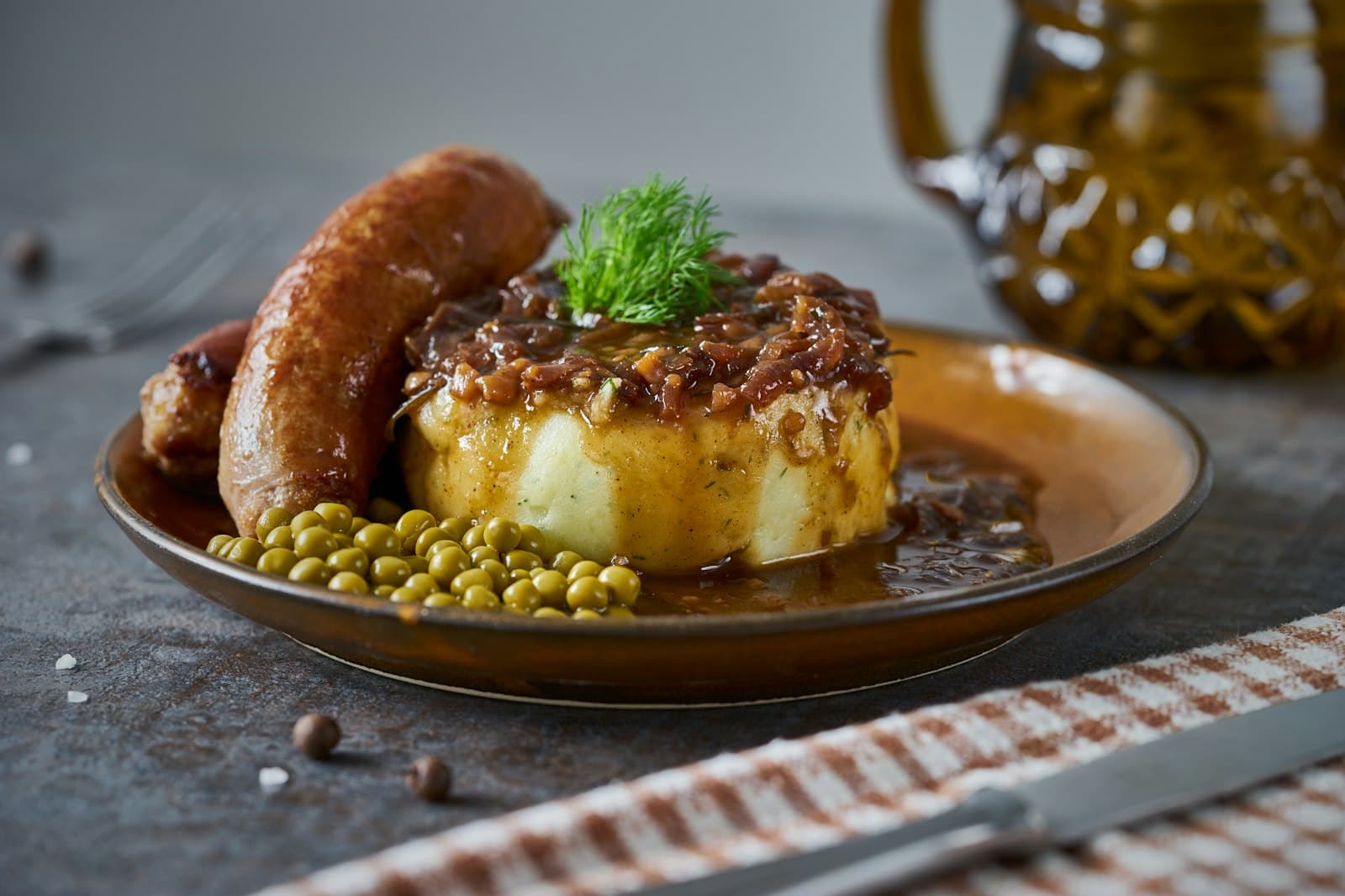
Bangers and mash is British pub food at its most comforting: plump pork sausages, a mound of buttery mashed potatoes and plenty of sweet, savoury onion gravy poured over everything. The only real secret is patience. Cook the sausages slowly so they brown without splitting, and give the onions a full 20 minutes so the gravy tastes rich and deep rather than sharp.
By Mei Lin Tan
Published
- Prep Time
- 15 mins
- Cook Time
- 40 mins
- Total Time
- 55 mins
- Servings
- 4 servings
How do you make Bangers and Mash with Onion Gravy?
Cook 3 sliced onions in butter over low heat for 20-25 minutes until sticky and golden, then stir in flour, beef stock and Worcestershire sauce and simmer into a gravy. Meanwhile, boil 1 kg floury potatoes and mash them with butter and warm milk, and fry 8 pork sausages over medium-low heat until browned and 71°C (160°F) inside. Serve with peas.
- Total time
- 55 mins
- Calories
- 850 per serving
- Protein
- 32 g
- Yield
- 4 servings
- Difficulty
- Easy
- Method
- Pan-frying
Ingredients
Onion gravy
Mash
Sausages
To serve
Equipment
Large pot · 2 large skillets · Potato masher or ricer · Small saucepan · Instant-read thermometer
Quick Directions
Caramelise the onions
Cook the onions slowly in butter for 20-25 minutes until sticky and golden.
Boil the potatoes
Boil the potatoes in salted water for 15-20 minutes until very tender.
Cook the sausages
Fry the sausages over medium-low heat until browned and 71°C (160°F) inside.
Finish the gravy
Stir in the flour, stock, Worcestershire and thyme and simmer until thick.
Mash the potatoes
Drain, steam-dry and mash the potatoes with butter, warm milk, salt and pepper.
Cook the peas
Boil the peas for 2-3 minutes.
Serve
Plate the mash and sausages, pour over the gravy and serve with peas.
Step-by-Step Instructions
Follow these detailed steps to make the perfect bangers and mash with onion gravy.
Caramelise the onions
Melt the 25 g butter in a large skillet over medium-low heat. Add the onions and a pinch of salt and cook for 20-25 minutes, stirring every few minutes, until soft, sticky and deep golden brown. Stir in the brown sugar for the last 5 minutes.
Boil the potatoes
While the onions cook, put the potatoes in a large pot, cover with cold water and add a good pinch of salt. Bring to a boil and simmer for 15-20 minutes until a knife slides through the chunks with no resistance.
Cook the sausages
At the same time, heat the oil in a second large skillet over medium-low heat. Add the sausages and cook for 15-20 minutes, turning every few minutes, until browned all over and 71°C (160°F) in the centre on an instant-read thermometer. Keep the heat moderate so the skins do not split.
Finish the gravy
Sprinkle the flour over the onions and stir for 1 minute. Gradually pour in the stock, stirring to keep it smooth, then add the Worcestershire sauce and thyme. Simmer for 5-8 minutes until the gravy coats the back of a spoon. Remove the thyme stalks and season with salt and pepper.
Mash the potatoes
Drain the potatoes well and return them to the warm pot for 1-2 minutes so the steam dries them out. Mash with the 50 g butter until smooth, then beat in the warm milk, salt and pepper until creamy.
Cook the peas
Cook the peas in a small saucepan of boiling water for 2-3 minutes until hot and bright green, then drain.
Serve
Spoon the mash onto warm plates, add two sausages to each and pour plenty of onion gravy over the top. Serve the peas alongside.
Recipe Tips
- Do not prick the sausages. Pricking lets the juices escape and leaves them dry; gentle, steady heat is what stops them bursting.
- Take your time with the onions. Rushing them over high heat burns the edges before the centres turn sweet, and the gravy ends up bitter.
- Warm the milk before adding it to the mash. Cold milk cools the potatoes and makes the mash gluey; a potato ricer gives the smoothest result.
- Sausages vary in thickness, so check the centre with a thermometer rather than relying on colour.
Variations
- Red wine onion gravy: replace 150 ml of the stock with red wine and let it bubble for 2 minutes before adding the rest of the stock.
- Mustard mash: beat 1-2 tsp English or wholegrain mustard into the potatoes with the milk.
- Oven-baked sausages: roast them on a lined tray at 200°C (400°F) for 20-25 minutes, turning once, until they reach 71°C (160°F).
- Vegetarian: use vegetarian sausages, vegetable stock and a vegetarian Worcestershire sauce, since the regular kind contains anchovies.
Nutrition (per serving)
| Calories | 850 |
|---|---|
| Protein | 32 g |
| Carbs | 83 g |
| Fat | 44 g |
| Saturated fat | 20 g |
| Fibre | 11 g |
| Sugar | 13 g |
| Sodium | 1350 mg |
Estimated from the listed ingredients; values vary by brand.
Related Recipes
Storing & Reheating
- Fridge
- Store the sausages, mash and gravy in separate airtight containers in the fridge for up to 3 days.
- Freezer
- Cooked sausages and onion gravy freeze well for up to 3 months. Mash freezes too, but it may be slightly looser once thawed. Thaw overnight in the fridge.
- Reheat
- Reheat the sausages in a 180°C (350°F) oven for 15 minutes, the gravy in a saucepan with a splash of stock, and the mash in the microwave with a splash of milk, stirring, until everything is steaming hot.
Bangers and Mash with Onion Gravy FAQs
Why are sausages called bangers?
The name is usually traced to the First World War, when sausages were made with so much water that they often burst with a bang as they fried. The nickname stuck, and bangers and mash became a British pub classic.
What sausages are best for bangers and mash?
Use good-quality fresh pork sausages with a high meat content, such as Cumberland or Lincolnshire. Any coarse, well-seasoned fresh pork sausage works. Avoid pre-cooked or smoked sausages, which do not brown or taste the same.
How do I stop sausages from splitting?
Cook them over medium-low heat and turn them often, and do not prick the skins. Taking them out of the fridge 15 minutes before cooking also helps them cook evenly.
Can I make the onion gravy ahead?
Yes. The onion gravy keeps in the fridge for up to 3 days and freezes for up to 3 months. Reheat it gently in a saucepan with a splash of stock or water, stirring, until it is steaming hot.
What are the best potatoes for mashed potatoes?
Floury, starchy potatoes such as Russet, Maris Piper or King Edward make the fluffiest mash. Yukon Gold gives a denser, buttery mash. Waxy salad potatoes turn gluey when mashed.
Disclaimer
- Nutrition information is an estimate based on the listed ingredients. It changes with the brands, portion sizes and swaps you use.
- Read ingredient labels for allergens and for diet claims such as gluten-free or vegan. Products and their ingredients can change.
- Cooking times are a guide, since ovens, air fryers and slow cookers all run differently. Use a food thermometer and cook meat, poultry and fish to the safe internal temperatures in government food safety guidance.
- This recipe is general information, not medical or nutrition advice. If you have an allergy, a health condition or a special diet, check with a qualified health professional.