Lemongrass Pork Banh Mi
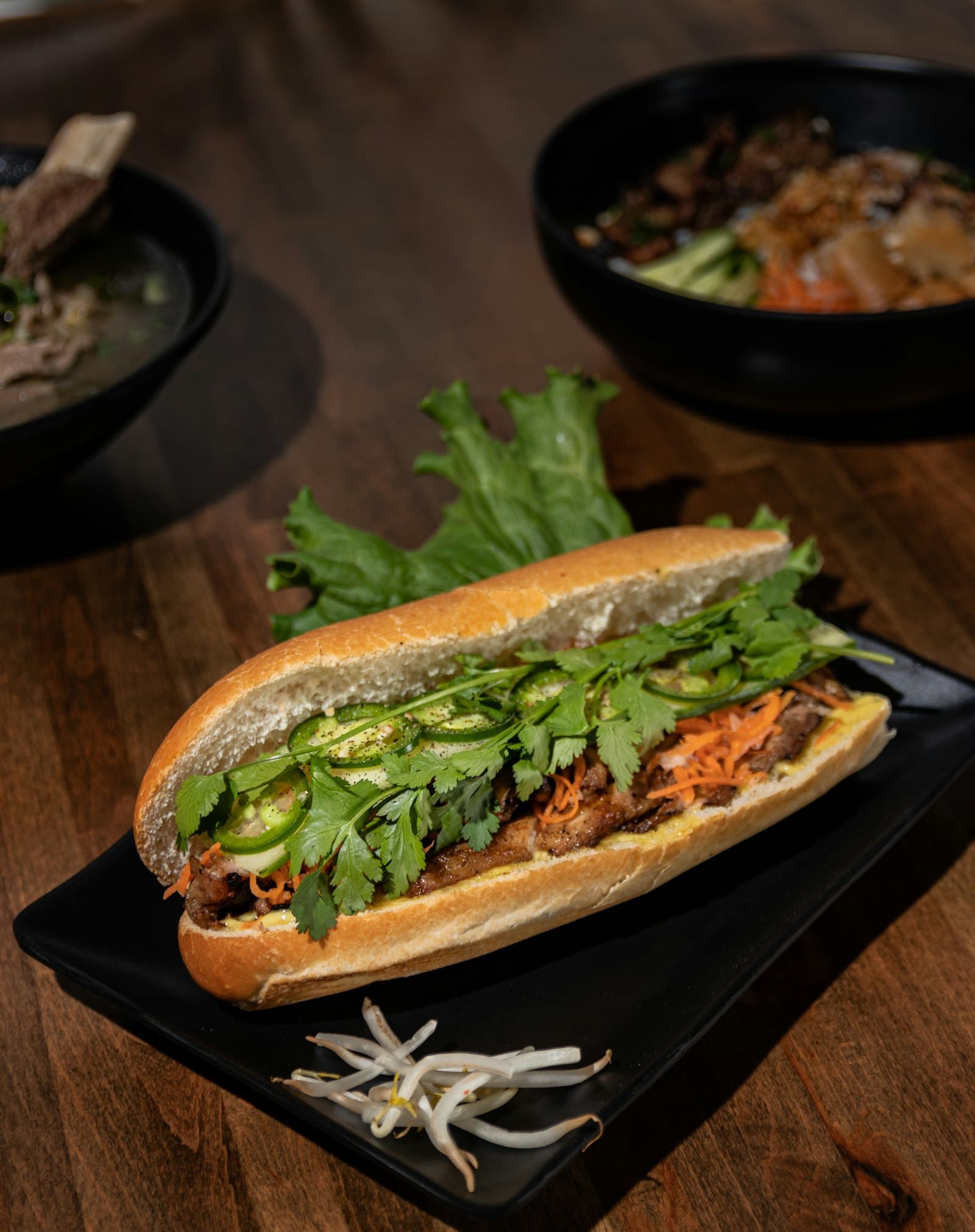
A good banh mi is all about contrast: a crackly, airy baguette, rich and slightly sweet grilled pork, sharp pickled vegetables, cool cucumber and a handful of coriander. This home version marinates thin slices of pork shoulder in lemongrass, garlic and fish sauce, then sears them hard in a hot pan. The quick pickles are ready in the same 30 minutes the pork spends in the marinade.
By Mei Lin Tan
Published
- Prep Time
- 25 mins
- Cook Time
- 15 mins
- Marinate and pickle
- 30 mins
- Total Time
- 1 hr 10 mins
- Servings
- 4 sandwiches
How do you make Lemongrass Pork Banh Mi?
To make banh mi, marinate thin slices of pork shoulder in lemongrass, garlic, shallot, fish sauce, soy sauce and brown sugar for 30 minutes while carrot and daikon pickle in sweetened rice vinegar. Sear the pork in a very hot pan until caramelised and 71°C (160°F). Toast split baguettes, spread with mayonnaise, and fill with pork, pickles, cucumber, coriander and chilli.
- Total time
- 1 hr 10 mins
- Calories
- 660 per serving
- Protein
- 33 g
- Yield
- 4 sandwiches
- Difficulty
- Easy
- Method
- Pan-searing
Ingredients
Quick pickles
Lemongrass pork
Sandwiches
Equipment
Large cast-iron skillet or grill pan · Medium bowl · Jar or small bowl for the pickles · Sharp knife · Instant-read thermometer
Quick Directions
Quick-pickle the vegetables
Soak carrot and daikon in sweetened vinegar for at least 30 minutes.
Marinate the pork
Coat the sliced pork in the lemongrass marinade for 30 minutes or up to a day.
Sear the pork
Sear the pork in batches for 2-3 minutes per side, to 71°C (160°F).
Toast the bread
Warm the split baguettes at 200°C (400°F) for 3-4 minutes.
Build the sandwiches
Spread with mayo and fill with pork, pickles, cucumber, coriander and chilli.
Step-by-Step Instructions
Follow these detailed steps to make the perfect lemongrass pork banh mi.
Quick-pickle the vegetables
Stir the warm water, rice vinegar, sugar and salt in a jar or small bowl until the sugar dissolves. Add the carrot and daikon, press them under the liquid and leave for at least 30 minutes, until they bend without snapping. They keep improving for a day.
Marinate the pork
In a medium bowl, mix the lemongrass, garlic, shallot, fish sauce, soy sauce, brown sugar, pepper and oil. Add the pork slices and massage the marinade in until every piece is coated. Cover and marinate in the fridge for at least 30 minutes, or up to 24 hours.
Sear the pork
Heat a cast-iron skillet or grill pan over medium-high heat until very hot and brush it with a little oil. Lay in the pork in a single layer, in batches so the pan stays hot. Cook for 2-3 minutes per side, until deeply caramelised at the edges and no longer pink in the centre. The thickest piece should read 71°C (160°F). Move to a plate and repeat with the rest.
Toast the bread
Split the baguettes lengthwise without cutting all the way through. Warm them in a 200°C (400°F) oven or toaster oven for 3-4 minutes, until the crust crackles. If the rolls are dense, pull out a little of the soft crumb to make room for the filling.
Build the sandwiches
Spread mayonnaise on one cut side of each baguette and pate on the other, if using. Fill with the pork, then drained pickles, cucumber spears, coriander sprigs and sliced chilli. Add a few drops of Maggi seasoning or soy sauce and some sriracha if you like. Press closed and eat right away.
Recipe Tips
- Pork shoulder has enough fat to stay juicy at high heat. Partially freezing it for 30 minutes makes thin, even slices much easier to cut.
- Only use the pale, tender lower part of the lemongrass stalk. Peel off the tough outer layers and mince it as finely as you can so it is not stringy.
- Drain the pickles well before filling the sandwiches, or the brine soaks the bread.
- Vietnamese baguettes are lighter than French ones, with a thin, crackly crust. Choose the airiest baguette or soft sub roll you can find.
Variations
- Swap the pork for boneless, skinless chicken thighs, cooked to 74°C (165°F).
- For a vegetarian banh mi, marinate thick slices of extra-firm tofu in the same mix with soy sauce instead of fish sauce, and pan-fry until golden. Use vegan mayo for a vegan version.
- Cook the pork on an outdoor grill over medium-high heat for a smokier flavour.
- Serve the lemongrass pork over rice or rice noodles with the pickles and herbs for a banh mi bowl.
Nutrition (per serving)
| Calories | 660 |
|---|---|
| Protein | 33 g |
| Carbs | 62 g |
| Fat | 30 g |
| Saturated fat | 7 g |
| Fibre | 3 g |
| Sugar | 10 g |
| Sodium | 1650 mg |
Estimated from the listed ingredients; values vary by brand.
Related Recipes
Storing & Reheating
- Fridge
- Keep the cooked pork in an airtight container for up to 4 days and the pickles in their brine for up to 2 weeks. Assembled sandwiches are best eaten right away.
- Freezer
- Freeze the cooked pork for up to 3 months, or freeze it raw in its marinade for up to 2 months and thaw overnight in the fridge before cooking.
- Reheat
- Reheat the pork in a hot skillet for 1-2 minutes until sizzling and steaming hot, then build fresh sandwiches.
Lemongrass Pork Banh Mi FAQs
What is banh mi?
Banh mi is the Vietnamese word for bread, and it now means the sandwich: a light, crusty baguette filled with grilled or cold meats, pate, mayonnaise, pickled carrot and daikon, cucumber, coriander and chilli.
What bread is best for banh mi?
Vietnamese baguettes are made to be airy with a thin, crisp crust. If you cannot find them, use a light French baguette or soft sub rolls, warm them until crisp and pull out some of the inside crumb.
What can I use instead of daikon radish?
Use all carrot, or mix the carrot with thinly sliced red radishes or kohlrabi. They pickle in the same 30 minutes and give the same sharp crunch.
Can I make banh mi ahead for lunches?
Make the pickles and cook the pork up to 4 days ahead, then assemble each sandwich the day you eat it. A filled baguette turns soft within a few hours, so pack the fillings separately if you can.
Disclaimer
- Nutrition information is an estimate based on the listed ingredients. It changes with the brands, portion sizes and swaps you use.
- Read ingredient labels for allergens and for diet claims such as gluten-free or vegan. Products and their ingredients can change.
- Cooking times are a guide, since ovens, air fryers and slow cookers all run differently. Use a food thermometer and cook meat, poultry and fish to the safe internal temperatures in government food safety guidance.
- This recipe is general information, not medical or nutrition advice. If you have an allergy, a health condition or a special diet, check with a qualified health professional.