Oyakodon (Japanese Chicken and Egg Rice Bowl)
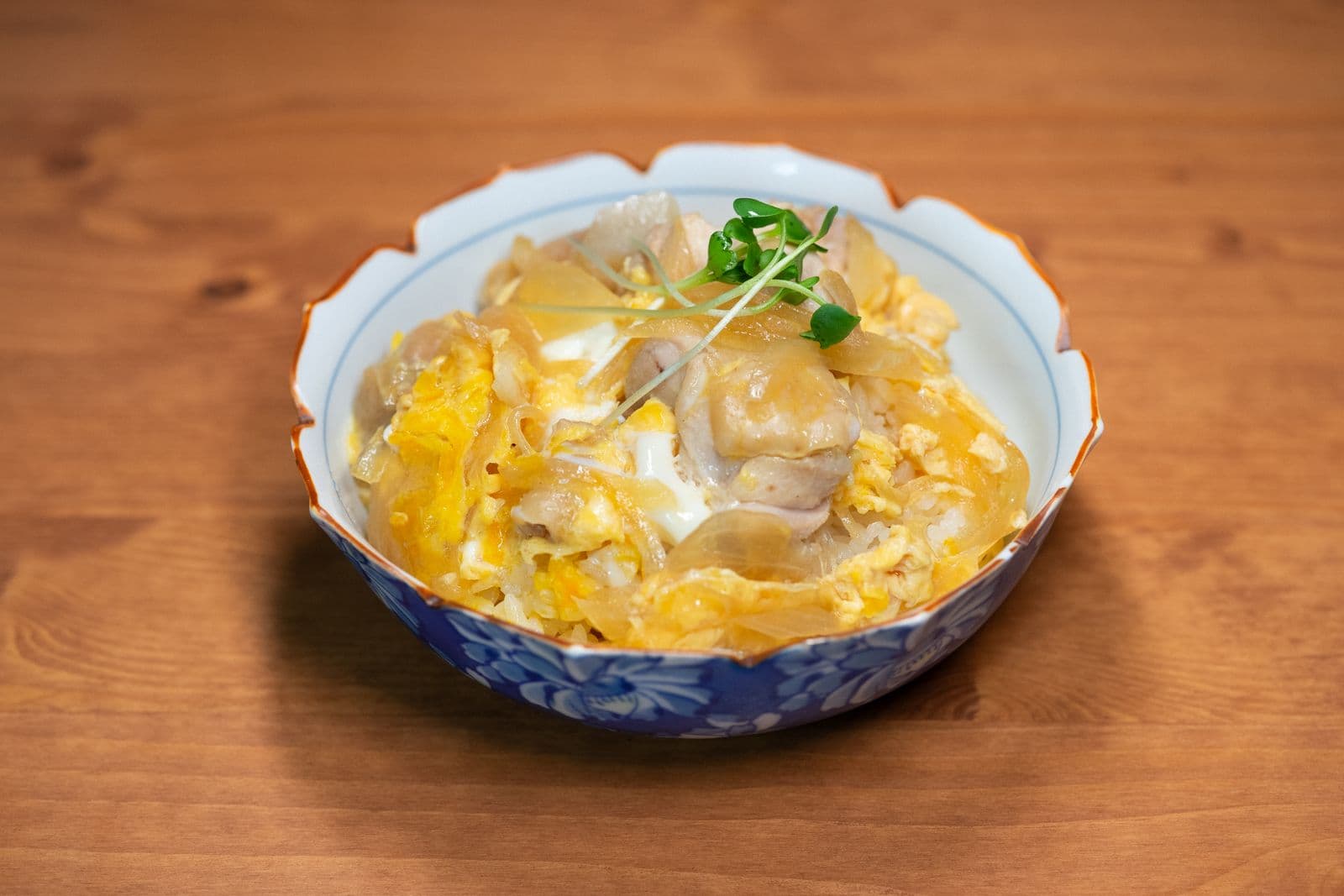
Oyakodon means "parent and child bowl", a name that nods to the chicken and the egg in it. Bite-size chicken thighs and soft onion simmer in a sweet-savoury broth of dashi, soy sauce and mirin, then beaten egg is poured over and cooked until just set. Spooned over hot rice, the egg soaks up the broth. The chicken simmers while the rice steams, so dinner is ready in 30 minutes.
By Mei Lin Tan
Published
- Prep Time
- 5 mins
- Cook Time
- 25 mins
- Total Time
- 30 mins
- Servings
- 4 servings
How do you make Oyakodon (Japanese Chicken and Egg Rice Bowl)?
Simmer a sliced onion and 450 g bite-size chicken thighs for 6-8 minutes in 240 ml dashi, 3 tbsp soy sauce, 2 tbsp mirin and 1 tbsp sugar until the chicken reaches 74°C (165°F). Pour 6 lightly beaten eggs over in two additions, cover and cook until the eggs are just set. Slide over hot short-grain rice and top with green onions.
- Total time
- 30 mins
- Calories
- 570 per serving
- Protein
- 38 g
- Yield
- 4 servings
- Difficulty
- Easy
- Method
- Simmering
Ingredients
Rice
Chicken and broth
Egg
To serve
Equipment
Medium saucepan with a tight-fitting lid · Fine-mesh sieve · Large skillet with a lid, at least 28 cm wide · Small bowl · Instant-read thermometer
Quick Directions
Cook the rice
Rinse the rice, then simmer covered for 13 minutes and rest for 10.
Prepare the chicken, onion and eggs
Slice the onion, cut the chicken, mix the broth and lightly beat the eggs.
Simmer the onion and chicken
Simmer the onion and chicken for 6-8 minutes until the chicken reaches 74°C (165°F).
Add the egg in two pours
Pour in the egg in two additions, covered, until the eggs are just set.
Assemble the bowls
Fluff the rice and divide it among 4 deep bowls.
Step-by-Step Instructions
Follow these detailed steps to make the perfect oyakodon (japanese chicken and egg rice bowl).
Cook the rice
Rinse the rice in a sieve under cold running water, swirling it with your hand, until the water runs almost clear, about 1 minute. Put it in the saucepan with the cold water and bring to the boil over high heat. Cover tightly, turn the heat to its lowest setting and cook for 13 minutes without lifting the lid. Turn off the heat and leave the rice covered to steam for 10 minutes.
Prepare the chicken, onion and eggs
While the rice cooks, slice the onion and cut the chicken into 2.5 cm pieces. Stir the dashi, soy sauce, mirin and sugar together in a small bowl until the sugar dissolves. Crack the eggs into another bowl and beat them lightly with chopsticks or a fork. Stop while streaks of white are still visible, because that gives the finished bowl its layered look.
Simmer the onion and chicken
Pour the broth into the skillet and bring it to the boil over medium-high heat. Add the onion and chicken in a single layer, lower the heat to a steady simmer and cook for 6-8 minutes, turning the chicken once and skimming off any grey foam, until the onion is soft and the thickest piece of chicken reaches 74°C (165°F).
Add the egg in two pours
Keep the broth at a gentle simmer. Pour about two thirds of the egg in a slow circle over the chicken and onion, cover and cook for 1 minute. Pour the rest of the egg over the middle of the pan, cover again and cook for another 1-2 minutes, until the eggs are just set. Turn off the heat; the egg keeps cooking in the steam.
Assemble the bowls
Fluff the rice and divide it among 4 deep bowls. Slide a quarter of the chicken, onion and egg over each, with some of the broth so it soaks into the rice. Finish with green onions, nori and a pinch of shichimi togarashi, if using. Serve hot.
Recipe Tips
- Use thighs rather than breasts. They stay tender in the broth and are forgiving if they simmer a minute too long.
- Cook the chicken in a single layer. Crowded pieces steam unevenly, so use a skillet at least 28 cm wide.
- Restaurant oyakodon often leaves the egg runny. Runny eggs are not recommended for young children, pregnant people, older adults or anyone with a weakened immune system, so only do this with pasteurized eggs, and cook the egg until set for anyone at risk.
- Rinsing the rice washes off surface starch so the grains cook up glossy and separate rather than gummy.
Variations
- Add 100 g sliced shiitake or button mushrooms with the onion for a deeper, earthier broth.
- Stir a handful of baby spinach or mitsuba (Japanese parsley) into the pan with the second egg pour.
- Use bite-size chicken breast instead of thighs and simmer it for 4-5 minutes, until it reaches 74°C (165°F).
Nutrition (per serving)
| Calories | 570 |
|---|---|
| Protein | 38 g |
| Carbs | 72 g |
| Fat | 13 g |
| Saturated fat | 4 g |
| Fibre | 2 g |
| Sugar | 9 g |
| Sodium | 1010 mg |
Estimated from the listed ingredients; values vary by brand.
Related Recipes
Storing & Reheating
- Fridge
- Oyakodon is best eaten straight away. Refrigerate leftover chicken, onion and egg in an airtight container within 1 hour if you can, and no later than 2 hours after cooking. Keep for up to 2 days. Cool leftover rice quickly in a shallow container and refrigerate it separately within the same time.
- Reheat
- Reheat the chicken and egg gently in a small pan over medium heat, with a splash of dashi or water, until steaming hot and at 74°C (165°F). Reheat the rice only once, sprinkled with a little water and covered, until it reaches 74°C (165°F). Egg dishes do not freeze well, so eat the leftovers within 2 days.
Oyakodon (Japanese Chicken and Egg Rice Bowl) FAQs
What does oyakodon mean?
Oyakodon means "parent and child bowl". Oyako is parent and child, a nod to the chicken and the egg, and don is short for donburi, a bowl of rice with a topping. Chicken and onion are simmered in dashi, soy sauce and mirin, set with egg and served over rice.
How do I know the egg is cooked safely?
Cook the egg covered until the eggs are just set, with no clear liquid white left. The chicken should reach 74°C (165°F) before the egg goes in. If you like a softer egg, use pasteurized eggs, and avoid it for young children, pregnant people, older adults and anyone with a weakened immune system.
What can I use instead of dashi?
Instant dashi granules dissolved in hot water are the easiest option and keep for months in the pantry. Without dashi, use low-sodium chicken stock. The bowl will taste a little less smoky and savoury but still very good.
Can I make oyakodon without mirin?
Yes. Replace each tablespoon of mirin with 1 tbsp water and 1 tsp sugar. The broth will be a little less glossy and complex but keeps the same sweet-savoury balance.
Disclaimer
- Nutrition information is an estimate based on the listed ingredients. It changes with the brands, portion sizes and swaps you use.
- Read ingredient labels for allergens and for diet claims such as gluten-free or vegan. Products and their ingredients can change.
- Cooking times are a guide, since ovens, air fryers and slow cookers all run differently. Use a food thermometer and cook meat, poultry and fish to the safe internal temperatures in government food safety guidance.
- This recipe is general information, not medical or nutrition advice. If you have an allergy, a health condition or a special diet, check with a qualified health professional.