Make-Ahead Sausage Breakfast Casserole
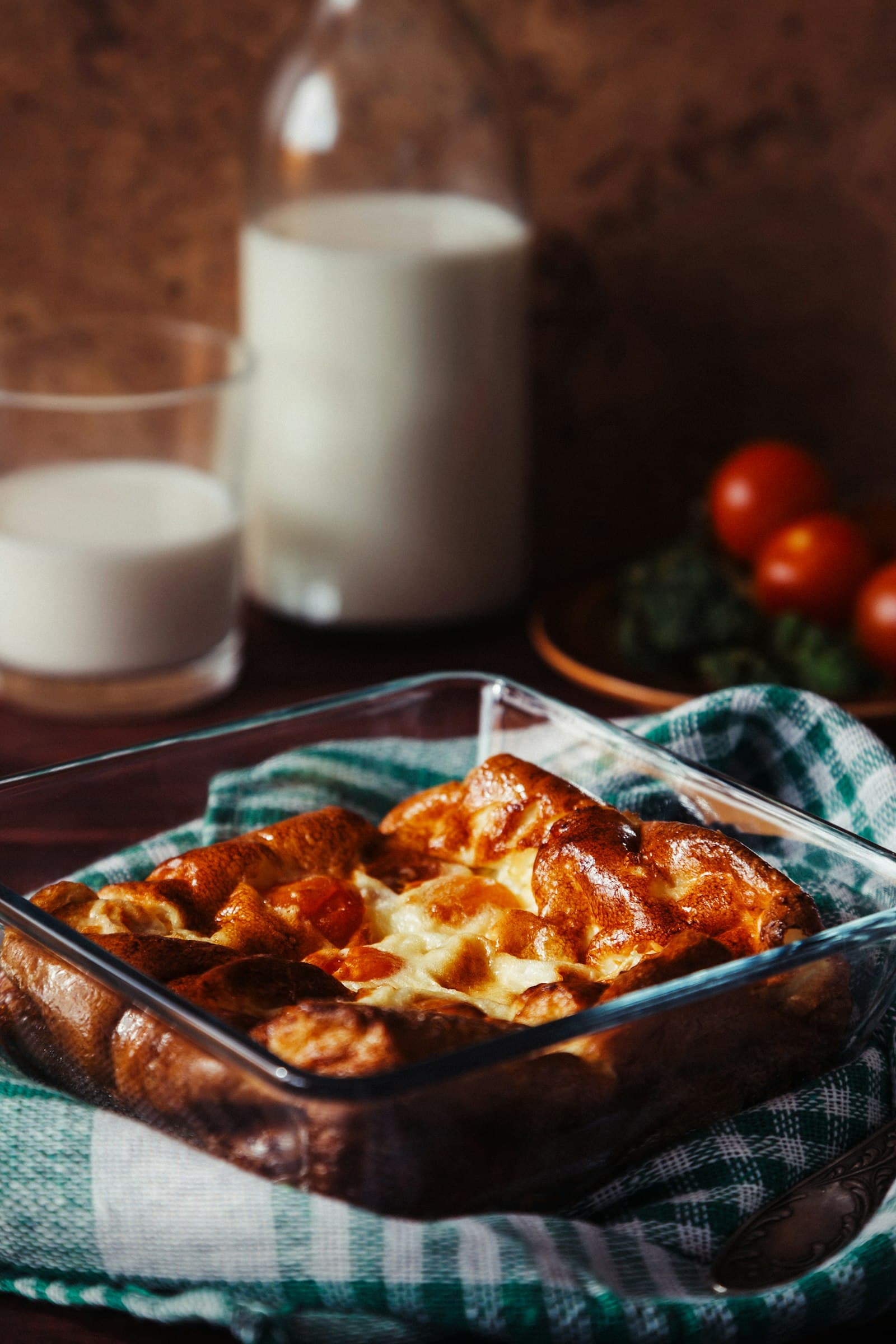
This breakfast casserole is built the night before, so the bread soaks up the egg custard in the fridge and bakes into a puffed, golden dish that slices cleanly. Browned sausage, sharp cheddar and a little mustard keep it savoury, and one pan feeds 8 people for a holiday morning or a weekend brunch.
Published
- Prep Time
- 20 mins
- Cook Time
- 1 hr 5 mins
- Chill (or overnight)
- 2 hrs
- Total Time
- 3 hrs 25 mins
- Servings
- 8 servings
How do you make Make-Ahead Sausage Breakfast Casserole?
Brown 450 g (1 lb) breakfast sausage and layer it in a 23 x 33 cm (9 x 13 inch) dish with 6 cups day-old bread cubes and 2 cups cheddar. Pour over 10 eggs whisked with 2 cups milk and 1 tsp mustard. Chill at least 2 hours or overnight, then bake at 175°C (350°F) for 50-60 minutes, until set and 74°C (165°F) in the centre.
- Total time
- 3 hrs 25 mins
- Calories
- 470 per serving
- Protein
- 28 g
- Yield
- 8 servings
- Difficulty
- Easy
- Method
- Baking
Ingredients
Filling
Egg custard
Equipment
23 x 33 cm (9 x 13 inch) baking dish · Large frying pan · Large mixing bowl · Whisk · Instant-read thermometer
Quick Directions
Brown the sausage
Cook the sausage in a large frying pan over medium-high heat for 8-10 minutes, breaking it into small pieces, until browned with no pink left and cooked to 71°C (160°F).
Layer the casserole
Grease a 23 x 33 cm (9 x 13 inch) baking dish.
Add the egg custard
Whisk the eggs, milk, mustard, salt and pepper in a large bowl until smooth.
Chill
Cover the dish tightly and refrigerate for at least 2 hours and up to 24 hours.
Bake
Take the dish out of the fridge while the oven heats to 175°C (350°F), up to 30 minutes.
Rest and serve
Let the casserole rest for 10 minutes so it firms up and slices neatly, then cut into 8 squares.
Step-by-Step Instructions
Follow these detailed steps to make the perfect make-ahead sausage breakfast casserole.
Brown the sausage
Cook the sausage in a large frying pan over medium-high heat for 8-10 minutes, breaking it into small pieces, until browned with no pink left and cooked to 71°C (160°F). Add the bell pepper for the last 3 minutes and the green onions for the last minute. Spoon onto a plate lined with paper towel to drain the fat.
Layer the casserole
Grease a 23 x 33 cm (9 x 13 inch) baking dish. Spread half the bread cubes in the dish, then half the sausage mixture and 3/4 cup of the cheddar. Repeat with the rest of the bread, the rest of the sausage and another 3/4 cup of cheddar. Keep the last 1/2 cup of cheese in the fridge for the top.
Add the egg custard
Whisk the eggs, milk, mustard, salt and pepper in a large bowl until smooth. Pour it evenly over the casserole, then press the bread down gently with a spatula so every cube is moistened.
Chill
Cover the dish tightly and refrigerate for at least 2 hours and up to 24 hours. The longer soak gives a softer, more even texture.
Bake
Take the dish out of the fridge while the oven heats to 175°C (350°F), up to 30 minutes. Uncover, scatter over the remaining cheese and bake for 50-60 minutes, until puffed and golden, the centre no longer jiggles and a knife in the middle comes out clean. The centre should read 74°C (165°F). Tent loosely with foil if the top browns before the middle is set.
Rest and serve
Let the casserole rest for 10 minutes so it firms up and slices neatly, then cut into 8 squares.
Recipe Tips
- Use bread that is a day or two old, or dry fresh cubes in a 150°C (300°F) oven for 10 minutes. Fresh bread turns mushy.
- Drain the sausage well. Leftover fat pools on top of the casserole and makes it greasy.
- A glass or ceramic dish straight from the fridge should not go into a very hot oven. Let it stand while the oven heats to avoid cracking.
Variations
- Ham and cheese: swap the sausage for 2 cups diced cooked ham and use Swiss or Gruyère cheese.
- Hash brown casserole: replace the bread with 4 cups thawed frozen shredded hash browns, squeezed dry, and bake for 55-65 minutes.
- Vegetarian: skip the sausage and add 2 cups sautéed mushrooms and spinach, squeezed dry, with the bell pepper.
Nutrition (per serving)
| Calories | 470 |
|---|---|
| Protein | 28 g |
| Carbs | 23 g |
| Fat | 29 g |
| Saturated fat | 12 g |
| Fibre | 1 g |
| Sugar | 5 g |
| Sodium | 980 mg |
Estimated from the listed ingredients; values vary by brand.
Related Recipes
Storing & Reheating
- Fridge
- Refrigerate leftovers, covered, within 2 hours of baking for up to 4 days.
- Freezer
- Freeze cooled, baked squares wrapped individually for up to 2 months. Thaw overnight in the fridge.
- Reheat
- Microwave a square for 1-2 minutes, or reheat the dish covered with foil in a 175°C (350°F) oven for 20-25 minutes, until hot to 74°C (165°F) in the centre.
Make-Ahead Sausage Breakfast Casserole FAQs
Can you make breakfast casserole the night before?
Yes. Assemble the casserole, cover it and refrigerate for up to 24 hours. Take it out while the oven heats and bake as directed. A dish that went in cold may need an extra 5-10 minutes.
How do you know when a breakfast casserole is done?
It is done when the top is puffed and golden, the centre no longer jiggles, a knife in the middle comes out clean, and an instant-read thermometer reads 74°C (165°F) in the centre.
Why is breakfast casserole watery?
A watery breakfast casserole usually means it was underbaked, the vegetables went in raw and released liquid, or the bread was too fresh to absorb the custard. Cook the vegetables first, use day-old bread and bake until the centre reaches 74°C (165°F).
Can you freeze breakfast casserole?
Yes. Freeze baked, cooled squares wrapped individually for up to 2 months. Thaw overnight in the fridge and reheat until hot to 74°C (165°F).
Can I make breakfast casserole without bread?
Yes. Use 4 cups of thawed frozen shredded hash browns, squeezed dry, in place of the bread cubes. It also makes the casserole gluten-free if your sausage is gluten-free.
Disclaimer
- Nutrition information is an estimate based on the listed ingredients. It changes with the brands, portion sizes and swaps you use.
- Read ingredient labels for allergens and for diet claims such as gluten-free or vegan. Products and their ingredients can change.
- Cooking times are a guide, since ovens, air fryers and slow cookers all run differently. Use a food thermometer and cook meat, poultry and fish to the safe internal temperatures in government food safety guidance.
- This recipe is general information, not medical or nutrition advice. If you have an allergy, a health condition or a special diet, check with a qualified health professional.