Fettuccine Alfredo
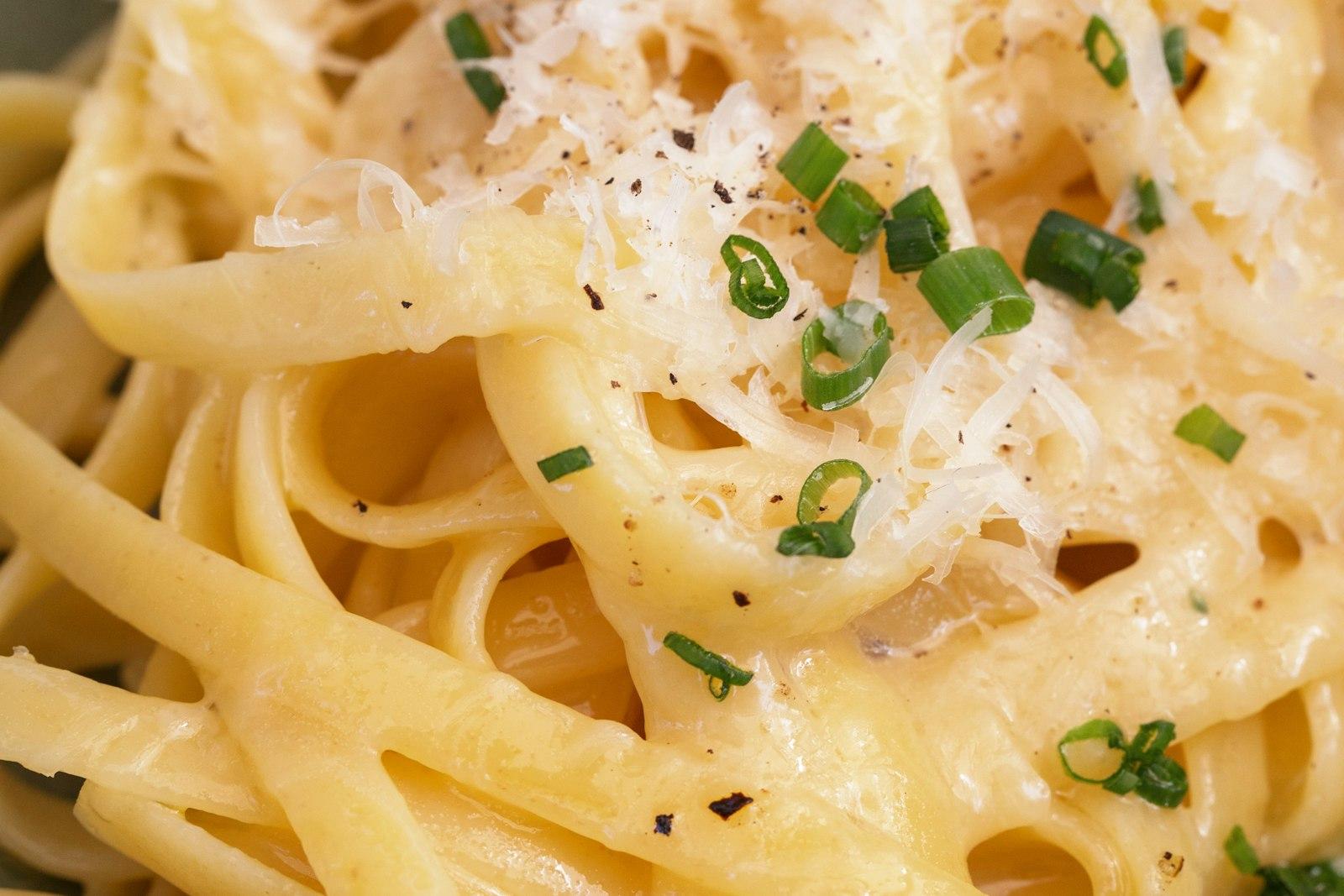
Fettuccine Alfredo needs only butter, cream and Parmigiano-Reggiano, so the method matters more than the shopping list. The cream simmers briefly with the butter, the pasta comes out of the water a minute early, and the cheese is tossed through off the heat with a little starchy pasta water, which keeps the sauce smooth instead of grainy. The dish is named after a Rome restaurateur whose version used only butter and cheese; cream arrived with the North American versions. It takes 25 minutes.
By Luca Ferraro
Published
- Prep Time
- 10 mins
- Cook Time
- 15 mins
- Total Time
- 25 mins
- Servings
- 4 servings
How do you make Fettuccine Alfredo?
Cook 340 g fettuccine 1-2 minutes short of al dente and save 250 ml of the pasta water. Simmer 60 g butter with 300 ml heavy cream for 3-4 minutes, add the pasta, then take the pan off the heat and toss in 90 g finely grated Parmigiano with splashes of pasta water until glossy. Season with pepper and serve at once. Total time: 25 minutes.
- Total time
- 25 mins
- Calories
- 765 per serving
- Protein
- 20 g
- Yield
- 4 servings
- Difficulty
- Easy
- Method
- Stovetop
Ingredients
Equipment
Large pot · Large skillet or sauté pan · Tongs · Fine grater or rasp · Heatproof measuring cup
Quick Directions
Get the water boiling
Bring a large pot of water to the boil and salt it well.
Cook the fettuccine
Cook the fettuccine for 1-2 minutes less than the package says, usually 8-10 minutes for dried fettuccine, so it is still slightly firm.
Simmer the butter and cream
Melt the butter, add the cream and simmer for 3-4 minutes.
Toss with the cheese
Turn the heat to low, add the drained fettuccine to the skillet and toss with tongs for 1 minute so it soaks up some of the cream.
Serve right away
Divide between warm plates and finish with chives or parsley, extra pepper and more grated cheese.
Step-by-Step Instructions
Every step for making fettuccine alfredo, written out in full.
Get the water boiling
Bring a large pot of water to the boil and salt it well. While it heats, finely grate the cheese on a rasp or the fine side of a box grater so it melts quickly into the sauce.
Cook the fettuccine
Cook the fettuccine for 1-2 minutes less than the package says, usually 8-10 minutes for dried fettuccine, so it is still slightly firm. Scoop out 250 ml (1 cup) of the pasta water before you drain it.
Simmer the butter and cream
While the pasta cooks, melt the butter in a large skillet over medium-low heat. Pour in the cream, bring it to a gentle simmer and cook for 3-4 minutes, until it has reduced a little and lightly coats a spoon. Stir in the pepper and a pinch of nutmeg, if using.
Toss with the cheese
Turn the heat to low, add the drained fettuccine to the skillet and toss with tongs for 1 minute so it soaks up some of the cream. Take the pan off the heat. Add the cheese a handful at a time, tossing constantly and adding pasta water 2 tablespoons at a time, until the sauce is smooth and glossy and clings to every strand. Taste and add salt if it needs it.
Serve right away
Divide between warm plates and finish with chives or parsley, extra pepper and more grated cheese. The sauce thickens as it cools, so serve it at once; if it tightens in the pan, loosen it with another splash of pasta water.
Recipe Tips
- Grate the cheese yourself from a block. Ready-grated cheese is coated in anti-caking starch that keeps it from melting smoothly, and the sauce can turn gritty.
- Keep the cream at a gentle simmer and add the cheese off the heat. Boiling cream and cheese together makes the cheese clump and release its fat.
- Save more pasta water than you think you need. Its starch helps the butter, cream and cheese hold together as one smooth sauce.
- Warm the plates in a low oven or with hot water. Alfredo sets quickly on cold plates.
Variations
- No-cream Alfredo: toss the hot fettuccine with 85 g butter, 100 g grated Parmigiano and 125-175 ml hot pasta water, tossing hard until the cheese melts into a creamy coating.
- Garlic Alfredo: cook 2 minced garlic cloves in the butter for 1 minute before adding the cream.
- Broccoli Alfredo: add 300 g small broccoli florets to the pasta pot for the last 3 minutes of cooking and drain them with the fettuccine.
- Chicken Alfredo: top each serving with sliced chicken breast seared until it reaches 74°C (165°F) in the thickest part.
Nutrition (per serving)
| Calories | 765 |
|---|---|
| Protein | 20 g |
| Carbs | 67 g |
| Fat | 47 g |
| Saturated fat | 29 g |
| Fibre | 3 g |
| Sugar | 4.5 g |
| Sodium | 850 mg |
Estimated from the listed ingredients; values vary by brand.
Related Recipes
Storing & Reheating
- Fridge
- Refrigerate within 2 hours in an airtight container for up to 3 days.
- Freezer
- Not recommended: the cream sauce separates and turns grainy when it thaws.
- Reheat
- Reheat in a skillet over low heat with a splash of milk or cream, tossing until hot throughout, to 74°C (165°F). In the microwave, use medium power and stir every 30 seconds; full power makes the sauce split.
Fettuccine Alfredo FAQs
Why is my Alfredo sauce grainy or oily?
The cheese got too hot, or it was ready-grated cheese with anti-caking starch. Take the pan off the heat before adding finely grated cheese from a block, add it a handful at a time, and toss in a splash of warm pasta water. A sauce that has just started to look oily can often be brought back by tossing in 2-3 tablespoons of pasta water off the heat.
Can I make fettuccine Alfredo without cream?
Yes. The original Roman version uses no cream: hot fettuccine is tossed hard with butter, finely grated Parmigiano and a little starchy pasta water until the cheese melts into a creamy coating. Use about 85 g butter, 100 g cheese and 125-175 ml pasta water for 340 g dried fettuccine.
How do I thicken Alfredo sauce?
Simmer the butter and cream for a minute or two longer before the pasta goes in, add a little more grated cheese, or let the tossed pasta stand for 1 minute before serving. Flour is not needed; the cheese and the starch in the pasta water thicken the sauce.
Can I use fresh fettuccine?
Yes. Use about 450 g fresh fettuccine and cook it for 2-3 minutes, just until tender. Fresh pasta releases less starch into the water, so you may need a little more pasta water to bring the sauce together.
Can you reheat fettuccine Alfredo?
Yes, gently. Refrigerate leftovers within 2 hours and use them within 3 days. Reheat in a skillet over low heat with a splash of milk or cream, tossing until hot to 74°C (165°F). High heat makes the sauce separate, and freezing is not recommended.
Is fettuccine Alfredo vegetarian?
It contains no meat, but Parmigiano-Reggiano and most parmesan are made with animal rennet. For a strictly vegetarian dish, use a hard cheese labelled vegetarian or made with microbial or vegetable rennet.
Disclaimer
- Nutrition information is an estimate based on the listed ingredients. It changes with the brands, portion sizes and swaps you use.
- Read ingredient labels for allergens and for diet claims such as gluten-free or vegan. Products and their ingredients can change.
- Cooking times are a guide, since ovens, air fryers and slow cookers all run differently. Use a food thermometer and cook meat, poultry and fish to the safe internal temperatures in government food safety guidance.
- This recipe is general information, not medical or nutrition advice. If you have an allergy, a health condition or a special diet, check with a qualified health professional.