Spaghetti Carbonara
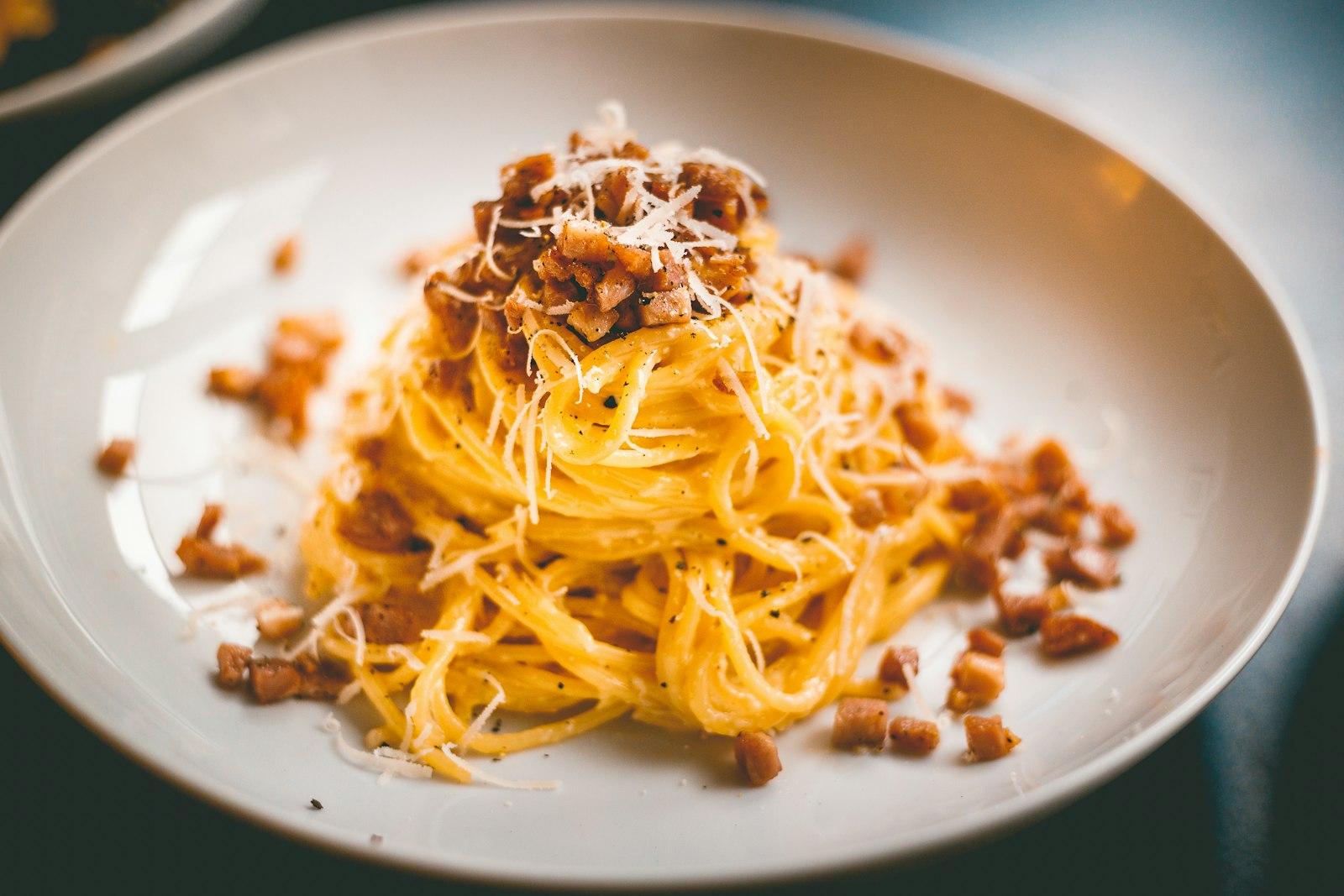
Roman carbonara gets its creamy sauce from egg yolks, Pecorino Romano and starchy pasta water, with no cream at all. Guanciale, cured pork cheek, renders its fat in the pan and crisps at the edges, and that fat carries the pepper and cheese through the spaghetti. The only tricky part is the eggs: they go in off the heat, so the warmth of the pasta thickens them into a sauce instead of scrambling them. It takes 30 minutes.
By Luca Ferraro
Published
- Prep Time
- 10 mins
- Cook Time
- 20 mins
- Total Time
- 30 mins
- Servings
- 4 servings
How do you make Spaghetti Carbonara?
Crisp 150 g diced guanciale in a skillet for 8-10 minutes. Whisk 4 egg yolks, 2 eggs, 75 g grated Pecorino Romano and black pepper. Cook 400 g spaghetti 1 minute short of al dente, toss it in the guanciale fat, then take the pan off the heat and stir in the egg mixture with splashes of pasta water until creamy. Ready in 30 minutes.
- Total time
- 30 mins
- Calories
- 755 per serving
- Protein
- 30 g
- Yield
- 4 servings
- Difficulty
- Medium
- Method
- Stovetop
Ingredients
Equipment
Large pot · Large skillet · Mixing bowl · Whisk or fork · Tongs · Fine grater or rasp
Quick Directions
Prepare the egg mixture
Bring a large pot of water to the boil and salt it lightly.
Crisp the guanciale
While the water heats, put the guanciale in a large cold skillet and set it over medium heat.
Cook the spaghetti
Cook the spaghetti for 1 minute less than the package says, about 9-10 minutes for most brands.
Toss with the guanciale
Set the skillet back over low heat.
Add the eggs off the heat
Off the heat, toss in the egg mixture with splashes of pasta water until creamy.
Serve
Serve straight away in warm bowls, topped with the remaining 20 g of pecorino and more black pepper.
Step-by-Step Instructions
Every step for making spaghetti carbonara, written out in full.
Prepare the egg mixture
Bring a large pot of water to the boil and salt it lightly. While it heats, whisk the egg yolks, eggs, 75 g of the pecorino and 1 1/2 tsp of the pepper in a bowl until it forms a thick, smooth paste.
Crisp the guanciale
While the water heats, put the guanciale in a large cold skillet and set it over medium heat. Cook for 8-10 minutes, stirring now and then, until the fat has melted out and the pieces are golden and crisp at the edges. Turn off the heat and leave the guanciale and its fat in the pan. If more than about 4 tablespoons of fat has collected, spoon off the excess.
Cook the spaghetti
Cook the spaghetti for 1 minute less than the package says, about 9-10 minutes for most brands. Scoop out 250 ml (1 cup) of the pasta water, then drain.
Toss with the guanciale
Set the skillet back over low heat. Add the spaghetti, the remaining 1/2 tsp pepper and 3 tablespoons of pasta water, and toss for 1 minute so every strand is coated in fat.
Add the eggs off the heat
Take the skillet off the heat and wait 30 seconds, so it is no longer sizzling. Whisk 2 tablespoons of hot pasta water into the egg mixture, pour it over the spaghetti and toss constantly with tongs for 1-2 minutes, adding pasta water a spoonful at a time, until the eggs thicken into a creamy sauce that coats every strand. If it stays thin, hold the pan over the lowest heat for 10-20 seconds at a time while tossing; if it starts to look lumpy, take it off and add a splash of water.
Serve
Serve straight away in warm bowls, topped with the remaining 20 g of pecorino and more black pepper. The sauce sets as it cools, so carbonara does not wait well.
Recipe Tips
- The eggs in carbonara are only lightly cooked by the heat of the pasta and pan. For young children, pregnant people, older adults and anyone with a weakened immune system, use pasteurized eggs, which work the same way in the sauce.
- Take the pan off the heat before the eggs go in. Direct heat scrambles them; the stored heat in the pasta is enough to thicken them into a sauce.
- Start the guanciale in a cold pan so the fat melts out slowly and the meat crisps instead of burning on the outside.
- Go easy on salt in the pasta water. Pecorino and guanciale are both salty, and the starchy water ends up in the sauce.
Variations
- Pancetta or bacon: use the same weight of pancetta, or bacon for a smoky flavour, and cook it until crisp.
- Milder cheese: replace half the pecorino with Parmigiano-Reggiano for a less salty, rounder sauce.
- Other shapes: rigatoni, bucatini or mezze maniche work in the same weight; cook them 1 minute short of the package time.
Nutrition (per serving)
| Calories | 755 |
|---|---|
| Protein | 30 g |
| Carbs | 76 g |
| Fat | 36 g |
| Saturated fat | 15 g |
| Fibre | 3 g |
| Sugar | 2.5 g |
| Sodium | 1200 mg |
Estimated from the listed ingredients; values vary by brand.
Related Recipes
Storing & Reheating
- Fridge
- Carbonara is best eaten as soon as it is made. Refrigerate leftovers within 2 hours in an airtight container and eat them within 2 days.
- Freezer
- Not recommended: the egg sauce turns grainy once frozen and thawed.
- Reheat
- Reheat in a skillet over low heat with a splash of water, tossing until steaming hot to 74°C (165°F). The sauce firms up and loses some creaminess on reheating.
Spaghetti Carbonara FAQs
Does carbonara have cream in it?
Traditional Roman carbonara has no cream. The creamy texture comes from egg yolks and Pecorino Romano tossed with hot spaghetti, rendered guanciale fat and a little starchy pasta water, which together thicken into a smooth sauce.
How do I keep the eggs from scrambling in carbonara?
Take the pan off the heat and let it stop sizzling before you add the eggs, then toss constantly. Thinning the egg mixture with 2 tablespoons of hot pasta water first also helps. If the sauce stays runny, return the pan to the lowest heat for 10-20 seconds at a time while tossing.
Are the eggs in carbonara safe to eat?
The eggs are thickened by the heat of the pasta, not cooked until firm. Young children, pregnant people, older adults and anyone with a weakened immune system should use pasteurized eggs, which are heat-treated in the shell and behave the same way in the sauce.
What is the difference between guanciale, pancetta and bacon?
Guanciale is cured pork cheek, the traditional choice for carbonara; it is fattier than the others and renders a lot of flavourful fat. Pancetta is cured pork belly, usually unsmoked. Bacon is cured pork that is usually smoked. All three work if cooked until crisp; bacon gives a smoky taste.
Should carbonara use whole eggs or just yolks?
Yolks give a richer, more golden sauce, while whole eggs make it lighter and a little looser. This recipe uses 4 yolks and 2 whole eggs for 400 g spaghetti. Freeze the leftover whites in a sealed container for up to 12 months, or refrigerate them for up to 4 days.
Can I make carbonara ahead of time?
Not really; the sauce sets as it cools and turns thick on reheating. You can dice the guanciale, grate the cheese and mix the eggs and cheese up to a few hours ahead, keeping the egg mixture covered in the fridge, then cook the pasta and finish the dish in about 20 minutes.
Disclaimer
- Nutrition information is an estimate based on the listed ingredients. It changes with the brands, portion sizes and swaps you use.
- Read ingredient labels for allergens and for diet claims such as gluten-free or vegan. Products and their ingredients can change.
- Cooking times are a guide, since ovens, air fryers and slow cookers all run differently. Use a food thermometer and cook meat, poultry and fish to the safe internal temperatures in government food safety guidance.
- This recipe is general information, not medical or nutrition advice. If you have an allergy, a health condition or a special diet, check with a qualified health professional.