Greek Lemon Potatoes
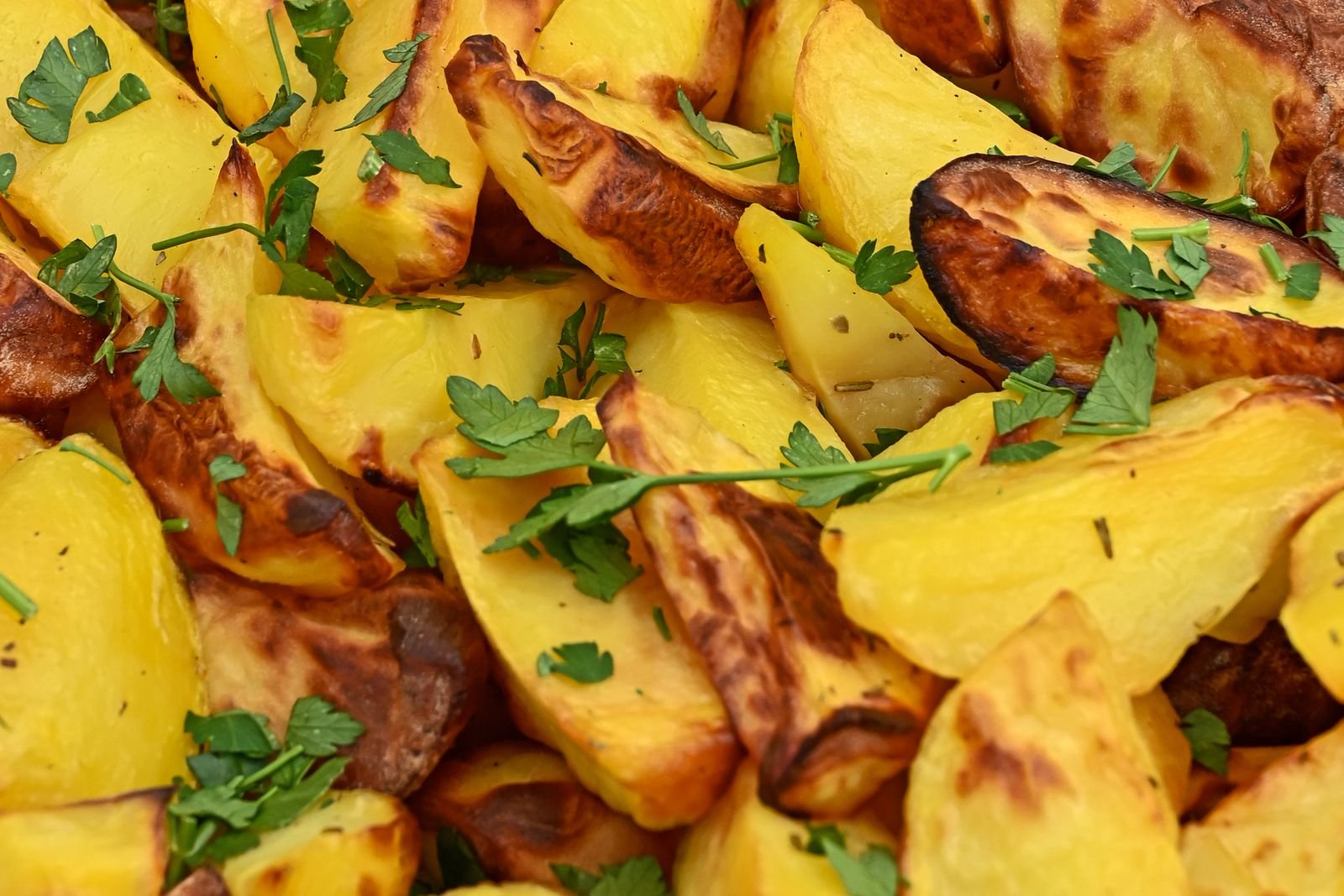
Greek lemon potatoes, patates lemonates, are wedges roasted in a shallow bath of lemon juice, olive oil and stock until the liquid has gone and the edges turn deep gold. In Greece they sit beside roast chicken, lamb and souvlaki, and they often share the table with the lamb at Easter. Vegetable stock keeps this version vegan, and fresh juice and zest go on at the end to bring back the sharpness the oven takes away.
By Mei Lin Tan
Published
- Prep Time
- 15 mins
- Cook Time
- 1 hr 10 mins
- Total Time
- 1 hr 25 mins
- Servings
- 6 servings
How do you make Greek Lemon Potatoes?
To make Greek lemon potatoes, cut 1.2 kg yellow potatoes into wedges and toss them in a large roasting pan with 80 ml olive oil, 80 ml lemon juice, 250 ml vegetable stock, garlic, oregano and salt. Roast at 200°C (400°F) for 65-70 minutes, turning once, until the liquid is absorbed, the centres are soft and the edges are browned.
- Total time
- 1 hr 25 mins
- Calories
- 270 per serving
- Protein
- 4 g
- Yield
- 6 servings
- Difficulty
- Easy
- Method
- Roasting
Ingredients
To finish
Equipment
Large metal roasting pan, about 30 x 40 cm (12 x 16 in) · Measuring jug · Whisk or fork · Tongs or thin metal spatula
Step-by-Step Instructions
Every step for making greek lemon potatoes, written out in full.
Cut the potatoes
Heat the oven to 200°C (400°F) with a rack in the middle. Halve each peeled potato lengthwise, then cut each half into 3 or 4 long wedges about 3 cm thick at the widest point, so they all cook at the same rate. Rinse them briefly and pat dry.
Whisk the lemon bath
Finely grate 1 tsp zest from one lemon and set it aside for the end, then squeeze the juice. In a measuring jug, whisk together the olive oil, 80 ml lemon juice, vegetable stock, garlic, oregano, salt and pepper.
Fill the pan
Put the wedges in the roasting pan, pour the lemon mixture over them and toss with your hands until every piece is coated. Lay the wedges on a cut side in a single, snug layer. The liquid should reach about a third of the way up the potatoes.
Roast the first side
Roast for 35 minutes, until the tops are pale gold and the liquid has reduced by about half.
Turn and roast until browned
Turn each wedge onto its other cut side with tongs or a thin spatula, and spoon the pan juices over them. Roast for 30-35 minutes more, until only a thin film of oil is left in the pan, the potatoes are soft when pierced and the edges are well browned. If the pan runs dry before the potatoes are tender, add 60 ml hot water; if liquid is still pooling at the end, give them another 10 minutes.
Finish with fresh lemon
Drizzle the potatoes with 1 tbsp lemon juice, scatter the zest and parsley over the top and add more salt if needed. Serve hot, spooning any oily, lemony juices from the pan over each portion.
Recipe Tips
- A metal pan heats faster than glass or ceramic, so the edges brown before the centres turn to mush. In a glass or ceramic dish, allow 10-15 minutes more.
- Keep the potatoes in one layer. Wedges stacked two deep steam instead of browning, so if your pan is smaller than 30 x 40 cm (12 x 16 in), or you double the recipe, use two pans and swap their shelves when you turn the wedges.
- The garlic goes into the liquid rather than on top of the wedges, where it would scorch during more than an hour in a hot oven.
- The fresh lemon scent fades over an hour in the oven, so the zest and a last spoonful of juice go on just before serving.
Variations
- Swap the vegetable stock for chicken stock for a more savoury pan sauce. The potatoes are then no longer vegan.
- For extra crunch, broil the finished potatoes for 2-3 minutes, watching closely so the tips do not burn.
- Stir 1 tsp sweet paprika or a pinch of chili flakes into the lemon bath for colour and a little warmth.
Nutrition (per serving)
| Calories | 270 |
|---|---|
| Protein | 4 g |
| Carbs | 37 g |
| Fat | 12 g |
| Saturated fat | 2 g |
| Fibre | 4 g |
| Sugar | 2 g |
| Sodium | 510 mg |
Estimated from the listed ingredients; values vary by brand.
Related Recipes
Storing & Reheating
- Fridge
- Refrigerate within 2 hours of cooking in an airtight container for up to 4 days.
- Freezer
- Not recommended: the potatoes turn watery and grainy once thawed.
- Reheat
- Spread on a baking sheet and reheat at 200°C (400°F) for 12-15 minutes, until hot through, 74°C (165°F), and the edges have crisped again.
Greek Lemon Potatoes FAQs
Why are my Greek lemon potatoes soggy?
They usually came out of the oven before the liquid had cooked away. Keep roasting until only a little oil is left in the pan, use a metal pan, and keep the wedges in a single layer so the moisture can escape instead of steaming them.
What kind of potatoes are best for Greek lemon potatoes?
All-purpose yellow potatoes such as Yukon Gold are the most reliable: they absorb the lemon and stock while keeping their wedge shape. Russets give fluffier centres but can fall apart when turned, and waxy red potatoes stay firm and take up less of the liquid.
Why do Greek potatoes roast in stock?
The stock, lemon juice and oil simmer around the wedges at first, cooking them through and seasoning them all the way to the middle. As the stock evaporates, the oil that remains fries the outsides, so the potatoes end up both tender and browned.
Can I make Greek lemon potatoes ahead of time?
Yes. Roast them up to a day in advance, cool, and keep them covered in the fridge. Reheat on a baking sheet at 200°C (400°F) for 12-15 minutes with a spoonful of stock or water, then add the fresh lemon juice and zest just before serving.
Can I roast lemon potatoes in the same pan as chicken or lamb?
Yes, and it is a common way to cook them in Greece, with the meat juices dripping into the potatoes. Leave the wedges room around the meat so they still brown, cut back the stock slightly, and make sure the meat reaches its safe temperature: chicken pieces 74°C (165°F), whole poultry 82°C (180°F) and a lamb roast at least 63°C (145°F).
Disclaimer
- Nutrition information is an estimate based on the listed ingredients. It changes with the brands, portion sizes and swaps you use.
- Read ingredient labels for allergens and for diet claims such as gluten-free or vegan. Products and their ingredients can change.
- Cooking times are a guide, since ovens, air fryers and slow cookers all run differently. Use a food thermometer and cook meat, poultry and fish to the safe internal temperatures in government food safety guidance.
- This recipe is general information, not medical or nutrition advice. If you have an allergy, a health condition or a special diet, check with a qualified health professional.