Japanese Ginger Pork (Shogayaki)
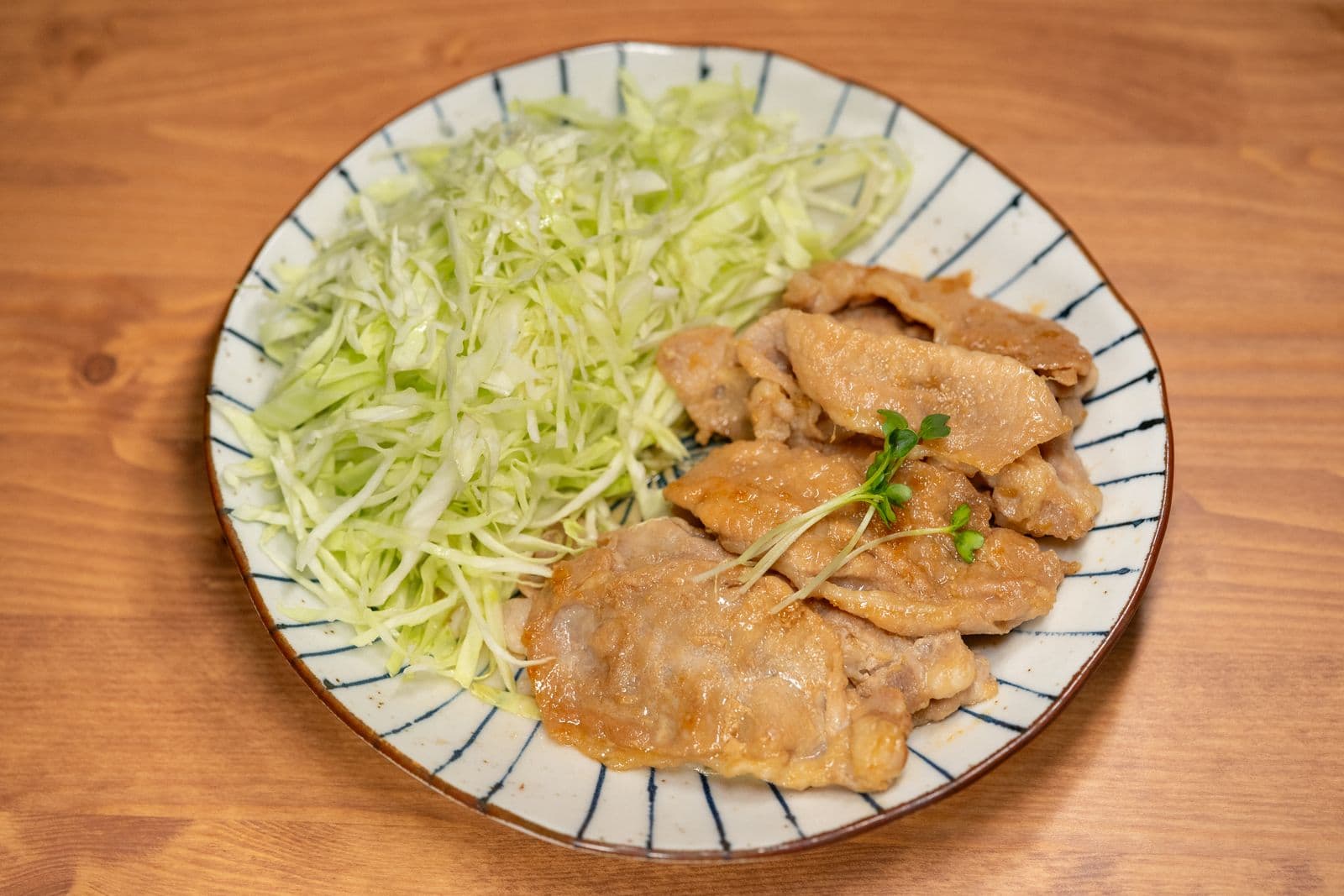
Shogayaki is a Japanese home-cooking favourite: thin slices of pork soaked briefly in a marinade of soy sauce, mirin, sake and plenty of grated ginger, then seared in a hot skillet with onion until the sauce turns glossy. Ginger keeps the pork tasting bright rather than heavy. The marinade takes 15 minutes in the fridge and the pan work takes about 10, so it suits a weeknight when the rice is already cooked.
By Mei Lin Tan
Published
- Prep Time
- 10 mins
- Cook Time
- 10 mins
- Marinate
- 15 mins
- Total Time
- 35 mins
- Servings
- 4 servings
How do you make Japanese Ginger Pork (Shogayaki)?
Marinate 500 g thinly sliced pork shoulder for 15 minutes in the fridge in 3 tbsp soy sauce, 2 tbsp mirin, 2 tbsp sake and 1 tbsp grated ginger. Fry a sliced onion in 1 tbsp oil for 3 minutes, add the pork in batches and cook until no pink remains and it reaches 71°C (160°F). Pour in the leftover marinade, boil for 1 minute and serve over shredded cabbage and cooked rice.
- Total time
- 35 mins
- Calories
- 555 per serving
- Protein
- 29 g
- Yield
- 4 servings
- Difficulty
- Easy
- Method
- Stir-frying
Ingredients
Pork and marinade
Pan
To serve
Equipment
Medium bowl for the marinade · Large skillet or wide frying pan · Chopsticks or tongs · Instant-read thermometer · Box grater or fine grater
Quick Directions
Marinate the pork
Coat the pork in the marinade and chill it for 15 minutes.
Prepare the vegetables
Shred the cabbage onto plates and slice the onion.
Soften the onion
Fry the onion for 3 minutes until soft.
Sear the pork
Brown the pork in two batches, 1-2 minutes per side.
Glaze and check
Boil the leftover marinade for 1 minute until the pork reaches 71°C (160°F).
Serve
Plate the pork with cabbage and rice.
Step-by-Step Instructions
Follow these detailed steps to make the perfect japanese ginger pork (shogayaki).
Marinate the pork
Stir the soy sauce, mirin, sake and grated ginger together in the bowl. Add the pork and turn it with your hands or chopsticks until every slice is coated, separating any that stick together. Cover and refrigerate for 15 minutes, no longer than 30, because the soy sauce starts to firm and salt the meat.
Prepare the vegetables
While the pork marinates, shred the cabbage as finely as you can and divide it among 4 plates. Slice the onion and keep the rice hot.
Soften the onion
Heat the oil in the large skillet over medium-high heat. Add the onion and cook for 3 minutes, stirring, until it softens and the edges start to colour. Push it to one side of the pan.
Sear the pork
Lift the pork out of the marinade with tongs, keeping the marinade in the bowl, and let the excess drip off. Spread half the pork in a single layer in the pan and cook for 1-2 minutes per side until browned. Move it to the onion side and cook the second half the same way. The pork must not pile up, or it steams and turns grey instead of browning.
Glaze and check
Pour the leftover marinade into the pan, stir everything together, bring it to a boil and let it bubble for 1 minute, until the sauce is glossy and the pork has no pink and reaches 71°C (160°F). The marinade has touched raw pork, so it must boil before it is eaten.
Serve
Spoon the pork and onion over the cabbage beside a mound of hot rice, and pour any sauce left in the pan over the rice. Sprinkle with sesame seeds, if using. Serve at once.
Recipe Tips
- Pork shoulder or belly stays juicier than lean loin. Look for packs labelled thin-sliced pork, shabu-shabu pork or pork for shogayaki, or freeze a piece for 30-40 minutes and slice it 2-3 mm thick across the grain.
- Grate the ginger on a fine grater and add the juice from the board. Bottled ginger paste works but tastes flatter.
- Cook the pork in two batches. A 30 cm skillet holds about 250 g of thin slices in one layer, so 500 g all at once will steam.
- Raw cabbage and the hot, salty pork are the classic contrast. Keep the cabbage dry so the sauce does not wilt it before you eat.
Variations
- Chicken shogayaki: swap the pork for thinly sliced boneless, skinless chicken thigh and cook until no pink remains and it reaches 74°C (165°F).
- Add 1 tsp sugar and 1 tbsp water to the marinade for a sweeter, thinner sauce that coats the rice.
- Replace the cabbage with sliced cucumber and tomato wedges for a cooler plate.
Nutrition (per serving)
| Calories | 555 |
|---|---|
| Protein | 29 g |
| Carbs | 55 g |
| Fat | 22 g |
| Saturated fat | 7 g |
| Fibre | 3 g |
| Sugar | 7 g |
| Sodium | 750 mg |
Estimated from the listed ingredients; values vary by brand.
Related Recipes
Storing & Reheating
- Fridge
- Refrigerate the cooked pork and onion with their sauce in an airtight container within 2 hours of cooking, and keep it for up to 3 days. Keep the cabbage and rice in separate containers. Refrigerate cooked rice within 1 hour if you can, and no later than 2 hours after cooking.
- Freezer
- Freeze the cooled pork and onion in their sauce for up to 2 months. Thaw overnight in the fridge.
- Reheat
- Reheat the pork in a pan over medium heat until steaming hot throughout. Reheat the rice once, covered, until steaming and hot to 74°C (165°F) throughout.
Japanese Ginger Pork (Shogayaki) FAQs
What is shogayaki?
Shogayaki means ginger-grilled. It is thinly sliced pork marinated in soy sauce, mirin, sake and grated ginger, then pan-fried, usually with onion. In Japan it is a common set meal served with rice, shredded cabbage and miso soup.
Which cut of pork works best?
Thinly sliced pork shoulder or belly stays tender and a little fatty, which carries the ginger well. Loin works if you slice it 2-3 mm thick and do not overcook it. Packs labelled thin-sliced or shabu-shabu pork are already the right thickness.
Can I use bottled ginger instead of fresh?
Fresh ginger gives the cleaner, sharper flavour that defines the dish. If you only have ginger paste from a tube, use 1 tbsp and expect a slightly flatter taste. Dried ground ginger is not a good substitute here.
Can I make shogayaki without sake or mirin?
Yes. Use dry white wine or water in place of the sake, and replace the mirin with 2 tbsp water mixed with 2 tsp sugar. The sauce will be a little less glossy but keeps the same salty-sweet balance.
Disclaimer
- Nutrition information is an estimate based on the listed ingredients. It changes with the brands, portion sizes and swaps you use.
- Read ingredient labels for allergens and for diet claims such as gluten-free or vegan. Products and their ingredients can change.
- Cooking times are a guide, since ovens, air fryers and slow cookers all run differently. Use a food thermometer and cook meat, poultry and fish to the safe internal temperatures in government food safety guidance.
- This recipe is general information, not medical or nutrition advice. If you have an allergy, a health condition or a special diet, check with a qualified health professional.