Japchae (Korean Glass Noodles)
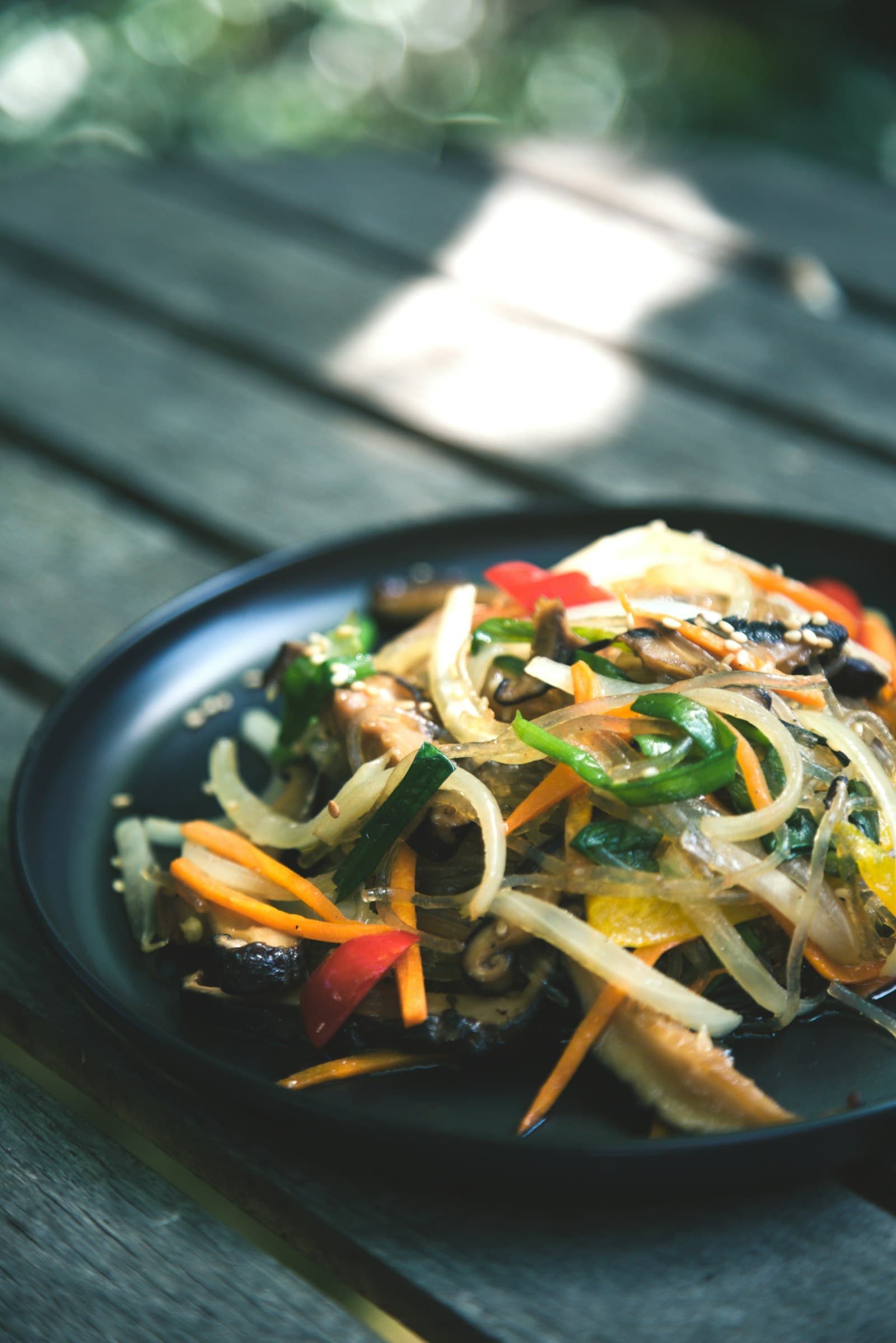
Japchae is the noodle dish that turns up at every Korean celebration, and it is just as good on a weeknight. Sweet potato starch noodles cook up glossy and springy, then get tossed with quickly stir-fried vegetables in a sauce of soy, sugar, garlic and toasted sesame oil. This version skips the beef, so it is fully vegan and works as a side or a light main.
By Mei Lin Tan
Published
- Prep Time
- 20 mins
- Cook Time
- 25 mins
- Total Time
- 45 mins
- Servings
- 6 servings
How do you make Japchae (Korean Glass Noodles)?
To make japchae, blanch 200 g spinach, then boil 250 g Korean sweet potato noodles for 6-7 minutes until chewy and drain. Stir-fry onion, carrot, red pepper and shiitake mushrooms one after another in a little oil. Toss the noodles in the pan with a sauce of soy sauce, sugar, sesame oil and garlic, then mix everything with green onions and sesame seeds.
- Total time
- 45 mins
- Calories
- 310 per serving
- Protein
- 3 g
- Yield
- 6 servings
- Difficulty
- Easy
- Method
- Stir-frying
Ingredients
Sauce
Noodles and vegetables
Equipment
Large pot · Large skillet or wok · Colander · Kitchen scissors · Large mixing bowl
Quick Directions
Mix the sauce
Stir the soy sauce, sugar, 2 tbsp sesame oil, garlic and black pepper together in a small bowl until the sugar dissolves.
Blanch the spinach
Blanch the spinach for 30 seconds, squeeze dry and season.
Cook the noodles
Boil the noodles for 6-7 minutes, drain, cut and toss with a little sauce.
Stir-fry the vegetables
Stir-fry the onion and carrot, then the pepper and mushrooms.
Glaze the noodles
Put the noodles and the remaining sauce in the skillet over medium heat.
Toss and serve
Toss the noodles with the vegetables, green onions and sesame seeds.
Step-by-Step Instructions
Follow these detailed steps to make the perfect japchae (korean glass noodles).
Mix the sauce
Stir the soy sauce, sugar, 2 tbsp sesame oil, garlic and black pepper together in a small bowl until the sugar dissolves. Bring a large pot of water to a boil.
Blanch the spinach
Drop the spinach into the boiling water for 30 seconds, just until it wilts. Lift it out with tongs, rinse under cold water and squeeze out as much water as you can. Toss with 1 tsp sesame oil and a pinch of salt and put it in the large mixing bowl. Keep the water boiling.
Cook the noodles
Add the noodles to the same pot and boil for 6-7 minutes, stirring now and then, until they are soft but still bouncy. Drain, rinse briefly under cold water and drain well. Snip through them 2-3 times with kitchen scissors so they are easier to toss and serve, then mix in 1 tbsp of the sauce so they don't stick together.
Stir-fry the vegetables
Heat 1 tbsp vegetable oil in a large skillet over medium-high heat. Stir-fry the onion and carrot with a pinch of salt for 2-3 minutes until just tender, then add to the bowl. Add the remaining oil and stir-fry the red pepper for 1 minute, then the mushrooms with 1 tbsp of the sauce for 2-3 minutes until softened. Add them to the bowl too.
Glaze the noodles
Put the noodles and the remaining sauce in the skillet over medium heat. Toss for about 2 minutes, until the noodles absorb the sauce and turn glossy and light brown.
Toss and serve
Tip the noodles into the bowl with the vegetables, add the green onions and sesame seeds, and toss everything together with tongs or gloved hands. Taste and add a little more soy sauce or sugar if needed. Serve warm or at room temperature.
Recipe Tips
- Cooking the vegetables one after another keeps each one bright and crisp-tender instead of stewing together. It sounds fussy, but it only takes a few minutes in one pan.
- Don't overcook the noodles. They keep softening as they soak up the sauce, so take them off when they are tender but still springy.
- Toss the noodles with a little sauce as soon as they are drained. Starch noodles stick together quickly as they cool.
- Japchae tastes best on the day it is made. If you make it a few hours ahead, toss it in a hot pan for a minute before serving to loosen the noodles.
Variations
- Beef japchae: marinate 200 g thinly sliced beef sirloin in 1 tbsp soy sauce, 1 tsp sugar and 1 minced garlic clove, stir-fry until browned and add it with the vegetables.
- Add a thin omelette, cut into strips, for the traditional egg garnish. It is no longer vegan.
- Make it spicy with 1-2 tsp gochugaru (Korean chili flakes) stirred into the sauce.
- Add cubes of pan-fried firm tofu to turn it into a vegan main course.
Nutrition (per serving)
| Calories | 310 |
|---|---|
| Protein | 3 g |
| Carbs | 51 g |
| Fat | 11 g |
| Saturated fat | 1 g |
| Fibre | 4 g |
| Sugar | 8 g |
| Sodium | 700 mg |
Estimated from the listed ingredients; values vary by brand.
Related Recipes
Storing & Reheating
- Fridge
- Refrigerate within 2 hours in an airtight container for up to 3 days. The noodles firm up when cold.
- Reheat
- Reheat in a skillet over medium heat with 1-2 tbsp water, tossing for 2-3 minutes until the noodles turn soft and glossy again, or microwave covered until hot.
Japchae (Korean Glass Noodles) FAQs
What noodles are used in japchae?
Japchae uses dangmyeon, Korean noodles made from sweet potato starch. They are grey when dry and turn clear, chewy and springy when cooked. Look for them as sweet potato noodles or sweet potato vermicelli in Asian grocers or the international aisle. Mung bean glass noodles work in a pinch but are thinner and softer, so boil them for only 3-4 minutes.
Is japchae gluten-free?
The sweet potato noodles are naturally gluten-free, but regular soy sauce contains wheat. Use tamari or a gluten-free soy sauce and check the noodle package to make the whole dish gluten-free.
Is japchae served hot or cold?
Japchae is usually served warm or at room temperature, which is why it is a favourite for parties and holiday tables. Don't leave it out for more than 2 hours, and refrigerate any leftovers.
Why did my japchae noodles turn hard and clumpy?
Sweet potato starch noodles firm up as they cool, especially in the fridge. Toss them with a little sauce or sesame oil right after draining, and reheat leftovers in a pan with a splash of water to make them soft again.
Disclaimer
- Nutrition information is an estimate based on the listed ingredients. It changes with the brands, portion sizes and swaps you use.
- Read ingredient labels for allergens and for diet claims such as gluten-free or vegan. Products and their ingredients can change.
- Cooking times are a guide, since ovens, air fryers and slow cookers all run differently. Use a food thermometer and cook meat, poultry and fish to the safe internal temperatures in government food safety guidance.
- This recipe is general information, not medical or nutrition advice. If you have an allergy, a health condition or a special diet, check with a qualified health professional.