Spicy Pork Bulgogi (Jeyuk Bokkeum)
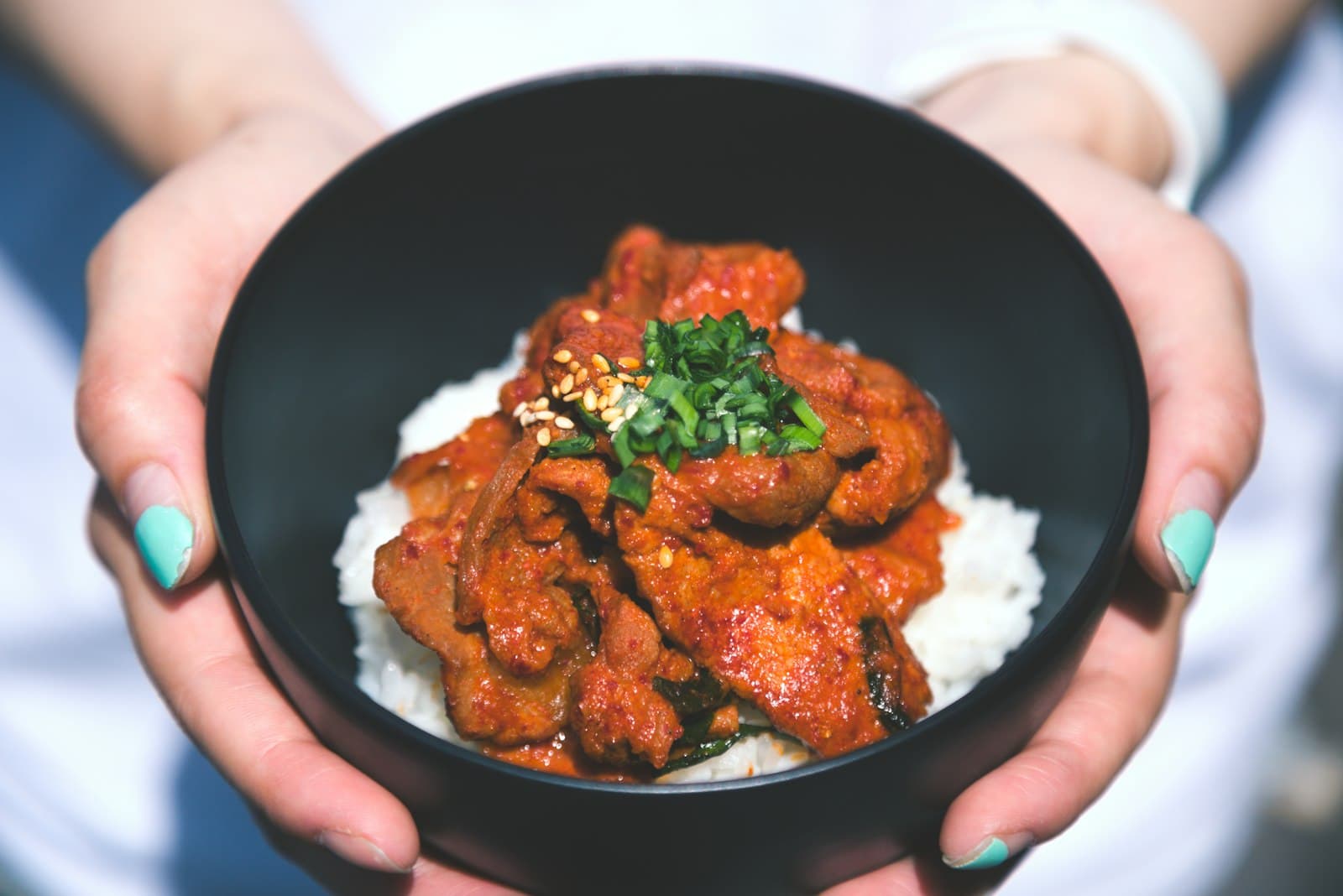
Jeyuk bokkeum, often called spicy pork bulgogi, is one of the best-loved home dishes in Korea. Thin slices of pork shoulder soak up a sticky gochujang marinade, then hit a hot pan until the edges catch and caramelize. You need one bowl and one skillet, and the marinade does most of the work while the rice cooks.
By Mei Lin Tan
Published
- Prep Time
- 20 mins
- Cook Time
- 12 mins
- Marinate
- 30 mins
- Total Time
- 1 hr 2 mins
- Servings
- 4 servings
How do you make Spicy Pork Bulgogi (Jeyuk Bokkeum)?
Spicy pork bulgogi (jeyuk bokkeum) is thinly sliced pork shoulder marinated in gochujang, Korean chili flakes, soy sauce, sugar, garlic, ginger and sesame oil. Marinate 600 g pork for at least 30 minutes, stir-fry it in a hot skillet for 5 minutes, add sliced onion and carrot, and cook until the pork reaches 71°C (160°F). Finish with green onions and sesame seeds and serve with rice.
- Total time
- 1 hr 2 mins
- Calories
- 515 per serving
- Protein
- 28 g
- Yield
- 4 servings
- Difficulty
- Easy
- Method
- Stir-frying
Ingredients
Marinade
Stir-fry
To serve
Equipment
Large skillet or wok (30 cm) · Sharp knife and cutting board · Mixing bowl · Instant-read thermometer
Quick Directions
Slice the pork
Slice the pork 3 mm thick against the grain.
Mix the marinade
In a mixing bowl, stir together the gochujang, gochugaru, soy sauce, sugar, mirin, sesame oil, garlic, ginger, grated pear and black pepper until smooth.
Marinate
Coat the pork and refrigerate for 30 minutes to 24 hours.
Sear the pork
Brown the pork over medium-high heat for about 5 minutes.
Add the vegetables
Stir-fry the onion and carrot until the pork reaches 71°C (160°F).
Finish and serve
Add the green onions and chili and toss for 1 minute, just until the green onions wilt.
Step-by-Step Instructions
Follow these detailed steps to make the perfect spicy pork bulgogi (jeyuk bokkeum).
Slice the pork
If the pork is soft, wrap it and freeze for 30-45 minutes so it firms up. Cut it against the grain into slices about 3 mm thick, then into pieces about 5 cm long.
Mix the marinade
In a mixing bowl, stir together the gochujang, gochugaru, soy sauce, sugar, mirin, sesame oil, garlic, ginger, grated pear and black pepper until smooth.
Marinate
Add the pork to the bowl and massage the marinade into every slice with your hands or a spoon. Cover and refrigerate for at least 30 minutes, or up to 24 hours.
Sear the pork
Heat the vegetable oil in a large skillet or wok over medium-high heat. Spread the pork out in a single layer, working in two batches if your pan is smaller than 30 cm, and leave it for 1-2 minutes to brown. Stir-fry for about 3 minutes more. The sugar in gochujang scorches quickly, so add a splash of water if the sauce starts to catch.
Add the vegetables
Add the onion and carrot and stir-fry for 3-4 minutes, until the onion is soft and glossy. The pork is done when it reaches 71°C (160°F) on an instant-read thermometer in the thickest piece and shows no pink inside.
Finish and serve
Add the green onions and chili and toss for 1 minute, just until the green onions wilt. Sprinkle with sesame seeds and serve hot with rice, with lettuce leaves on the side for wrapping.
Recipe Tips
- Partly freezing the pork makes thin, even slices much easier. Many Asian grocers also sell pork shoulder or belly already sliced for hot pot, which saves the knife work.
- Pork shoulder has enough fat to stay juicy over high heat. Lean loin dries out quickly, so if you use it, pull it off the heat as soon as it reaches 71°C (160°F).
- Gochujang varies in heat. Many tubs carry a heat rating, so choose mild or medium for a family meal and add gochugaru to taste.
- Leave the pork alone for the first minute or two in the pan. Those caramelized edges are where most of the flavour comes from.
Variations
- Swap the pork for boneless, skinless chicken thighs, sliced thin, and cook until they reach 74°C (165°F).
- Add 2 cups of sliced green cabbage or a sliced zucchini with the onion to stretch the dish to 5 servings.
- Use thinly sliced pork belly for a richer, more indulgent version. Pour off some of the rendered fat before adding the vegetables.
- For a milder version, leave out the gochugaru and add an extra 1 tsp honey.
Nutrition (per serving)
| Calories | 515 |
|---|---|
| Protein | 28 g |
| Carbs | 20 g |
| Fat | 35 g |
| Saturated fat | 10 g |
| Fibre | 2 g |
| Sugar | 11 g |
| Sodium | 900 mg |
Estimated from the listed ingredients; values vary by brand.
Related Recipes
Storing & Reheating
- Fridge
- Refrigerate within 2 hours in an airtight container for up to 4 days. Raw marinated pork keeps for up to 24 hours in the fridge.
- Freezer
- Freeze the raw marinated pork flat in a freezer bag for up to 3 months and thaw overnight in the fridge before cooking. Cooked pork freezes for up to 2 months.
- Reheat
- Reheat in a skillet over medium heat with a splash of water, or in the microwave, until steaming hot, 74°C (165°F) in the centre.
Spicy Pork Bulgogi (Jeyuk Bokkeum) FAQs
What is the difference between bulgogi and spicy pork bulgogi?
Classic bulgogi is beef in a sweet soy sauce, garlic and sesame marinade with no chili. Spicy pork bulgogi, called jeyuk bokkeum or dwaeji bulgogi in Korean, uses pork and a gochujang-based sauce, so it is red, spicy and slightly sweet.
What cut of pork is best for spicy pork bulgogi?
Boneless pork shoulder, also sold as pork butt, is the best choice because its marbling keeps the thin slices juicy. Pork belly is richer and very popular in Korea. Pork loin works but dries out if you cook it past 71°C (160°F).
What can I use instead of gochujang?
There is no exact substitute, because gochujang's fermented, slightly sweet depth defines the dish. It is sold in the international aisle of many supermarkets. In a pinch, mix 2 tbsp white miso with 1-2 tbsp sriracha and 1 tsp sugar; the result is close but less complex.
How long should I marinate spicy pork bulgogi?
At least 30 minutes, and up to 24 hours in the fridge. Thin slices absorb the marinade quickly, so 30 minutes already gives good flavour; overnight makes it deeper and saves time on a busy evening.
How do I make spicy pork bulgogi less spicy?
Leave out the gochugaru and use a mild gochujang, then add 1 tsp honey to round out the sauce. Serving it with plenty of rice and crisp lettuce leaves also softens the heat.
Disclaimer
- Nutrition information is an estimate based on the listed ingredients. It changes with the brands, portion sizes and swaps you use.
- Read ingredient labels for allergens and for diet claims such as gluten-free or vegan. Products and their ingredients can change.
- Cooking times are a guide, since ovens, air fryers and slow cookers all run differently. Use a food thermometer and cook meat, poultry and fish to the safe internal temperatures in government food safety guidance.
- This recipe is general information, not medical or nutrition advice. If you have an allergy, a health condition or a special diet, check with a qualified health professional.