New York Cheesecake
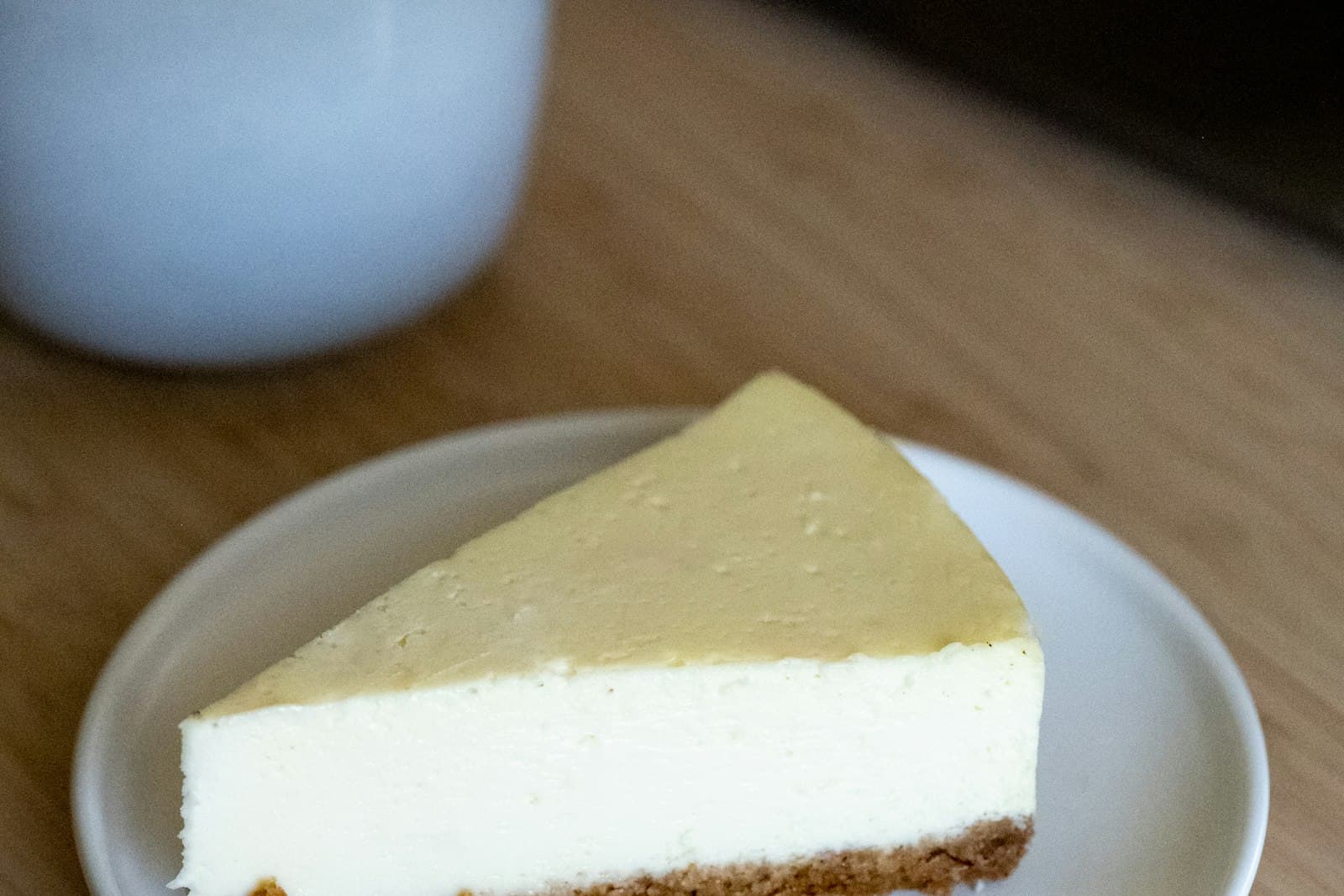
New York cheesecake is the dense, rich kind. The filling is mostly cream cheese, with a little sour cream for tang and a hint of lemon and vanilla, on a crisp biscuit-crumb base. It bakes slowly in a water bath so the filling sets smooth and creamy from edge to centre, then cools in the oven and chills overnight. Use graham crackers, or digestive biscuits if you live outside North America.
Published
- Prep Time
- 30 mins
- Cook Time
- 1 hr 30 mins
- Cool and chill overnight
- 10 hrs
- Total Time
- 12 hrs
- Servings
- 12 servings
How do you make New York Cheesecake?
For New York cheesecake, bake a graham or digestive biscuit crust in a 23 cm (9 inch) springform pan, then top it with 1.13 kg cream cheese beaten with sugar, sour cream, lemon and 5 eggs on low. Bake in a water bath at 160°C (325°F) for 70-85 minutes, until the centre wobbles slightly. Cool in the oven with the door ajar for 1 hour, then chill overnight.
- Total time
- 12 hrs
- Calories
- 590 per serving
- Protein
- 10 g
- Yield
- 12 servings
- Difficulty
- Medium
- Method
- Baking
Ingredients
Crust
Filling
To serve
Equipment
23 cm (9 inch) springform pan, at least 7 cm (2 3/4 inches) deep · Wide heavy-duty foil · Large roasting pan · Stand mixer with paddle or hand mixer · Large mixing bowl · Kettle · Thin knife · Wire rack
Quick Directions
Prepare the pan
Take the cream cheese, sour cream and eggs out of the fridge about 2 hours ahead.
Bake the crust
Mix the crumbs, sugar and melted butter until the mixture looks like wet sand.
Beat the cream cheese
Beat the cream cheese on medium-low speed for 2-3 minutes, until completely smooth, scraping the bowl and beater twice.
Add the eggs
On low speed, add the eggs one at a time, mixing just until each one disappears.
Set up the water bath
Pour the filling over the crust, smooth the top and tap the pan gently on the counter to bring air bubbles to the surface.
Bake low and slow
Bake at 160°C (325°F) for 70-85 minutes, until the centre wobbles slightly.
Cool in the oven
Turn off the oven, prop the door open a few centimetres with a wooden spoon and leave the cheesecake inside for 1 hour.
Chill overnight
Refrigerate the cheesecake for at least 8 hours or overnight, covering it once it is cold.
Step-by-Step Instructions
Follow these detailed steps to make the perfect new york cheesecake.
Prepare the pan
Take the cream cheese, sour cream and eggs out of the fridge about 2 hours ahead. Heat the oven to 175°C (350°F) with a rack in the centre. Wrap the outside of the springform pan in two layers of wide heavy-duty foil, pressing it up the sides, so no water can seep in.
Bake the crust
Mix the crumbs, sugar and melted butter until the mixture looks like wet sand. Press it firmly and evenly over the base of the pan with the bottom of a glass. Bake for 10 minutes, until fragrant and a shade darker, then set aside while you make the filling. Lower the oven to 160°C (325°F) and boil a full kettle.
Beat the cream cheese
Beat the cream cheese on medium-low speed for 2-3 minutes, until completely smooth, scraping the bowl and beater twice. Add the sugar, flour and salt and beat on low for 1 minute. Beat in the sour cream, vanilla, lemon zest and lemon juice on low until smooth.
Add the eggs
On low speed, add the eggs one at a time, mixing just until each one disappears. Scrape the bowl, then finish by stirring with a spatula to catch any lumps at the bottom. Don't beat on high speed: whipped-in air makes cheesecake puff up in the oven, then sink and crack.
Set up the water bath
Pour the filling over the crust, smooth the top and tap the pan gently on the counter to bring air bubbles to the surface. Set the wrapped pan in the roasting pan, place it on the oven rack and pour in boiling water to come about 2.5 cm (1 inch) up the sides of the springform. If you'd rather skip the water bath, put the roasting pan of boiling water on the lowest rack instead and bake the cheesecake on the rack above it.
Bake low and slow
Bake for 70-85 minutes, until the edges are set and slightly puffed and the centre 5-8 cm (2-3 inches) still wobbles slightly, like set jelly, when you nudge the pan. The top should stay pale. Without a water bath, start checking at 60 minutes. The centre firms up as the cheesecake cools and chills.
Cool in the oven
Turn off the oven, prop the door open a few centimetres with a wooden spoon and leave the cheesecake inside for 1 hour. Lift it out of the water, remove the foil and run a thin knife around the edge so the cheesecake can shrink away from the pan without cracking. Cool on a rack to room temperature, about 1 hour.
Chill overnight
Refrigerate the cheesecake for at least 8 hours or overnight, covering it once it is cold. Release the springform, then cut with a hot, dry knife, wiping it clean between slices. Serve plain or with berries or fruit sauce.
Recipe Tips
- Use room-temperature cream cheese. Cold cream cheese stays lumpy, and beating longer to smooth it whips in air that leads to cracks.
- Use full-fat brick cream cheese, not spreadable tub-style cream cheese, which is softer and won't set as firmly.
- If your foil isn't wide enough to wrap the pan without seams, set the springform inside a slightly larger cake pan or a roasting bag before it goes into the water.
- Take the cheesecake out while the centre still wobbles. Overbaking is the most common reason for a dry, cracked top.
Variations
- Classic sour cream topping: after baking, whisk 240 g (1 cup) sour cream with 2 tbsp sugar and 1/2 tsp vanilla, spread it over the cheesecake and bake for 10 minutes more before cooling in the oven. It also hides any cracks.
- Top each slice with cherry or strawberry sauce, or a pile of fresh berries.
- Use chocolate sandwich cookie crumbs for the crust and leave out the sugar.
Nutrition (per serving)
| Calories | 590 |
|---|---|
| Protein | 10 g |
| Carbs | 40 g |
| Fat | 44 g |
| Saturated fat | 24 g |
| Fibre | 0.5 g |
| Sugar | 30 g |
| Sodium | 490 mg |
Estimated from the listed ingredients; values vary by brand.
Related Recipes
Storing & Reheating
- Fridge
- Cover and refrigerate for up to 5 days.
- Freezer
- Freeze the whole cheesecake or individual slices, without toppings, well wrapped for up to 2 months. Thaw overnight in the fridge.
New York Cheesecake FAQs
What makes New York cheesecake different from other cheesecakes?
New York cheesecake is dense and rich, and taller than most. It uses a large amount of cream cheese with eggs, sour cream or cream and a little flour, sits on a simple biscuit-crumb crust and is baked slowly. Lighter styles use less cream cheese or fold in whipped egg whites, and no-bake cheesecakes are set with whipped cream instead of eggs.
How do I stop my cheesecake from cracking?
Start with room-temperature ingredients, mix the eggs in on low speed so you don't whip in air, and bake at a low temperature in a water bath or with a pan of water on the rack below. Take it out while the centre still wobbles, cool it in the turned-off oven with the door ajar for 1 hour, and run a knife around the edge before it cools further.
How do I know when New York cheesecake is done?
The edges look set and slightly puffed, while the centre 5-8 cm (2-3 inches) still wobbles slightly when you nudge the pan. The top should be pale, not browned or cracked. The centre finishes setting as the cheesecake cools and chills overnight.
Do I need a water bath for cheesecake?
A water bath gives the most even, creamy result, because the water keeps the edges from overbaking before the centre sets. If you don't want to use one, put a pan of boiling water on the lowest rack and bake the cheesecake on the rack above. The steam helps prevent cracks, though the edges may brown a little more.
Why does cheesecake need to chill overnight?
Cheesecake keeps setting as it chills. After at least 8 hours in the fridge the filling is firm and creamy, and the slices cut cleanly. Cut too soon, it is soft and can taste eggy.
Disclaimer
- Nutrition information is an estimate based on the listed ingredients. It changes with the brands, portion sizes and swaps you use.
- Read ingredient labels for allergens and for diet claims such as gluten-free or vegan. Products and their ingredients can change.
- Cooking times are a guide, since ovens, air fryers and slow cookers all run differently. Use a food thermometer and cook meat, poultry and fish to the safe internal temperatures in government food safety guidance.
- This recipe is general information, not medical or nutrition advice. If you have an allergy, a health condition or a special diet, check with a qualified health professional.