Cuban Black Beans (Frijoles Negros)
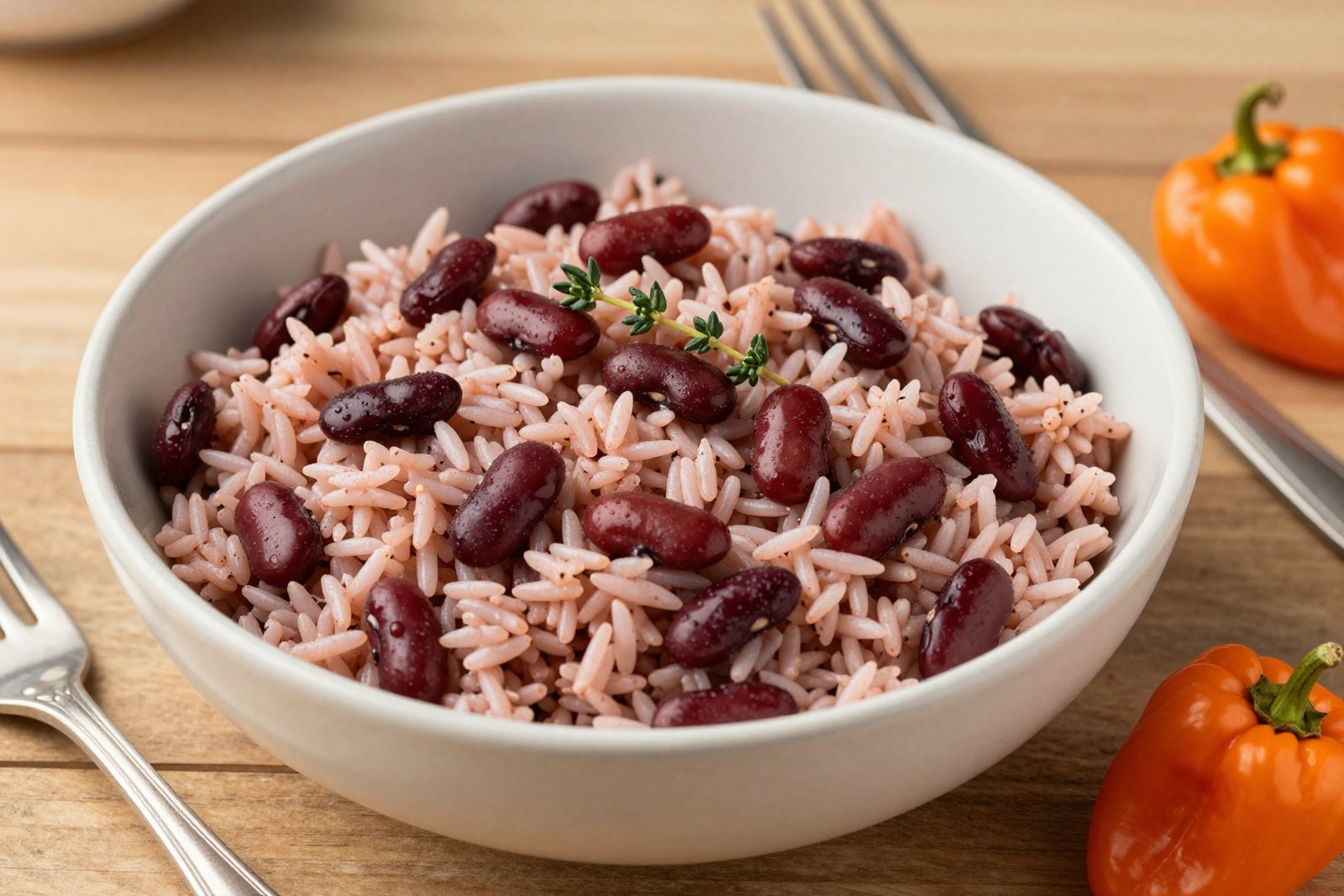
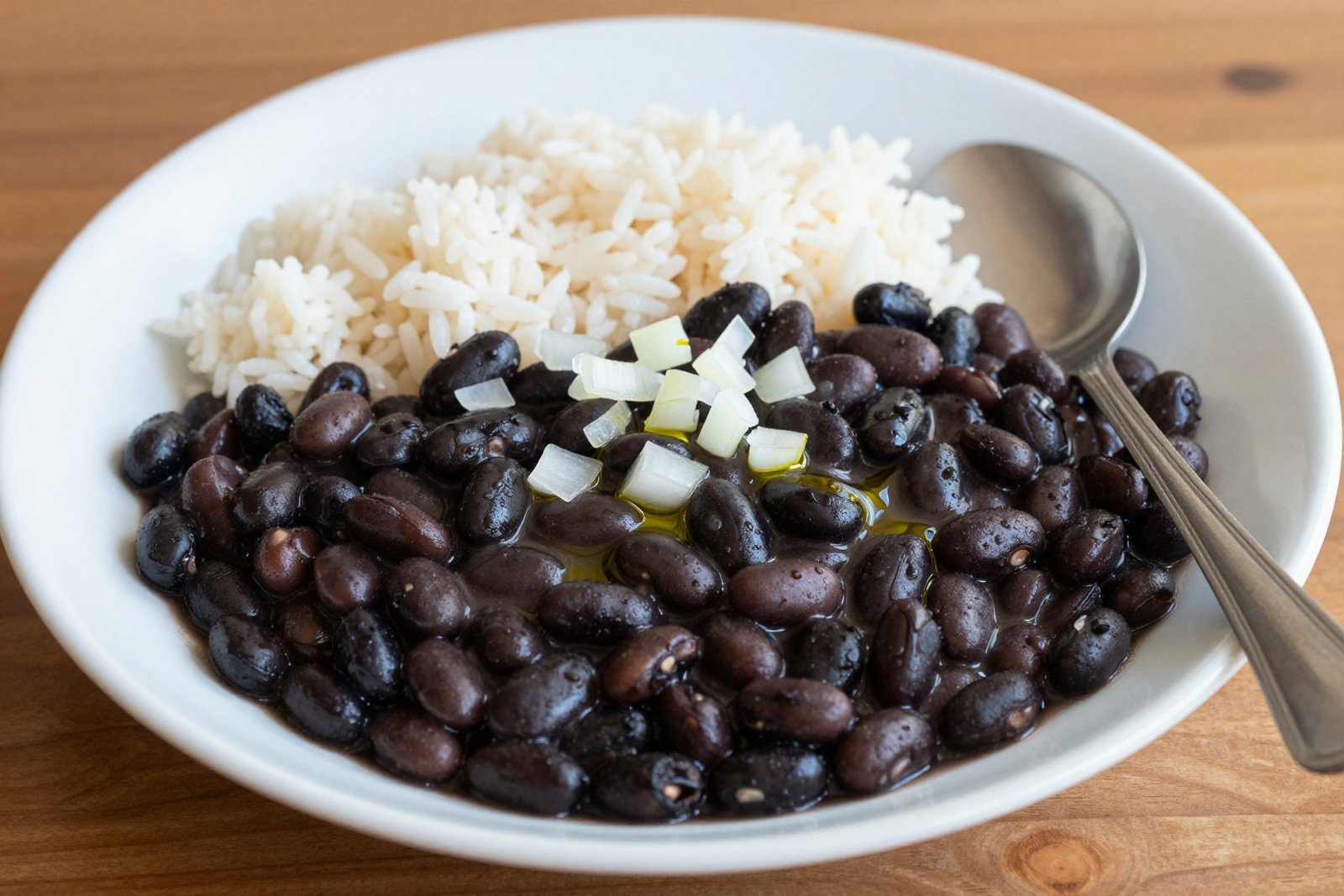
Frijoles negros are a staple of Cuban home cooking, spooned over white rice or served in a bowl beside it. Dried black beans simmer with bay leaf until creamy, then a sofrito of onion, green bell pepper and garlic, cooked in olive oil with cumin and oregano, goes into the pot and the liquid cooks down to a thick, dark gravy. Red wine vinegar and a little sugar go in at the end to sharpen and round out the flavour. Many Cuban cooks add pork; this pot has none, so it is vegan as written. The beans need no soaking, only a slow simmer of about two hours.
By Mei Lin Tan
Published
- Prep Time
- 15 mins
- Cook Time
- 2 hrs 30 mins
- Rest
- 10 mins
- Total Time
- 2 hrs 55 mins
- Servings
- 8 servings
How do you make Cuban Black Beans (Frijoles Negros)?
Boil 450 g dried black beans with 2 bay leaves in 2 litres of water for 10 minutes, then simmer for 1 1/2 to 2 hours, until creamy. Cook onion, green pepper and garlic in olive oil with cumin and oregano, mash in a cup of the beans and stir it into the pot with salt. Simmer for 20-30 minutes until thick, then finish with red wine vinegar and sugar.
- Total time
- 2 hrs 55 mins
- Calories
- 275 per serving
- Protein
- 13 g
- Yield
- 8 servings
- Difficulty
- Easy
- Method
- Simmering
Ingredients
Beans
Sofrito
To finish
Equipment
Large heavy pot or Dutch oven (5 litre or larger) · Colander · Large skillet · Ladle · Wooden spoon
Step-by-Step Instructions
Every step for making cuban black beans (frijoles negros), written out in full.
Sort and rinse the beans
Spread the beans on a tray and pick out any small stones or shrivelled beans. Tip them into a colander and rinse under cold water.
Boil the beans
Put the beans in a large pot with the water and bay leaves. Set the pot over high heat; it needs about 10 minutes to come to a boil. Boil for 10 minutes, skimming off any foam that rises.
Simmer until creamy
Lower the heat until the pot barely bubbles, set the lid on at an angle and simmer for 1 1/2 to 2 hours, stirring now and then. Keep the beans just covered with liquid, adding a little hot water from the kettle if they start to show above the surface. They are ready when a bean crushes easily between your fingers and is creamy right through, with no chalky middle.
Cook the sofrito
While the beans finish simmering, warm the 3 tbsp olive oil in a large skillet set over medium heat. Tip in the onion and green pepper and let them soften for 8-10 minutes, stirring often, until very soft but not browned. Stir in the garlic, cumin and oregano and cook for 1 minute more, until fragrant.
Mash and combine
Ladle about 250 ml (1 cup) of beans, with a little of their liquid, into the skillet and mash them into the sofrito with the back of a spoon. Scrape the contents of the skillet into the pot and stir in the salt and black pepper.
Cook down until thick
Simmer the pot uncovered over medium-low heat for 20-30 minutes, stirring often so the bottom does not catch. The liquid should reduce to a thick, dark gravy that coats the back of a spoon and holds its place on a plate of rice.
Finish and rest
Take the pot off the heat and fish out the bay leaves. Stir in the vinegar, the sugar and the 1 tbsp extra-virgin olive oil, then taste and add more salt or a few drops more vinegar if the beans need it. Let them stand for 10 minutes; they thicken as they cool. Serve over white rice, topped with diced raw onion if you like.
Recipe Tips
- Soaking is optional. Beans soaked in cold water for 8-12 hours and drained are tender after 60-75 minutes of simmering, not 1 1/2 to 2 hours, and they cook a little more evenly. Start them in 1.5 litres (6 cups) of fresh water, because they have already taken up some.
- Old beans are slow. If yours have been in the cupboard for more than a year, expect the simmer to run past 2 hours and keep topping up the water.
- Hold the vinegar back until the beans are tender. Acid added early keeps the skins tough.
- To make them ahead, cook the beans up to 3 days before you need them and refrigerate within 2 hours. They set firm when cold, so reheat them gently with a splash of water, and add the raw onion at the table.
- For a thicker pot, crush a few more spoonfuls of beans and simmer for 5-10 minutes longer. For a looser one, stir in hot water a splash at a time.
Variations
- Canned beans: cook the sofrito in a large pot, then add 3 cans (540 ml / 19 oz each) or 4 cans (400 g / 14 oz each) of black beans with their liquid, 250 ml (1 cup) water and the bay leaves. Mash a cup of the beans in the pot, cut the salt to 1/2 tsp and simmer uncovered for 20-25 minutes, until thick. Finish with the vinegar, sugar and oil. Allow about 45 minutes in total.
- Pressure cooker: put the rinsed, unsoaked beans, 1.5 litres (6 cups) water and the bay leaves in the cooker, filling it no more than half full because beans foam. Cook at high pressure for 30 minutes, then let the pressure drop naturally for 20 minutes. Mash a cup of the beans into the sofrito, stir it in with the salt and pepper and simmer uncovered for 20-30 minutes, until thick.
- With wine: pour 60 ml (1/4 cup) dry white wine into the sofrito after the garlic and let it bubble for 2 minutes before the beans go in. Many Cuban cooks use vino seco, a salted dry cooking wine.
- With pork (not vegan): simmer a smoked ham hock with the beans from the start, then pull the meat off the bone and return it to the pot before the final simmer.
Nutrition (per serving)
| Calories | 275 |
|---|---|
| Protein | 13 g |
| Carbs | 40 g |
| Fat | 7.5 g |
| Saturated fat | 1.1 g |
| Fibre | 9.5 g |
| Sugar | 3 g |
| Sodium | 570 mg |
Estimated from the listed ingredients; values vary by brand.
Related Recipes
Storing & Reheating
- Fridge
- Refrigerate the cooled beans within 2 hours of cooking, in sealed containers, and eat them within 4 days. They set thicker once cold.
- Freezer
- Freeze in portions with some of the gravy for up to 3 months. Fill the containers to about 2 cm below the rim, because the beans expand as they freeze, and defrost them in the fridge overnight.
- Reheat
- Loosen the beans with a few spoonfuls of water and heat them in a saucepan, stirring often, until they bubble and are hot right through, 74°C (165°F).
Cuban Black Beans (Frijoles Negros) FAQs
Do you have to soak black beans before cooking them?
No. Unsoaked black beans cook through in 1 1/2 to 2 hours at a gentle simmer, and their broth stays darker. Soaking them in cold water for 8-12 hours shortens the simmer to about 60-75 minutes and helps older beans cook evenly, so it is worth doing when you will be short of time on the day.
Why are my black beans still hard after two hours?
The usual cause is age: beans stored for a year or more take much longer and sometimes never turn creamy. Hard tap water slows them down too, and so do acidic ingredients such as vinegar, wine or tomato when they go in before the beans are soft. Keep the beans under hot water and keep simmering. If your water is hard, stir in 1/4 tsp baking soda.
Can I make Cuban black beans with canned beans?
Yes. Use 3 cans (540 ml / 19 oz each) or 4 smaller cans (400 g / 14 oz each) of black beans with their liquid in place of the dried beans and the long simmer. Cook the sofrito, add the beans, 250 ml (1 cup) water and the bay leaves, mash some of the beans and simmer for 20-25 minutes until thick, then finish with the vinegar, sugar and olive oil. Start with only 1/2 tsp salt, because canned beans are already salted.
What makes black beans Cuban-style?
Three things set them apart: a base of onion, green bell pepper and garlic softened in olive oil, the seasoning of cumin, oregano and bay leaf, and a finish of vinegar with a little sugar. The beans are cooked down in their own liquid until thick, not drained, and they are eaten with white rice.
What is the difference between frijoles negros and moros y cristianos?
Frijoles negros are stewed black beans, cooked separately and spooned over or beside white rice at the table. Moros y cristianos, often shortened to moros, cooks the rice and the black beans together in one pot with the sofrito, so the rice takes on the dark colour of the beans. The seasonings are much the same.
Disclaimer
- Nutrition information is an estimate based on the listed ingredients. It changes with the brands, portion sizes and swaps you use.
- Read ingredient labels for allergens and for diet claims such as gluten-free or vegan. Products and their ingredients can change.
- Cooking times are a guide, since ovens, air fryers and slow cookers all run differently. Use a food thermometer and cook meat, poultry and fish to the safe internal temperatures in government food safety guidance.
- This recipe is general information, not medical or nutrition advice. If you have an allergy, a health condition or a special diet, check with a qualified health professional.