Trinidadian Doubles (Curried Chickpea Flatbread Sandwiches)
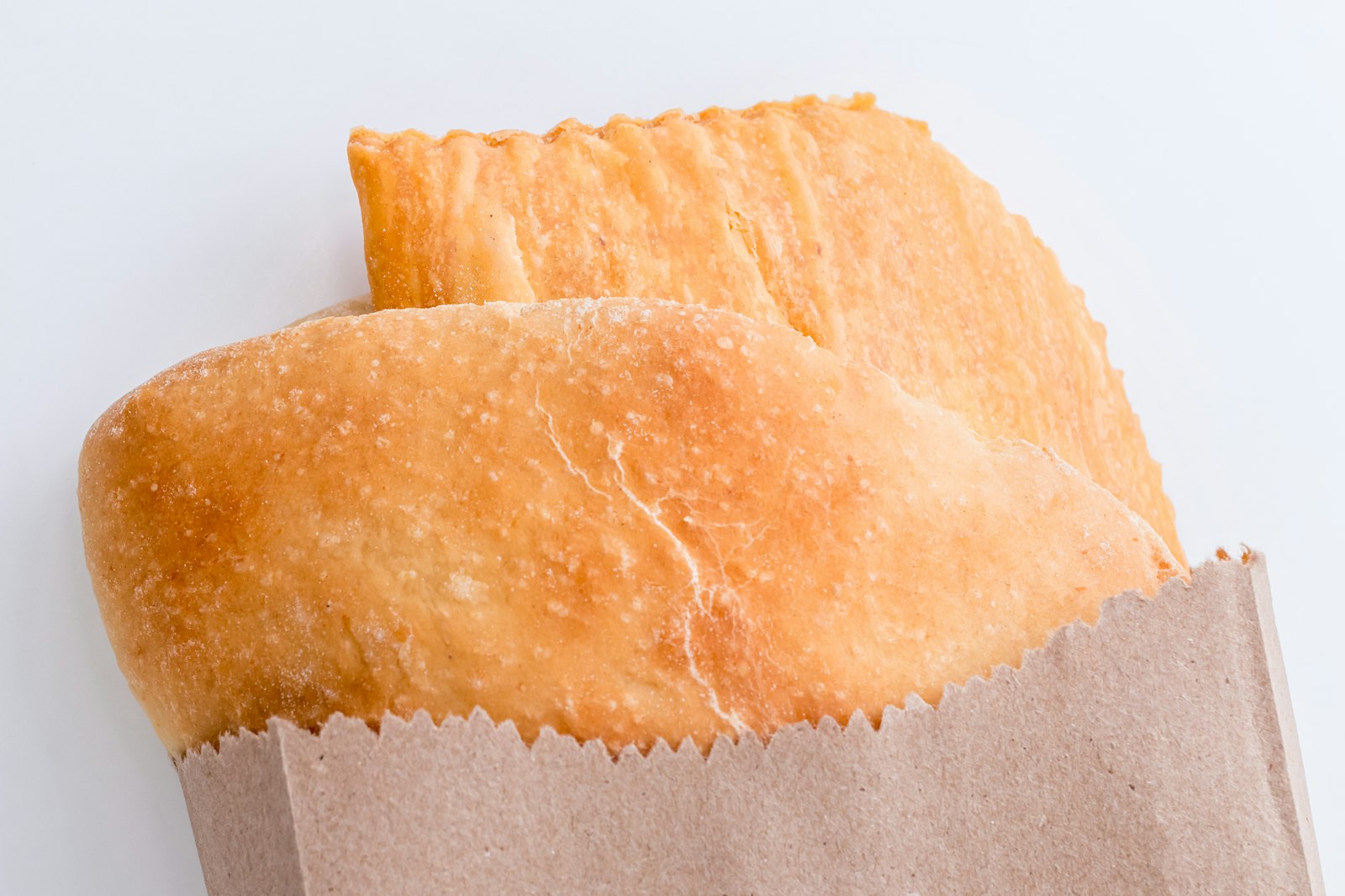
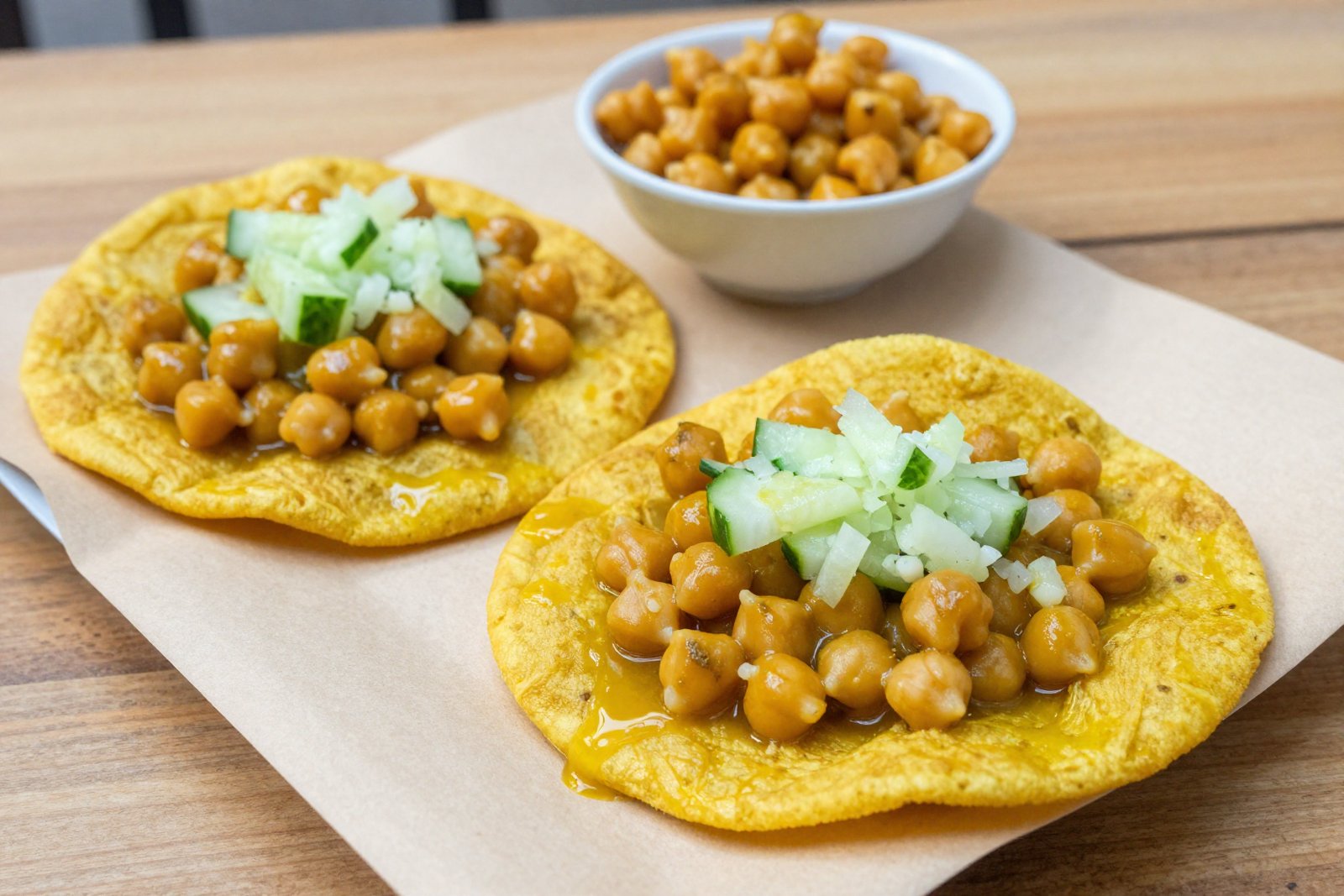
Doubles are Trinidad and Tobago's best-known street food: two soft, turmeric-yellow fried flatbreads called bara, filled with curried chickpeas (channa) and eaten out of hand, often for breakfast. The dish grew out of the country's Indo-Trinidadian cooking, and the name is generally said to come from customers asking vendors to double up the bara. At home the work splits into three parts: a loose, saucy channa made with canned chickpeas, a very soft yeast dough pressed thin with oiled hands, and a quick cucumber chutney. Tamarind sauce, kuchela and pepper sauce are the other usual toppings.
By Mei Lin Tan
Published
- Prep Time
- 25 mins
- Cook Time
- 55 mins
- Hands-off rise
- 30 mins
- Total Time
- 1 hr 50 mins
- Servings
- 8 doubles (16 bara)
How do you make Trinidadian Doubles (Curried Chickpea Flatbread Sandwiches)?
To make Trinidadian doubles, mix a sticky dough of 250 g flour, yeast, turmeric, cumin and 200 ml water and let it rise for 1 hour. Meanwhile, simmer 2 cans of chickpeas with onion, garlic, curry powder, cumin and turmeric for 20-25 minutes until soft. Fry 16 thin rounds for 15-20 seconds per side in 3 cm of oil at 180°C (350°F), then fill pairs with channa and cucumber chutney.
- Total time
- 1 hr 50 mins
- Calories
- 315 per serving
- Protein
- 8 g
- Yield
- 8 doubles (16 bara)
- Difficulty
- Medium
- Method
- Deep frying
Ingredients
Bara
Channa
Cucumber chutney
For frying
To serve
Equipment
Medium saucepan with a lid · Large mixing bowl · Rimmed baking sheet · Heavy pot about 20 cm (8 inches) across and at least 8 cm (3 inches) deep · Deep-fry thermometer · Slotted spoon or spider strainer · Box grater · Bowl lined with paper towel, plus a clean tea towel
Step-by-Step Instructions
Every step for making trinidadian doubles (curried chickpea flatbread sandwiches), written out in full.
Make the bara dough
Whisk the flour, yeast, 1/2 tsp turmeric, 1/2 tsp cumin, the sugar and 1/2 tsp salt in a large bowl. Pour in the lukewarm water and stir with a wooden spoon or your hand for 1-2 minutes, until there is no dry flour left and you have a very soft, sticky dough, closer to a thick batter than a bread dough. Do not add more flour. Cover the bowl and leave it somewhere warm for about 1 hour, until the dough has doubled and is full of bubbles. Cook the channa and make the chutney while it rises.
Cook the curry base
As soon as the dough is covered, start the channa. Stir the curry powder, 1 tsp cumin and 1/2 tsp turmeric into 60 ml (1/4 cup) of the channa water to make a loose paste. Heat the 2 tbsp oil for the channa in a medium saucepan over medium heat and cook the onion for 4-5 minutes, stirring, until soft and translucent. Add the minced garlic and cook for 30 seconds. Scrape in the curry paste and cook for 2 minutes, stirring all the time, until it darkens and thickens and the oil begins to separate at the edges.
Simmer the channa
Add the chickpeas and stir for 1 minute to coat them in the paste. Pour in the remaining 440 ml water, add the 3/4 tsp salt and the pepper and bring to a boil. Lower the heat, partly cover and simmer for 20-25 minutes, until a chickpea crushes easily between two fingers. Mash about a quarter of the chickpeas against the side of the pan so the sauce thickens; it should be loose and spoonable, not dry. Stir in the 2 tbsp culantro or cilantro and taste for salt. Cover the pan and take it off the heat. It sits there for less than 1 hour while the dough finishes rising and the bara are fried, and it is reheated before serving. If you are making the channa ahead, cool it and refrigerate it within 2 hours, for up to 3 days.
Make the cucumber chutney
While the channa simmers, coarsely grate the cucumber and squeeze it lightly over the sink to get rid of the excess water. Mix it with the grated garlic, 1 tbsp culantro or cilantro, the lime juice and 1/4 tsp salt. Keep it in the fridge until you are ready to serve.
Portion and rest the dough
Rub some of the 2 tbsp oil over a rimmed baking sheet and your hands. Knock the air out of the dough and pinch off 16 equal pieces, each about the size of a walnut (roughly 28 g). Shape each loosely into a ball, set them on the oiled sheet with space between them, cover with a damp tea towel and rest for 15 minutes.
Heat the oil
While the dough rests, pour the frying oil into a heavy pot about 20 cm (8 inches) across to a depth of 3 cm (1 1/4 inches); the pot must be no more than half full. Heat it over medium heat until a deep-fry thermometer reads 180°C (350°F), about 8 minutes, then lower the burner to hold it there until the dough has rested. Line a bowl with paper towel, keep a clean tea towel beside it for covering the bara, and do not walk away from the oil once it is hot.
Shape and fry the bara
Oil your palms and fingertips again. Use oil, never water, because water makes hot oil spit. Flatten a ball of dough between your palms, then stretch it gently into a thin round about 10 cm (4 inches) across, almost see-through in the centre. Lay it in the oil away from you. Fry for 15-20 seconds per side, turning once with a slotted spoon, until it puffs and turns a deeper yellow with a few pale gold spots. It should stay soft, not crisp. Lift it into the lined bowl and cover with the towel so the steam keeps the bara soft. Repeat with the rest, one or two at a time, holding the oil at 180°C (350°F). Frying all 16 takes about 15 minutes.
Fill and serve
Reheat the channa over medium heat until it is steaming hot, adding a splash of water if it has thickened. For each one, overlap two bara on a plate or a square of parchment, spoon about 3 heaped tbsp of channa over them and top with cucumber chutney, plus tamarind sauce, kuchela and pepper sauce if you have them. Fold it up and eat it straight away.
Recipe Tips
- The bara dough is meant to be sticky. Oil on your hands and the tray is what makes it workable; extra flour gives tough, bready bara.
- Bara cook in seconds and should come out soft and pale, not browned or crisp. Keeping them stacked and covered while you fry the rest lets them steam, which is what makes them pliable enough to fold.
- Check the thermometer between bara. Below 180°C (350°F) the dough soaks up oil and turns greasy; much above it and the bara brown before they puff. The 3 cm of oil should fill no more than half the pot.
- Channa for doubles is looser than a curry you would serve with rice. It thickens as it stands, so stir in a little hot water when you reheat it.
- The channa and the chutney are made while the dough rises, so the 1 hour rise and the 15 minute rest add only about 30 minutes of waiting. You can also make the channa up to 3 days ahead and keep it in the fridge, which leaves the dough, the chutney and the frying for the day.
Variations
- Dried chickpeas: soak 200 g (1 cup) overnight, drain, cover with fresh water and simmer for 1-1 1/2 hours until completely soft, then use them in place of the canned chickpeas.
- Heat in the channa: add 1/2 Scotch bonnet or habanero, seeded and finely chopped, with the garlic. Wear gloves to handle it.
- Airier bara: whisk 1/2 tsp baking powder into the flour, as many home recipes do, for slightly thicker, puffier bara.
Nutrition (per serving)
| Calories | 315 |
|---|---|
| Protein | 8 g |
| Carbs | 41 g |
| Fat | 13.5 g |
| Saturated fat | 1.2 g |
| Fibre | 5.5 g |
| Sugar | 2.5 g |
| Sodium | 560 mg |
Estimated from the listed ingredients; values vary by brand.
Related Recipes
Storing & Reheating
- Fridge
- Refrigerate the channa within 2 hours in an airtight container for up to 3 days. The cucumber chutney keeps for 1 day in the fridge before it turns watery. Bara are best the day they are fried; wrap any left over and refrigerate them for up to 2 days.
- Freezer
- Freeze the channa in an airtight container for up to 3 months and thaw it overnight in the fridge. The bara are better made fresh than frozen.
- Reheat
- Reheat the channa in a saucepan over medium heat, stirring in a splash of water, until steaming hot, 74°C (165°F). Warm leftover bara wrapped in foil in a 150°C (300°F) oven for 8-10 minutes, or in the microwave under a damp paper towel for 15-20 seconds.
Trinidadian Doubles (Curried Chickpea Flatbread Sandwiches) FAQs
What are Trinidadian doubles made of?
Doubles are two pieces of bara, a soft fried flatbread made from flour, yeast, turmeric and cumin, filled with channa, which is chickpeas simmered with curry powder, garlic and onion. Each one is finished with toppings chosen by the eater: cucumber chutney, tamarind sauce, kuchela (a spiced green mango relish) and pepper sauce are the common ones.
Why are they called doubles?
The usual account is that the snack was first sold in Trinidad in the 1930s as curried chickpeas on a single bara, and that customers began asking vendors to double the bara. The order became known as a doubles and the name stuck. In Trinidad a single one is still called a doubles.
Why are my bara tough instead of soft?
Tough bara usually come from a dough with too much flour, rounds that were left too thick, or frying for too long. Keep the dough sticky and handle it with oiled hands, stretch each round until it is nearly see-through in the middle, and fry for only 15-20 seconds per side at 180°C (350°F). Stack the hot bara and cover them so they steam and stay pliable.
Can I make doubles ahead of time?
The channa can be made up to 3 days ahead and kept in the fridge; reheat it until steaming hot with a splash of water. The cucumber chutney can be mixed a few hours ahead. The bara are best fried just before eating, although the dough can rise slowly in the fridge overnight: cover it, refrigerate for up to 12 hours and let it stand at room temperature for 30 minutes before you portion it.
Are doubles vegan?
Yes, as written. The bara contain no milk, butter or egg, the channa is cooked in oil and the cucumber chutney is only cucumber, garlic, herbs, lime and salt. Doubles are not gluten-free, because the bara are made with wheat flour. If you buy toppings such as kuchela or pepper sauce, check their labels.
Disclaimer
- Nutrition information is an estimate based on the listed ingredients. It changes with the brands, portion sizes and swaps you use.
- Read ingredient labels for allergens and for diet claims such as gluten-free or vegan. Products and their ingredients can change.
- Cooking times are a guide, since ovens, air fryers and slow cookers all run differently. Use a food thermometer and cook meat, poultry and fish to the safe internal temperatures in government food safety guidance.
- This recipe is general information, not medical or nutrition advice. If you have an allergy, a health condition or a special diet, check with a qualified health professional.