Som Tam (Thai Green Papaya Salad)
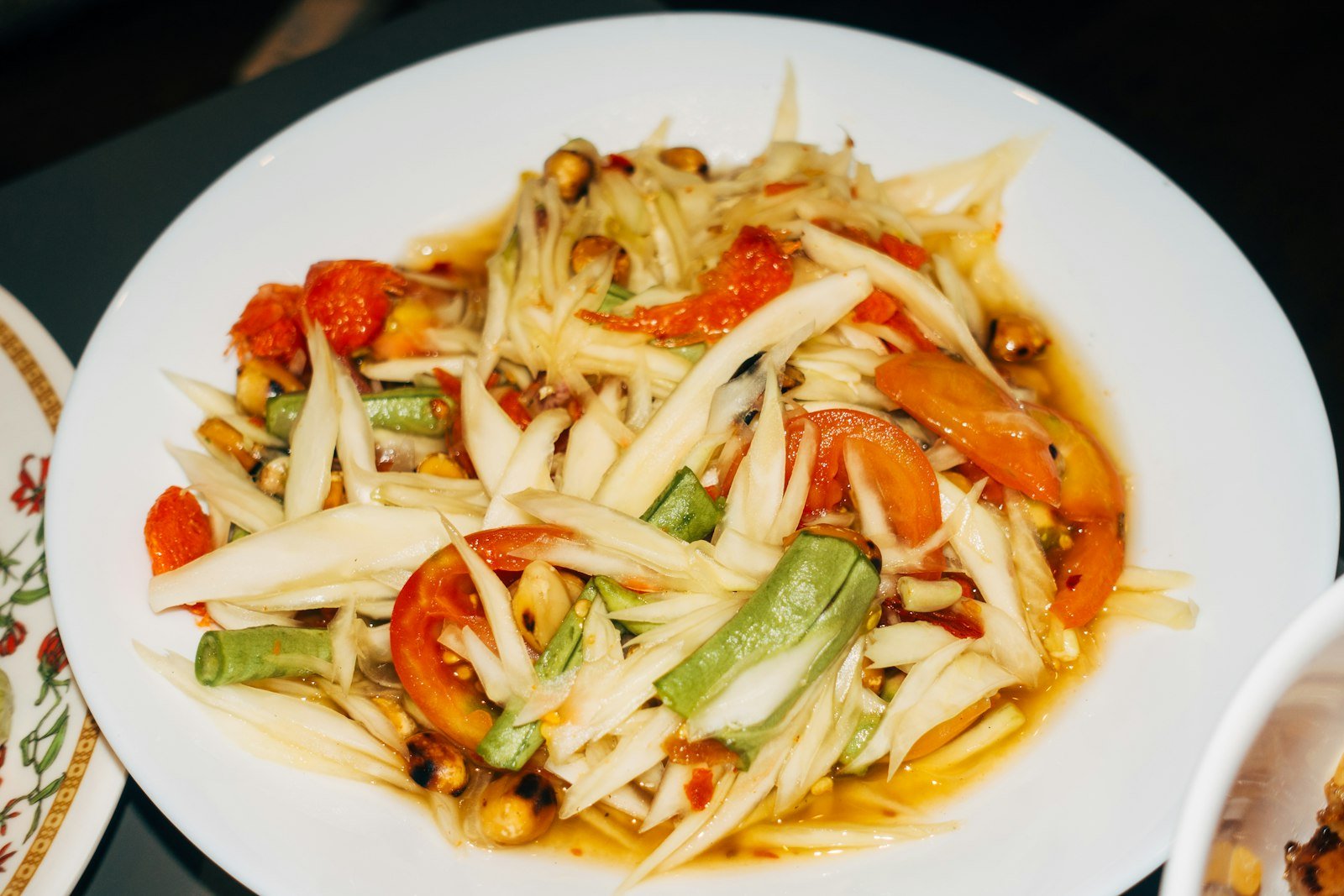
Som tam joins the Thai words for sour (som) and pound (tam), a fair description of a salad made in a mortar: garlic and chillies are crushed first, then lime, fish sauce and palm sugar, and finally long shreds of unripe papaya are bruised and tossed through. Papaya salad is closely tied to Laos and the Isan region of northeastern Thailand; the version here is som tam Thai (also written som tum), the sweeter central style with dried shrimp and roasted peanuts. At home, a julienne peeler stands in for the knife-and-shave method used at markets, and a rolling pin in a big bowl can do the pounding.
By Mei Lin Tan
Published
- Prep Time
- 20 mins
- Cook Time
- No cook
- Total Time
- 20 mins
- Servings
- 4 servings
How do you make Som Tam (Thai Green Papaya Salad)?
Pound 2 garlic cloves, 1-4 bird's eye chillies and 2 tbsp dried shrimp in a large mortar, then mash in 25 g palm sugar, 3 tbsp fish sauce and 4 tbsp lime juice. Bruise 100 g cut long beans and 200 g halved cherry tomatoes, then pound and toss 480 g shredded green papaya through for about 1 minute. Add 40 g roasted peanuts and serve straight away.
- Total time
- 20 mins
- Calories
- 175 per serving
- Protein
- 7.5 g
- Yield
- 4 servings
- Difficulty
- Easy
- Method
- No-cook
Ingredients
Dressing
Salad
To serve
Equipment
Large mortar and pestle (clay or wood is best), or a large sturdy bowl and a rolling pin · Julienne peeler, mandoline with a julienne blade, or the coarse side of a box grater · Vegetable peeler · Large spoon
Step-by-Step Instructions
Every step for making som tam (thai green papaya salad), written out in full.
Shred the papaya
Peel the papaya with a vegetable peeler, cut it in half lengthwise and scoop out the white seeds. Rinse off any milky sap; it can irritate skin, so wear gloves if yours is sensitive. Run a julienne peeler down the cut sides, or use a mandoline with a julienne blade or the coarse side of a box grater, to make long, thin strands. Weigh out 480 g (about 6 loosely packed cups) and keep any extra, undressed, for another day.
Cut the beans and tomatoes
Trim the long beans and cut them into 4 cm lengths. Halve the cherry tomatoes (or cut small tomatoes into wedges). Squeeze the limes.
Pound the garlic and chillies
Put the garlic and chillies in a large mortar and pound for about 30 seconds, until broken into a coarse, wet paste. One bird's eye chilli makes the whole salad mildly hot, two make it properly spicy and four make it very hot; for a mild salad use one chilli with its seeds scraped out. Add the dried shrimp and pound a few times to break them up. Wash your hands after handling the chillies.
Mix the dressing
Add the palm sugar and mash it into the paste with the pestle, then pour in the fish sauce and lime juice and stir with a spoon until the sugar has dissolved, about 1 minute.
Bruise the beans and tomatoes
Add the long beans and pound them 5 or 6 times, just enough to crack them so they take up the dressing. Add the tomatoes and press them lightly with the pestle so they release some juice without turning to pulp.
Pound and toss the papaya
Add the shredded papaya, in two batches if your mortar is small. Pound lightly with the pestle in one hand while you turn the salad over with a large spoon in the other, for about 1 minute, until the strands soften slightly at the edges and are coated in dressing. The aim is to bruise, not smash: the papaya should stay crunchy. Without a large mortar, do all of this in a big, sturdy bowl, using the end of a rolling pin to bruise and a spoon to toss.
Season and serve
Taste a strand: it should be sour and salty first, then sweet, then hot. Add a little more lime, fish sauce or sugar to suit you. Toss in the peanuts, pile the salad on a plate with the juices from the mortar, and serve straight away with cabbage wedges or lettuce leaves and sticky rice if you like.
Recipe Tips
- Green papaya is simply unripe papaya: hard, with dark green skin, pale greenish-white flesh and white seeds. Ripe orange papaya is too soft and sweet and turns to mush in the mortar. Asian grocers sell whole green papayas and sometimes ready-shredded packs.
- No green papaya? Shred green mango (it is tarter, so start with less lime), kohlrabi, or a mix of carrot and seeded cucumber. These are substitutes and the salad will taste different, but the dressing and method stay the same.
- For extra-crisp strands, soak the shredded papaya in iced water for 10 minutes, then drain and spin it completely dry before it goes in the mortar.
- Palm sugar sets hard. Shave it with a knife or grate it so it dissolves quickly in the lime and fish sauce.
- For a gluten-free salad, check the fish sauce label; a few brands contain wheat.
Variations
- Som tam Lao (tam pu pla ra when it includes crab): the stronger northeastern and Lao style is seasoned with pla ra, a fermented fish sauce sold in bottles at Asian grocers, and often salted crab. It is saltier and more pungent, and usually leaves out the peanuts and most of the sugar.
- Vegan: leave out the dried shrimp, use a vegan fish sauce or 2 tbsp light soy sauce (tamari for gluten-free) with a pinch of salt, and add an extra spoonful of peanuts.
- Green mango som tam: use 480 g shredded green mango in place of the papaya and start with 3 tbsp lime juice, adding more after tasting.
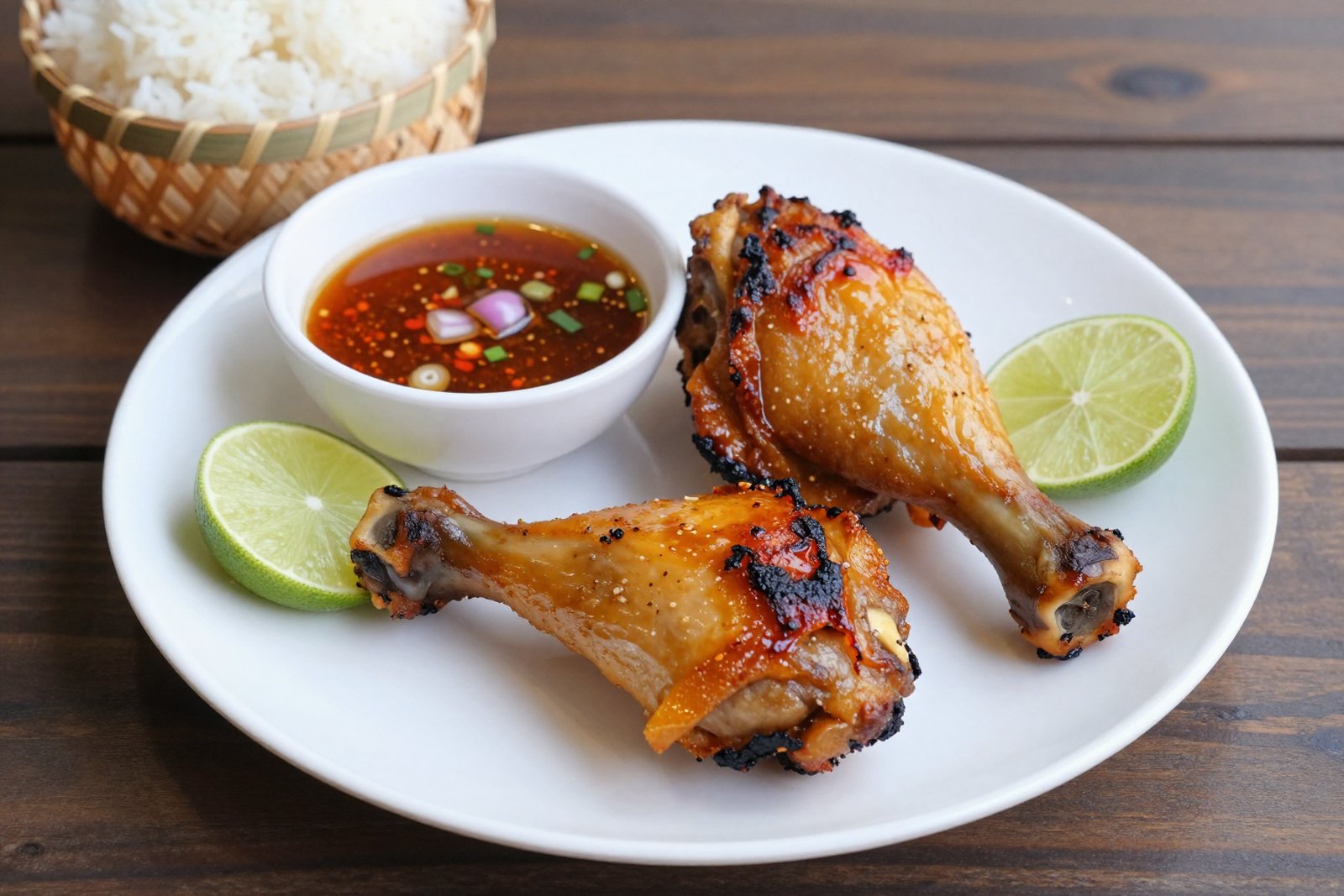
- As a meal: serve with grilled chicken (gai yang) and sticky rice, the usual Isan pairing.
Nutrition (per serving)
| Calories | 175 |
|---|---|
| Protein | 7.5 g |
| Carbs | 25.5 g |
| Fat | 5.5 g |
| Saturated fat | 0.8 g |
| Fibre | 4.5 g |
| Sugar | 12 g |
| Sodium | 1190 mg |
Estimated from the listed ingredients; values vary by brand.
Related Recipes
Storing & Reheating
- Fridge
- Som tam does not keep once dressed: the papaya goes limp and watery within an hour or so, so dress only what you will eat. Undressed shredded papaya keeps for 3-4 days in the fridge in a bag or container lined with paper towel, and the fish sauce, lime and sugar dressing keeps for 2 days in a sealed jar. Refrigerate any leftover dressed salad within 2 hours and eat it the next day; it will be soft but still tasty.
Som Tam (Thai Green Papaya Salad) FAQs
Can you use ripe papaya for som tam?
No. Som tam needs unripe green papaya, which is firm, crunchy and only faintly sweet. Ripe orange papaya is soft and sugary and breaks down as soon as it is pounded. If you cannot find green papaya, green mango, kohlrabi or carrot with cucumber make a better swap than ripe fruit.
How do you shred green papaya without a special tool?
A julienne peeler is the easiest tool and is inexpensive. Without one, use the coarse side of a box grater, or the traditional method: hold the peeled half in one hand, make many shallow lengthwise cuts with a large knife, then shave the cut surface off in thin strips.
Can I make som tam without a mortar and pestle?
Yes. Crush the garlic and chillies finely with a knife, mix the dressing in a large sturdy bowl, then bruise the beans, tomatoes and papaya in the bowl with the end of a rolling pin while turning everything with a spoon. The point is to bruise the papaya lightly so it absorbs the dressing.
How spicy is som tam?
As spicy as you make it. Market versions can contain ten chillies or more, but at home one bird's eye chilli gives the salad a mild heat, two make it spicy and four make it very hot. Scraping out the seeds or using half a serrano tames it further.
What is the difference between som tam Thai and som tam Lao?
Som tam Thai is the central Thai style, balanced with palm sugar and finished with dried shrimp and peanuts. Som tam Lao (tam pu pla ra when salted crab goes in) is the Lao and Isan style. It uses pla ra, a pungent fermented fish sauce, and is saltier and funkier, usually without peanuts.
Disclaimer
- Nutrition information is an estimate based on the listed ingredients. It changes with the brands, portion sizes and swaps you use.
- Read ingredient labels for allergens and for diet claims such as gluten-free or vegan. Products and their ingredients can change.
- Cooking times are a guide, since ovens, air fryers and slow cookers all run differently. Use a food thermometer and cook meat, poultry and fish to the safe internal temperatures in government food safety guidance.
- This recipe is general information, not medical or nutrition advice. If you have an allergy, a health condition or a special diet, check with a qualified health professional.