Tom Yum Soup (Tom Yum Goong)
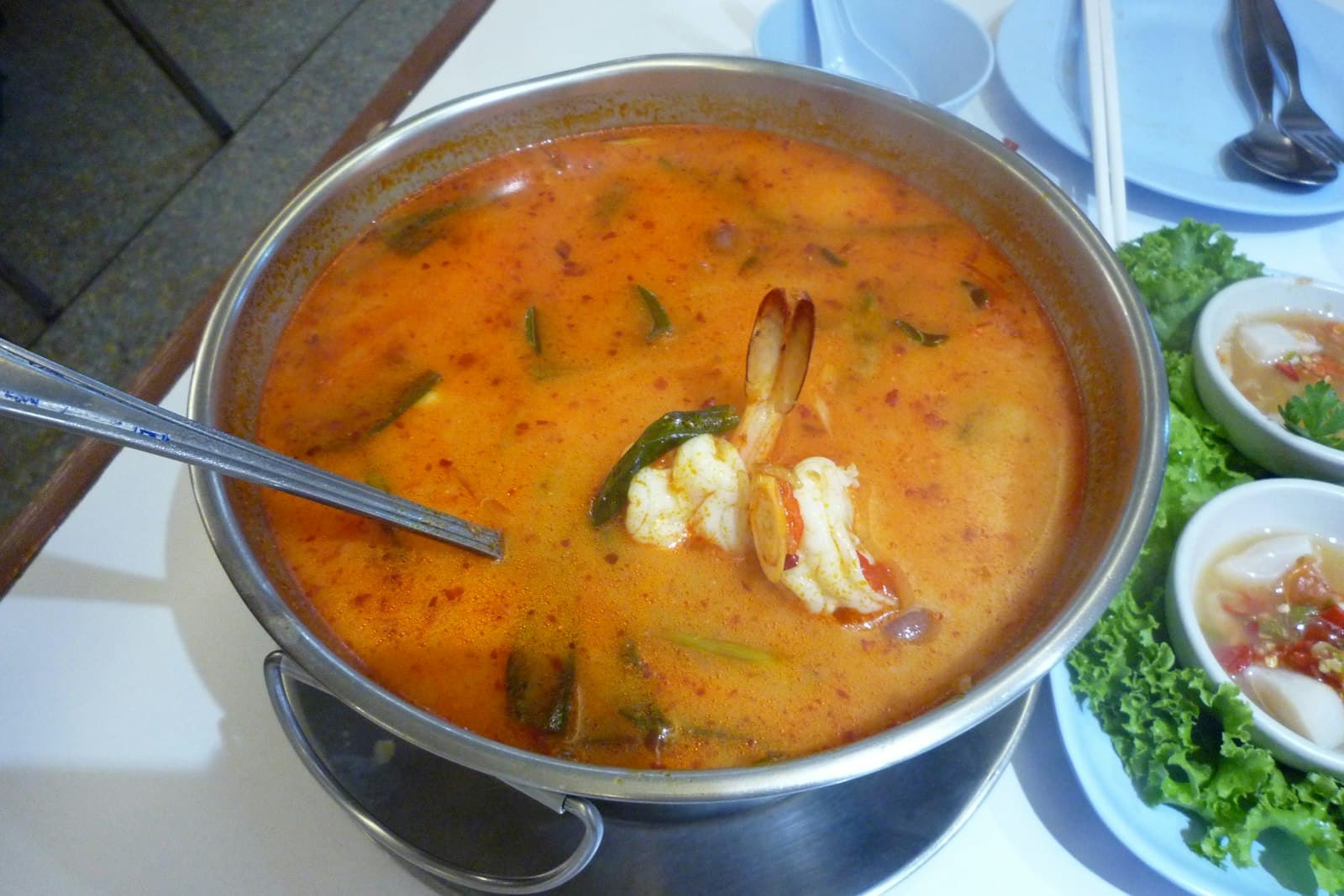
Tom yum goong is a Thai hot and sour soup of shrimp in a quick broth infused with lemongrass, galangal and makrut lime leaves, seasoned with fish sauce and lime juice and made hot with fresh chillies. The clear version, tom yum nam sai, is light and sharp. The creamy version, tom yum nam khon, adds evaporated milk or coconut milk and usually a spoonful of Thai chilli paste for a richer orange broth. This recipe makes either one from the same base in about 40 minutes.
By Mei Lin Tan
Published
- Prep Time
- 20 mins
- Cook Time
- 20 mins
- Total Time
- 40 mins
- Servings
- 4 servings
How do you make Tom Yum Soup (Tom Yum Goong)?
Simmer the shrimp shells in 1.25 L water for 10 minutes and strain. Add bruised lemongrass, sliced galangal, torn makrut lime leaves and chillies and simmer for 5 minutes, then add mushrooms, fish sauce and chilli paste. Cook 400 g peeled shrimp for 1-2 minutes, just until pink and opaque. Off the heat, stir in lime juice. For the creamy version, add evaporated milk before the shrimp.
- Total time
- 40 mins
- Calories
- 130 per serving
- Protein
- 23 g
- Yield
- 4 servings
- Difficulty
- Easy
- Method
- Simmering
Ingredients
Broth
Soup
Creamy version (nam khon)
To serve
Equipment
Medium pot (at least 3 L) · Fine-mesh sieve · Heavy knife or pestle · Ladle
Quick Directions
Make a quick shrimp stock
Simmer the shrimp shells in the water for 10 minutes, then strain.
Prepare the aromatics
Bruise and cut the lemongrass, slice the galangal, tear the lime leaves and crush the chillies.
Infuse the broth
Simmer the lemongrass, galangal, lime leaves and chillies in the stock for 5 minutes.
Add the mushrooms and season
Simmer the mushrooms, then stir in the fish sauce, sugar, chilli paste and milk, if using.
Cook the shrimp
Simmer the shrimp for 1-2 minutes, just until pink and opaque, then take the pot off the heat.
Add the lime juice
Stir in the lime juice off the heat and adjust the seasoning.
Serve
Ladle the soup into bowls so everyone gets shrimp and mushrooms, and scatter with coriander.
Step-by-Step Instructions
Follow these detailed steps to make the perfect tom yum soup (tom yum goong).
Make a quick shrimp stock
Peel and devein the shrimp, leaving the tails on if you like, and keep the heads and shells. Refrigerate the shrimp while you make the stock. Put the shells and heads in the pot with the water, bring to a boil, then lower the heat and simmer for 10 minutes. Strain into a bowl, pressing on the shells, and discard them. You should have about 1 L of stock; top it up with water if needed.
Prepare the aromatics
While the stock simmers, trim the root end and the dry top third from each lemongrass stalk and peel away the tough outer layer. Bruise the stalks by bashing them along their length with the back of a heavy knife or a pestle, then cut them into 5 cm lengths. Slice the galangal into thin coins. Tear the lime leaves in half and pull out the tough centre rib. Lightly crush the chillies so they release their heat.
Infuse the broth
Pour the stock back into the rinsed pot and bring it to a boil over medium-high heat. Add the lemongrass, galangal, lime leaves and chillies, lower the heat and simmer for 5 minutes, until the broth smells strongly of lemongrass and lime.
Add the mushrooms and season
Add the mushrooms and tomato and simmer for 2-3 minutes, until the mushrooms soften. Stir in the fish sauce, sugar and nam prik pao, if using, until dissolved. For creamy tom yum (nam khon), pour in the evaporated milk or coconut milk now and bring the soup back to a gentle simmer.
Cook the shrimp
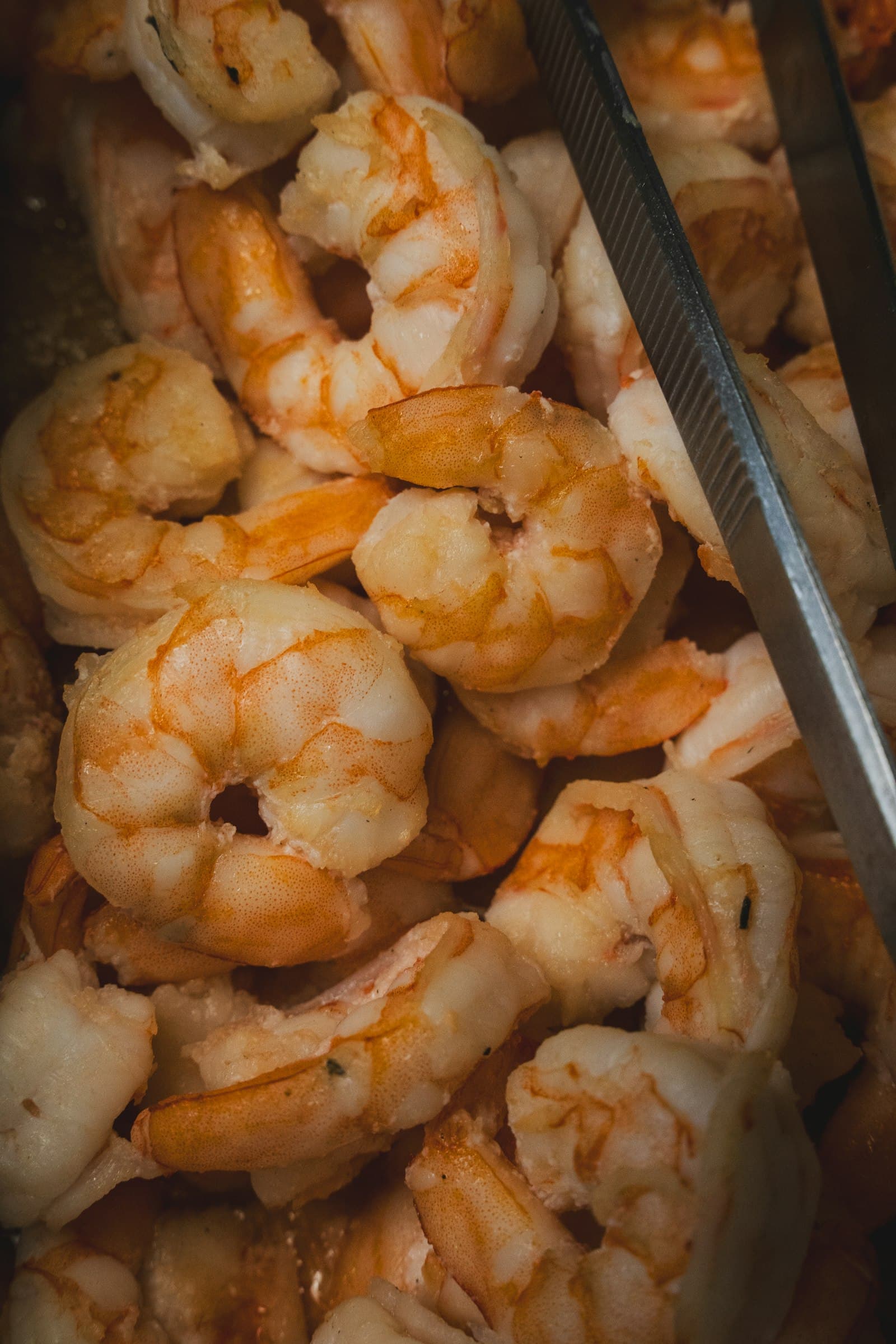
Add the shrimp and simmer for 1-2 minutes, just until they turn pink and opaque all the way through. Cut one open to check. Take the pot off the heat straight away, because the shrimp keep cooking in the hot broth and turn rubbery if overcooked.
Add the lime juice
Off the heat, stir in 4 tbsp of the lime juice. Taste: the soup should be sour and salty first, then hot, with only a hint of sweetness. Add more lime juice or fish sauce, a little at a time, until the balance suits you. Adding the lime juice off the heat keeps it fresh, because boiling dulls its flavour and can make it taste bitter.
Serve
Ladle the soup into bowls so everyone gets shrimp and mushrooms, and scatter with coriander. Serve straight away, with jasmine rice on the side if you like. The lemongrass, galangal and lime leaves flavour the broth but are too tough and fibrous to eat, so push them aside as you go, along with the whole chillies unless you want the extra heat.
Recipe Tips
- Buy shell-on shrimp if you can. Their heads and shells make a quick stock with far more flavour than plain water.
- Galangal, lemongrass and makrut lime leaves all freeze well. Buy a pack at an Asian grocery store and keep them in the freezer, then use them straight from frozen.
- Fish sauce and nam prik pao vary in saltiness from brand to brand, so start with the smaller amount and adjust at the end.
- For a gluten-free soup, check the labels on the fish sauce, the chilli paste and any stock you use, since a few brands contain wheat.
Variations
- Tom yum gai: replace the shrimp with 400 g thinly sliced boneless chicken thighs and simmer for 5-6 minutes, until the chicken reaches 74°C (165°F). Use water or chicken stock for the broth.
- Tom yum talay: use a mix of shrimp, squid rings and chunks of firm white fish. Add the fish first and simmer until it reaches 70°C (158°F), adding the shrimp and squid for the last 1-2 minutes.
- Vegetarian: use vegetable stock, double the mushrooms, add cubes of firm tofu, and season with light soy sauce or a vegan fish sauce. Check that the chilli paste has no shrimp or fish sauce.
Nutrition (per serving)
| Calories | 130 |
|---|---|
| Protein | 23 g |
| Carbs | 8 g |
| Fat | 1 g |
| Saturated fat | 0.2 g |
| Fibre | 1.5 g |
| Sugar | 3 g |
| Sodium | 1220 mg |
Estimated from the listed ingredients; values vary by brand.
Related Recipes
Storing & Reheating
- Fridge
- Refrigerate within 2 hours in an airtight container for up to 2 days. The shrimp firm up when reheated, so the soup is at its best fresh.
- Freezer
- Freeze the clear broth, without the shrimp, mushrooms or milk, for up to 3 months. Thaw overnight in the fridge.
- Reheat
- Reheat gently over medium heat until steaming, without boiling, so the shrimp don't toughen. For frozen broth, bring it to a simmer and cook fresh shrimp in it, then add fresh lime juice.
Tom Yum Soup (Tom Yum Goong) FAQs
What is the difference between clear and creamy tom yum?
Clear tom yum (tom yum nam sai) is a light broth of stock, aromatics, fish sauce and lime. Creamy tom yum (tom yum nam khon) adds evaporated milk or coconut milk, and usually Thai chilli paste, for a richer, orange broth with a softer sourness. Both start from the same base, and the nutrition figures on this page are for the clear version.
What can I use instead of galangal and makrut lime leaves?
Frozen galangal and frozen lime leaves are the closest swaps, and dried galangal slices also work. If you can't find galangal at all, use the same amount of fresh ginger; the soup tastes warmer and less citrusy, but still good. For lime leaves, add the zest of 1 lime, peeled in wide strips with no white pith, along with the lemongrass.
Do you eat the lemongrass and galangal in tom yum?
Usually not. The lemongrass, galangal and lime leaves are left in large pieces to flavour the broth, but they are too woody and fibrous to chew comfortably. Eat around them and leave them in the bowl. Whole chillies are optional too, depending on how much heat you want.
What is nam prik pao, and do I need it?
Nam prik pao is a Thai roasted chilli paste cooked in oil, often with shallots, garlic, dried shrimp and palm sugar. It adds a sweet, smoky depth and a deep orange colour, and it is common in the creamy version. The soup still tastes good without it; add an extra chilli if you want more heat.
Is tom yum soup gluten-free?
This tom yum is gluten-free: shrimp, aromatics, mushrooms, fish sauce and lime contain no gluten. Some fish sauces, chilli pastes and stocks include wheat, so check the labels if you need to avoid gluten.
Disclaimer
- Nutrition information is an estimate based on the listed ingredients. It changes with the brands, portion sizes and swaps you use.
- Read ingredient labels for allergens and for diet claims such as gluten-free or vegan. Products and their ingredients can change.
- Cooking times are a guide, since ovens, air fryers and slow cookers all run differently. Use a food thermometer and cook meat, poultry and fish to the safe internal temperatures in government food safety guidance.
- This recipe is general information, not medical or nutrition advice. If you have an allergy, a health condition or a special diet, check with a qualified health professional.