Sundubu Jjigae (Korean Soft Tofu Stew)
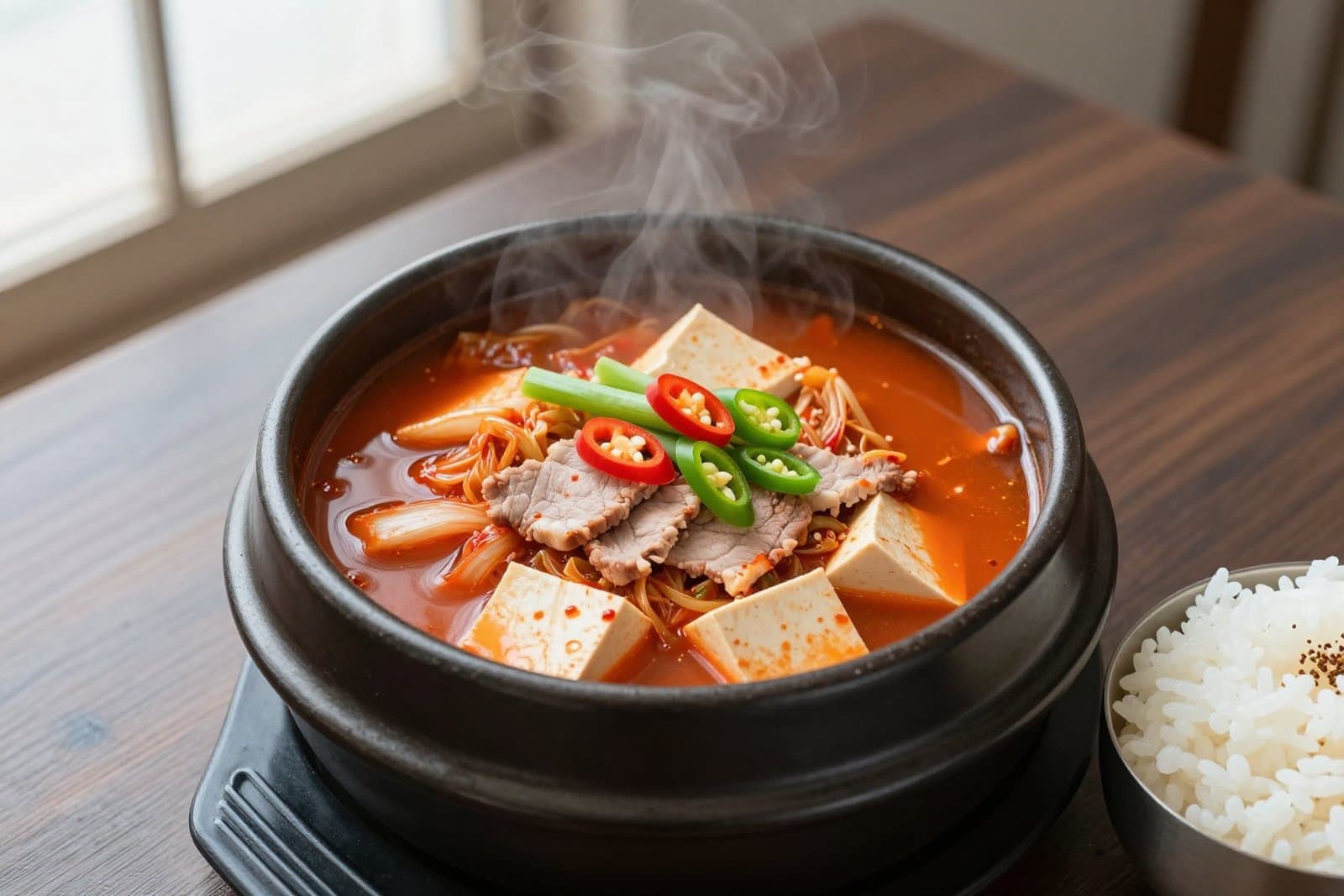
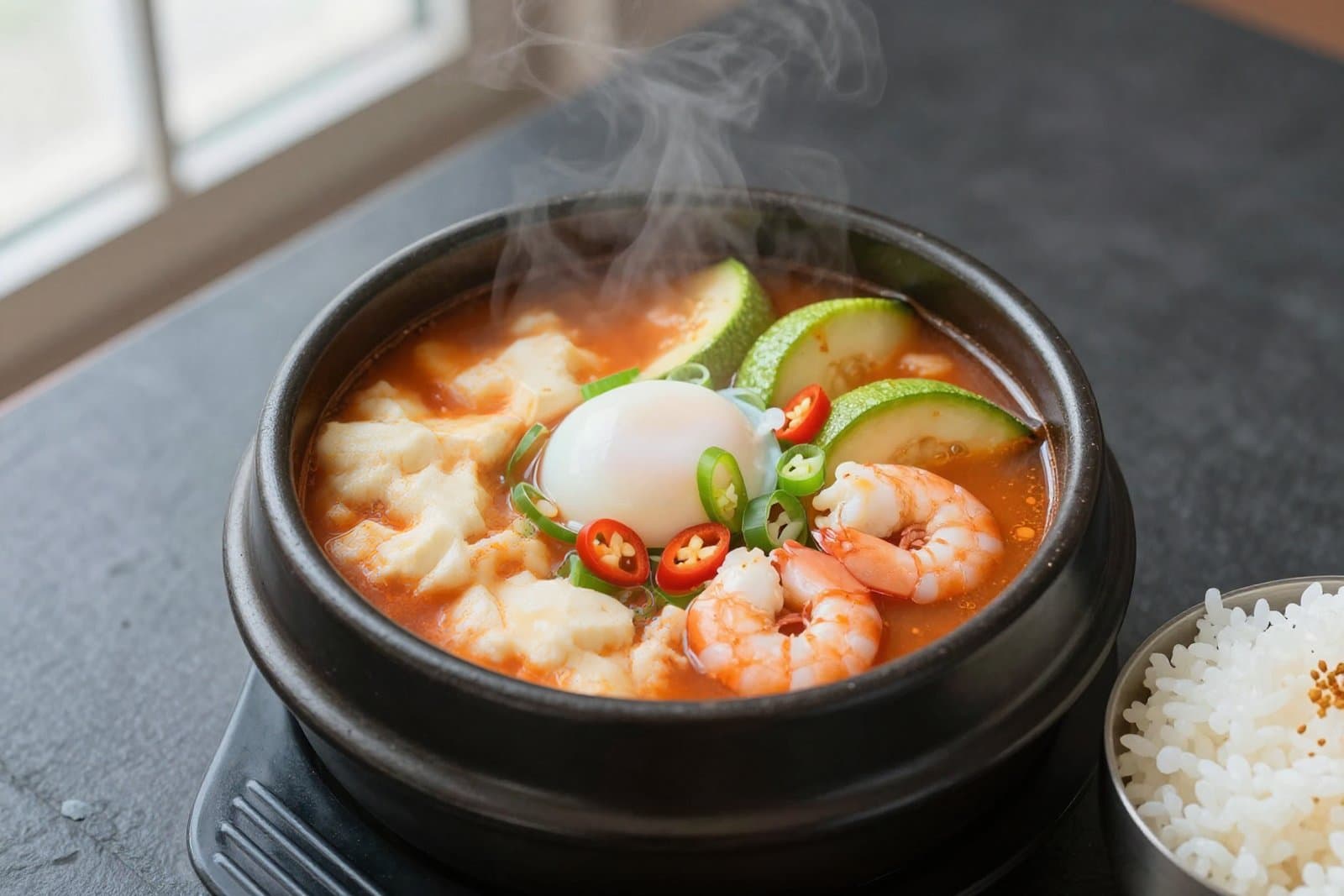
Sundubu jjigae is a spicy red stew built around sundubu, Korean extra-soft tofu: unpressed curds so tender they break apart under a spoon. The broth starts with a quick chili oil, gochugaru warmed gently with garlic and onion until the oil turns brick red, then gets anchovy-kelp stock, shrimp and, if you like, clams. An egg goes in at the end and cooks under the lid. It serves two and takes 30 minutes.
By Mei Lin Tan
Published
- Prep Time
- 10 mins
- Cook Time
- 20 mins
- Total Time
- 30 mins
- Servings
- 2 servings
How do you make Sundubu Jjigae (Korean Soft Tofu Stew)?
Soften onion and garlic in 1 tbsp oil, then stir in 1 1/2 tbsp gochugaru over low heat until the oil turns red. Add 360 ml anchovy-kelp stock, boil, then spoon in 350 g extra-soft tofu in big curds with sliced zucchini. Crack in 2 eggs, cover 4 minutes, then add 120 g shrimp for 3-4 minutes more, until the shrimp are opaque throughout and the yolks are set.
- Total time
- 30 mins
- Calories
- 320 per serving
- Protein
- 29 g
- Yield
- 2 servings
- Difficulty
- Easy
- Method
- Simmering
Ingredients
Chili oil
Stew
To finish
Equipment
Medium saucepan or Korean earthenware pot (about 2 L) with a lid · Sharp knife and cutting board · Large spoon · Ladle
Quick Directions
Prepare the seafood and vegetables
Chop the vegetables, prepare the shrimp, and scrub and check the clams.
Make the chili oil
Soften the onion and garlic, then stir in the gochugaru until the oil turns red.
Build the broth
Add the stock and seasonings, bring to a boil and cook the clams until they open.
Spoon in the tofu
Add the tofu in big curds and simmer for 3 minutes.
Cook the eggs and shrimp
Cook the eggs under the lid for 4 minutes, then add the shrimp until they are opaque and the eggs are set.
Serve
Top with green onion and chili and serve bubbling hot with rice.
Step-by-Step Instructions
Every step for making sundubu jjigae (korean soft tofu stew), written out in full.
Prepare the seafood and vegetables
Finely chop the onion, mince the garlic and slice the zucchini. Peel and devein the shrimp if needed, then keep them in the fridge until they go in. If you are using clams, scrub them under cold running water and throw out any with cracked shells, or any that are open and won't close when you tap them.
Make the chili oil
Heat the oil in the pot over medium-low heat. Add the onion and garlic and cook, stirring, for 2 minutes, until soft and fragrant but not browned. Turn the heat to low, add the gochugaru and stir for 30-60 seconds, until the oil turns brick red and smells toasty. If the chili starts to darken, lift the pot off the heat for a moment; burnt chili makes the stew bitter.
Build the broth
Pour in the stock, fish sauce and soy sauce, turn the heat to high and bring to a boil. Add the clams, if using, cover and cook for 3-5 minutes, until the shells open; discard any that stay shut. The clams add these 3-5 minutes to the total time. Add the zucchini.
Spoon in the tofu
Lower the heat to a gentle simmer. Cut the tube of tofu in half and squeeze it into the pot in large pieces, or scoop it in with a big spoon, keeping the curds as large as you can. Simmer for 3 minutes without stirring. Taste the broth and add a pinch of salt if it needs it.
Cook the eggs and shrimp
Crack the eggs into gaps on the surface, cover and simmer gently for 4 minutes. Tuck the shrimp into the broth around the eggs and spoon some hot broth over the yolks. Cover again and simmer for 3-4 minutes more, until the shrimp are pink and opaque throughout, the egg whites are firm and the yolks are set. If the yolks still wobble when you shake the pot, cover for 1-2 minutes longer.
Serve
Scatter the green onion and chili over the stew. Serve it in the pot, or ladle it into 2 warm bowls with an egg in each, and eat it while it is still bubbling, with steamed rice on the side.
Recipe Tips
- Keep the heat low once the gochugaru goes in. Chili flakes scorch in seconds; you want the oil brick red and smelling of toasted peppers, not dark or smoky.
- Put the tofu in as big pieces and then leave it alone. Nudge it with the back of a spoon instead of stirring, so it stays in silky curds rather than breaking into crumbs.
- Korean restaurants often bring the stew to the table with the egg barely cooked, to break into the hot broth. Runny yolks are not recommended for young children, pregnant people, older adults or anyone with a weakened immune system, so use pasteurized eggs if you serve them soft.
- To serve 4, double everything and use a pot of at least 3 L. The cooking times stay the same, though the extra broth takes a few minutes longer to come to the boil.
- The nutrition figures are for the stew with shrimp, without the optional clams or the rice.
Variations
- Pork sundubu: before the onion and garlic go in, cook 100 g ground pork in the oil, breaking it up, until browned with no pink left, then carry on with the recipe. It simmers for about 10 minutes more in the stew, well past the 71°C (160°F) ground pork needs.
- Vegetable sundubu: replace the shrimp and clams with 150 g mixed mushrooms such as oyster, shiitake or enoki, use vegetable stock or water, and season with soy sauce instead of fish sauce. With the egg, it is vegetarian.
- Kimchi sundubu: add 100 g (about 1/2 cup) chopped sour kimchi with the onion and garlic for a tangier broth.
Nutrition (per serving)
| Calories | 320 |
|---|---|
| Protein | 29 g |
| Carbs | 12 g |
| Fat | 17 g |
| Saturated fat | 3 g |
| Fibre | 3 g |
| Sugar | 4 g |
| Sodium | 840 mg |
Estimated from the listed ingredients; values vary by brand.
Related Recipes
Storing & Reheating
- Fridge
- Sundubu jjigae is best eaten as soon as it is made, because the soft tofu keeps releasing water and the shrimp firm up as they sit. Refrigerate leftovers in an airtight container within 2 hours and eat them within 2 days.
- Reheat
- Reheat in a small pot over medium heat, nudging rather than stirring, until bubbling and 74°C (165°F) throughout. It does not freeze well: soft tofu turns spongy and grainy once frozen.
Sundubu Jjigae (Korean Soft Tofu Stew) FAQs
What is sundubu, and can I use silken tofu?
Sundubu is Korean extra-soft tofu: curds that are never pressed into a block, so they are custardy and break apart under a spoon. It is sold in tubes or tubs in Asian grocers and some supermarkets. Silken tofu is the closest swap and goes in the same way. Firm tofu works, but makes a chunkier, very different stew.
What can I use instead of anchovy-kelp stock?
Use water with an extra 1 tsp fish sauce, or low-sodium chicken or vegetable stock. To make anchovy-kelp stock, bring 500 ml water to a boil with 6 large dried anchovies (heads and dark guts pulled out) and a 10 cm square of dried kelp. Simmer for 5 minutes, lift out the kelp, simmer the anchovies for 10 minutes more and strain. It adds about 20 minutes.
How spicy is sundubu jjigae?
With 1 1/2 tbsp gochugaru it is properly spicy but not fierce. Use 2 tsp for a milder stew and skip the fresh chili. The soft tofu and egg take some of the heat off as you eat, and so does a bowl of rice on the side.
How do I cook the shrimp and clams safely?
Before cooking, throw out any clams with cracked shells or that are open and won't close when you tap them. After cooking, discard any that stay shut. Cook the shrimp until they are pink and opaque throughout, with no grey, see-through patches in the middle.
Disclaimer
- Nutrition information is an estimate based on the listed ingredients. It changes with the brands, portion sizes and swaps you use.
- Read ingredient labels for allergens and for diet claims such as gluten-free or vegan. Products and their ingredients can change.
- Cooking times are a guide, since ovens, air fryers and slow cookers all run differently. Use a food thermometer and cook meat, poultry and fish to the safe internal temperatures in government food safety guidance.
- This recipe is general information, not medical or nutrition advice. If you have an allergy, a health condition or a special diet, check with a qualified health professional.