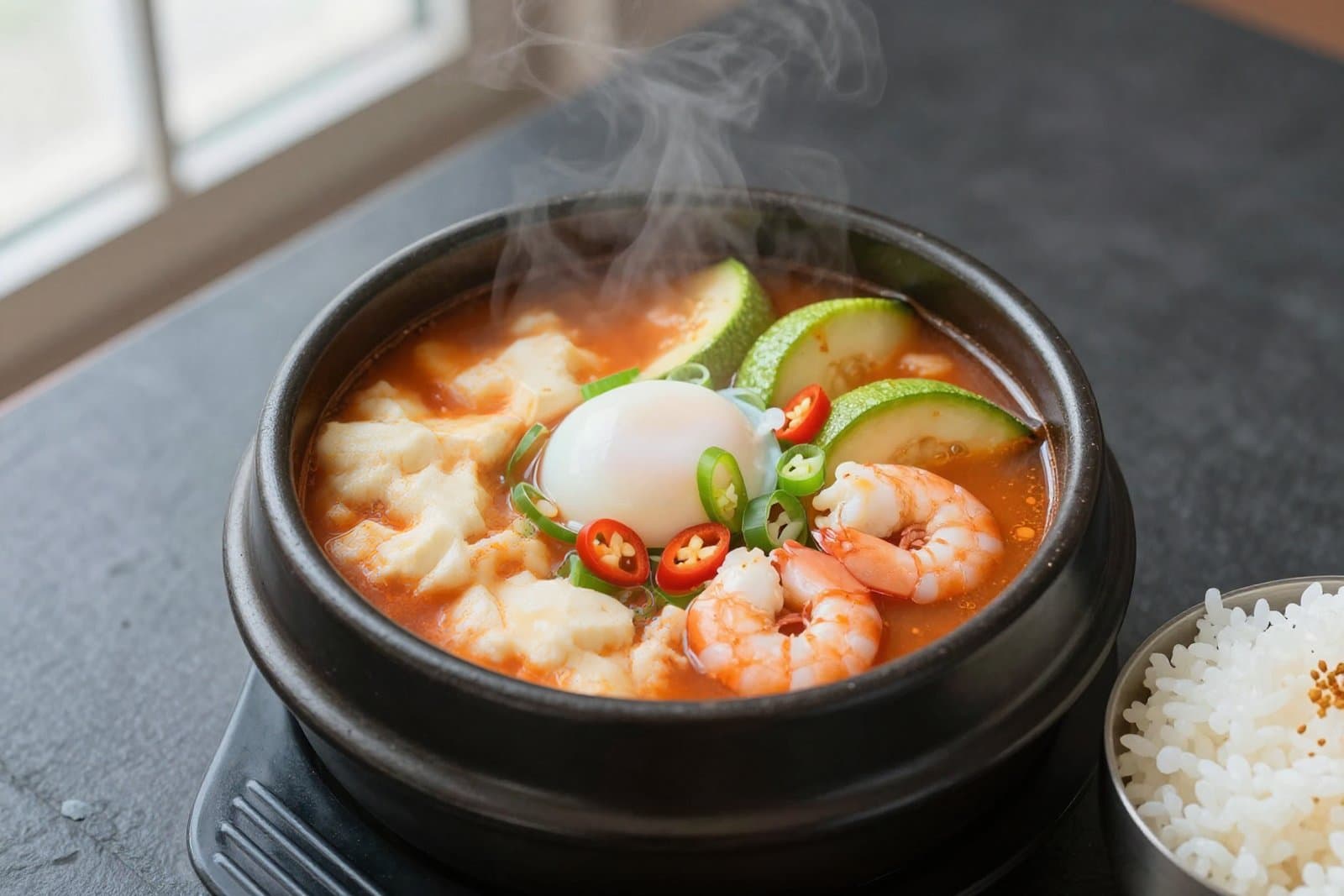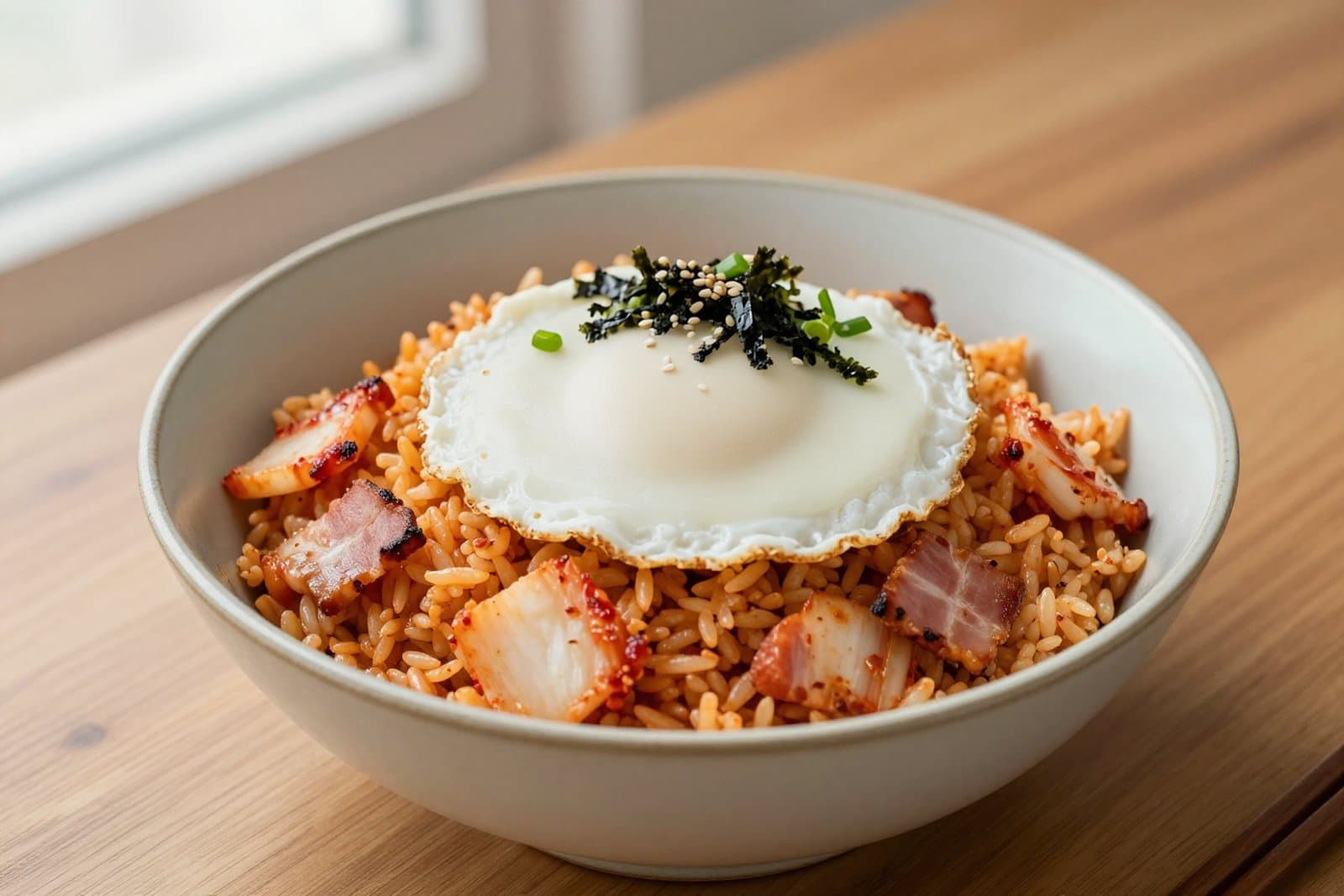
Kimchi Jjigae (Kimchi Stew with Pork and Tofu)
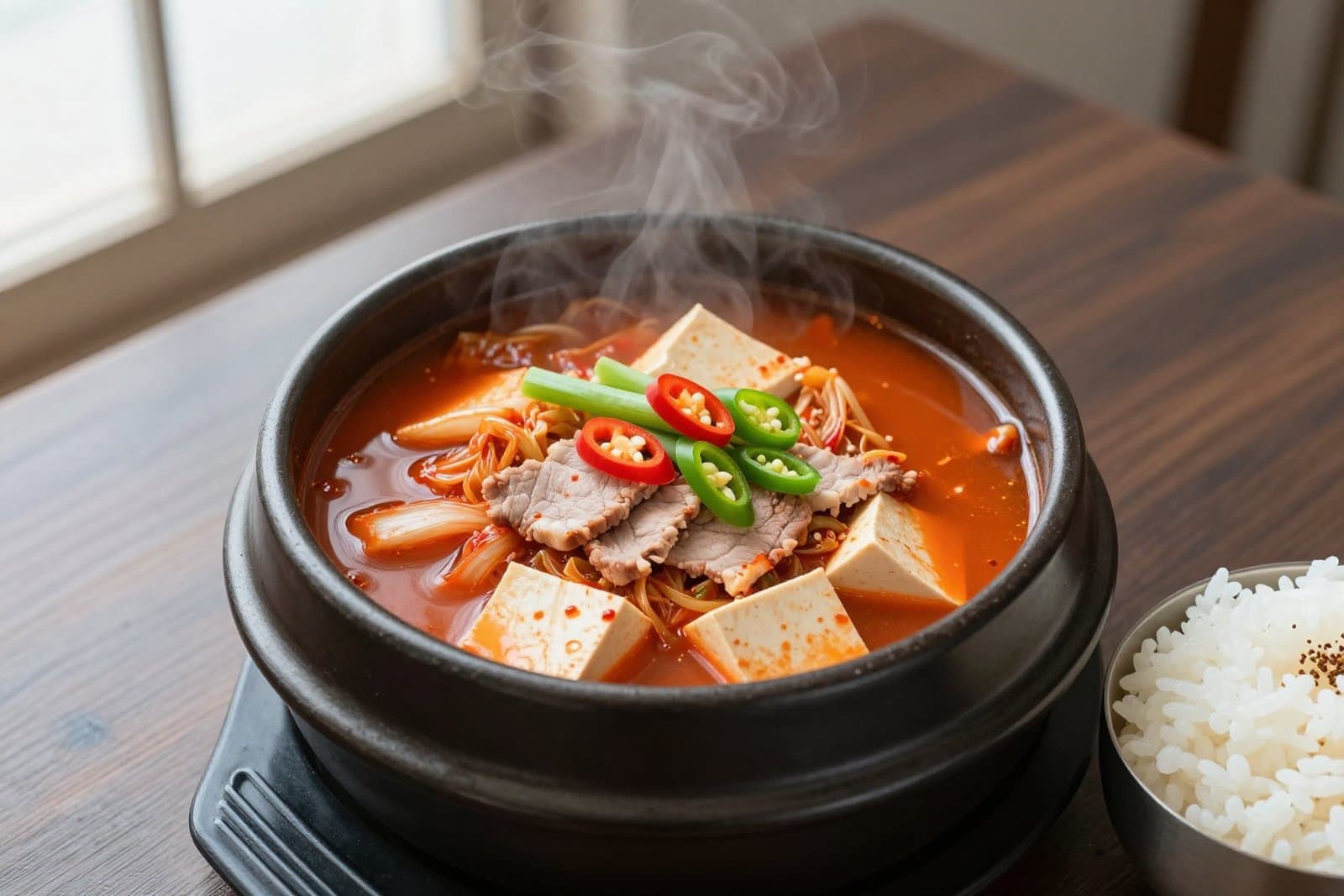
When a jar of kimchi has gone too sour to eat on its own, Korean home cooks turn it into kimchi jjigae. Jjigae means stew. Pork and chopped kimchi are fried in a little oil until the kimchi softens and the oil turns red, then simmered with the kimchi's own juice and some stock into a sour, spicy, savoury broth, with slabs of tofu added at the end. Bring it to the table still bubbling, with a bowl of rice for everyone.
By Mei Lin Tan
Published
- Prep Time
- 15 mins
- Cook Time
- 40 mins
- Total Time
- 55 mins
- Servings
- 4 servings
How do you make Kimchi Jjigae (Kimchi Stew with Pork and Tofu)?
Brown 300 g sliced pork shoulder in 1 tbsp oil, then stir-fry for 5 minutes with 400 g sour kimchi, onion, garlic and 1 tbsp gochugaru. Add 120 ml kimchi juice and 600 ml anchovy-kelp stock or water and simmer 20 minutes, until the kimchi is soft and the pork shows no pink. Add 450 g firm tofu slices for the last 5 minutes, green onions for the last minute.
- Total time
- 55 mins
- Calories
- 355 per serving
- Protein
- 26 g
- Yield
- 4 servings
- Difficulty
- Easy
- Method
- Simmering
Ingredients
Stew
To finish
Equipment
Heavy pot or Dutch oven (at least 3 L) · Kitchen scissors · Sharp knife and cutting board · Wooden spoon · Ladle
Quick Directions
Prepare the ingredients
Slice the pork, cut the kimchi, onion, tofu and green onions, and mince the garlic.
Brown the pork
Cook the pork in the oil for 3-4 minutes until lightly browned.
Fry the kimchi
Stir-fry the kimchi, onion, garlic and seasonings with the pork for 5 minutes.
Simmer the stew
Add the juice and stock, simmer for 20 minutes, then season with soy sauce.
Add the tofu and green onions
Simmer the tofu for 4 minutes, then the green onions for 1 minute.
Serve
Ladle into bowls and serve hot with rice.
Step-by-Step Instructions
Every step for making kimchi jjigae (kimchi stew with pork and tofu), written out in full.
Prepare the ingredients
Slice the pork 5 mm thick, then cut it into pieces about 4 cm long. Snip the kimchi into 3 cm pieces with kitchen scissors, working in a bowl so you keep the juice, and measure 120 ml of juice from the jar, topping it up with water if needed. Slice the onion and mince the garlic. Cut the tofu into slices 1.5 cm thick and about 4 cm square, and cut the green onions into 4 cm lengths.
Brown the pork
Heat the oil in the pot over medium-high heat. Add the pork and cook for 3-4 minutes, stirring now and then, until the outside is no longer pink, some fat has melted into the pot and the edges are starting to brown.
Fry the kimchi
Turn the heat to medium. Add the kimchi, onion, garlic, gochugaru, gochujang (if using) and sugar and stir-fry for 5 minutes, until the kimchi is soft and slightly see-through, the oil is stained red and the pot smells sour and toasty. Frying the kimchi before any liquid goes in softens its sharp sourness and toasts the chili. If anything starts to catch on the bottom, add a splash of the kimchi juice.
Simmer the stew
Pour in the kimchi juice and the stock or water and bring to a boil over high heat, scraping up anything stuck to the bottom. Lower the heat, partly cover and simmer for 20 minutes, until the kimchi is very soft and the broth tastes rounded rather than sharp. Twenty minutes at a simmer takes pork slices this thin well past 71°C (160°F), the safe temperature for pork, and a piece cut in half should show no pink. Taste and add soy sauce, a teaspoon at a time, if it needs more salt.
Add the tofu and green onions
Slide the tofu slices into the pot and press them gently under the broth with a spoon instead of stirring, so they stay whole. Simmer for 4 minutes, until the tofu is hot all the way through, then add the green onions and chili, if using, and cook for 1 minute more.
Serve
Bring the pot to the table, or ladle the stew into bowls so everyone gets some pork, kimchi and tofu. Serve very hot, with steamed short-grain rice on the side.
Recipe Tips
- Use kimchi that has gone properly sour, the kind that fizzes a little when you open the jar and is too sharp to enjoy as a side dish. Freshly made kimchi gives a thin, sweetish broth. If that is all you have, stir 1-2 tsp rice vinegar into the finished stew.
- Pork belly is the classic cut and makes a richer, oilier broth, at about 580 calories and 21 g protein a serving. Shoulder is leaner and still stays tender. The nutrition figures are for shoulder, without rice.
- Kimchi and its juice vary a lot in salt, so add the soy sauce only at the end, after tasting.
- Leave out the sugar if your kimchi is only mildly sour. It is there to soften the sourness, not to make the stew sweet.
Variations
- Tuna kimchi jjigae (chamchi kimchi jjigae): skip the pork, fry the kimchi in the oil on its own, and stir in a 150 g can of tuna, drained, with the tofu.
- Meat-free: use 200 g sliced shiitake or oyster mushrooms instead of the pork, and vegetable stock instead of anchovy-kelp stock. Most kimchi is made with fish sauce or salted shrimp, so check the label if you want it vegetarian.
- Add a handful of enoki mushrooms or a sliced small zucchini with the tofu for more vegetables.
Nutrition (per serving)
| Calories | 355 |
|---|---|
| Protein | 26 g |
| Carbs | 11 g |
| Fat | 22 g |
| Saturated fat | 5 g |
| Fibre | 4 g |
| Sugar | 4 g |
| Sodium | 1000 mg |
Estimated from the listed ingredients; values vary by brand.
Related Recipes
Storing & Reheating
- Fridge
- Let the stew cool, then refrigerate it in an airtight container within 2 hours for up to 3 days. The broth gets deeper and more sour overnight.
- Freezer
- Freeze in portions for up to 3 months and thaw overnight in the fridge. The tofu turns spongier and chewier once frozen; to keep it soft, freeze the stew before the tofu goes in and add fresh tofu when you reheat.
- Reheat
- Bring the stew back to a boil in a pot over medium heat, stirring gently, until it is steaming hot and 74°C (165°F) throughout. Add a splash of water if it has thickened.
Kimchi Jjigae (Kimchi Stew with Pork and Tofu) FAQs
What kind of kimchi is best for kimchi jjigae?
Well-fermented napa cabbage kimchi that tastes clearly sour, usually a few weeks old. Older kimchi gives the broth its tang, while young kimchi makes it taste flat and a little sweet. Jars of napa cabbage kimchi are sold in the fridge section of Asian grocers and many supermarkets; buy one a couple of weeks ahead and let it keep fermenting in your fridge.
Do I need anchovy-kelp stock for kimchi jjigae?
No. Plain water works, because sour kimchi and pork carry the flavour, and low-sodium chicken stock gives a fuller broth. If you want to make the stock, put 10 large dried anchovies (heads and dark guts pulled out) and a 10 cm square of dried kelp in 1 litre of water. Bring it to a boil, simmer for 5 minutes, take out the kelp, give the anchovies 10 minutes more, then strain. Allow about 20 extra minutes.
How can I make kimchi jjigae less spicy?
Cut the gochugaru to 1 tsp or leave it out, and skip the fresh chili. The kimchi itself still brings some heat. If you have no gochugaru, crushed red pepper flakes can stand in, but they are much hotter, so use about 1 tsp in place of 1-2 tbsp.
What is the difference between jjigae and guk?
Both are Korean soups, but jjigae is a stew: less liquid, more strongly seasoned and usually served bubbling in the pot it cooked in, with rice on the side. Guk is a lighter, brothier soup eaten as part of a meal. Kimchi jjigae is the thick stew; kimchi guk is a thinner kimchi soup.
Disclaimer
- Nutrition information is an estimate based on the listed ingredients. It changes with the brands, portion sizes and swaps you use.
- Read ingredient labels for allergens and for diet claims such as gluten-free or vegan. Products and their ingredients can change.
- Cooking times are a guide, since ovens, air fryers and slow cookers all run differently. Use a food thermometer and cook meat, poultry and fish to the safe internal temperatures in government food safety guidance.
- This recipe is general information, not medical or nutrition advice. If you have an allergy, a health condition or a special diet, check with a qualified health professional.