Vegan Chocolate Chip Cookies
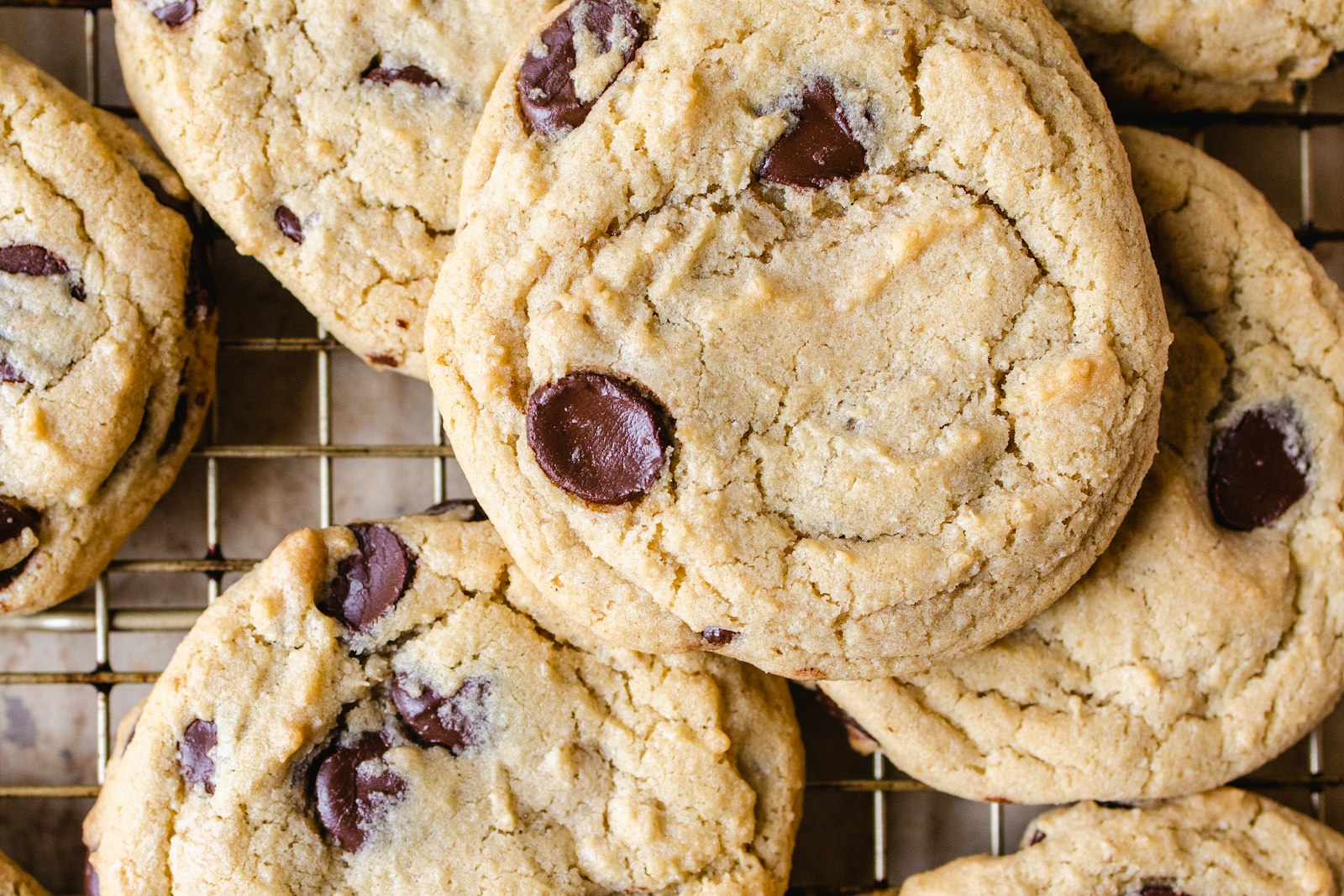
Butter and eggs do three jobs in a chocolate chip cookie: they supply the fat, the water and the binding. Here each job goes to a plant ingredient. Refined coconut oil is the fat, firm at room temperature the way butter is and neutral in taste. Ground flaxseed soaked in plant milk swells into a gel that holds the dough together as egg would, and the milk brings the water that lets the sugar dissolve. The cookies have crisp edges, soft centres and a paler top than the dairy kind.
Published
- Prep Time
- 20 mins
- Cook Time
- 24 mins
- Chill and cool
- 40 mins
- Total Time
- 1 hr 24 mins
- Servings
- about 20 cookies
How do you make Vegan Chocolate Chip Cookies?
Soak 1 tbsp ground flaxseed in 60 ml plant milk, then whisk it into 115 g melted refined coconut oil, 150 g brown sugar and 50 g granulated sugar. Fold in 220 g flour, baking soda, baking powder, salt and 170 g dairy-free chocolate chips. Chill 40 g balls for 30 minutes, then give them 10-12 minutes in a 180°C (350°F) oven, until the edges are set and the centres still look soft.
- Total time
- 1 hr 24 mins
- Calories
- 175 per serving
- Protein
- 1.5 g
- Yield
- about 20 cookies
- Difficulty
- Easy
- Method
- Baking
Ingredients
Equipment
Small bowl · 2 mixing bowls · Whisk · Spatula · Kitchen scale · Tray or large plate · 2 baking sheets · Parchment paper · Wire rack
Step-by-Step Instructions
Every step for making vegan chocolate chip cookies, written out in full.
Soak the flaxseed
Stir the ground flaxseed into the plant milk in a small bowl and leave it for 5-10 minutes, until it thickens into a loose gel. Check the labels on the chocolate chips and both sugars now if you are baking for vegans.
Whisk the oil and sugars
Whisk the melted coconut oil with the brown sugar and granulated sugar in a large bowl for 1 minute. Add the flaxseed mixture and the vanilla and whisk until the mixture turns smooth, thick and glossy, like a caramel sauce, with no oil pooling at the edge.
Fold in the dry ingredients
Whisk the flour, baking soda, baking powder and salt in a second bowl. Tip them into the oil mixture and fold with a spatula until the last streak of flour disappears, then fold in the chocolate chips. The dough is soft and feels slightly oily.
Portion, then chill
Scoop the dough into 20 balls of about 40 g each (2 heaped tablespoons) and set them close together on a tray or large plate lined with parchment paper. Do this before chilling: coconut oil sets hard in the fridge, and a cold bowl of dough is difficult to scoop. Refrigerate the balls for 30 minutes. While they chill, get the oven up to 180°C (350°F) and lay parchment paper on two baking sheets.
Bake
Arrange 10 chilled balls per baking sheet with 5 cm (2 inches) between them, leaving the other 10 in the fridge. Each sheet bakes on its own for 10-12 minutes: the cookies are done when the rims have set and turned light golden and the tops have puffed, cracked and lost their wet shine. The centres stay soft and the cookies stay paler than ones made with butter and egg.
Cool
Let the cookies stand on the hot sheet for 10 minutes. With no egg in them they are fragile while warm and firm up as the coconut oil sets. Lift them onto a wire rack to finish cooling.
Recipe Tips
- Choose refined coconut oil, which has no coconut taste or smell. Unrefined (virgin) coconut oil behaves the same way in the dough but makes the cookies taste of coconut.
- Bring the plant milk to room temperature. Cold liquid makes melted coconut oil seize into small hard beads; if that happens, stand the bowl over warm water for a minute and whisk until smooth again.
- Buy flaxseed already ground, or grind whole seeds in a spice grinder. Whole seeds will not form a gel. Golden flaxseed leaves fewer dark specks in the cookies than brown.
- Pull the cookies while the middles still look underdone. Egg-free dough browns very little, so colour is a poor guide, and the centres firm up a lot as they cool.
- Weigh the flour. A heavy-handed cup can add 30 g or more, and with no egg to add moisture the cookies turn dry and crumbly.
Variations
- Vegan butter: replace the coconut oil with 140 g (10 tbsp) of a firm vegan butter block, melted and cooled until just warm, and reduce the plant milk to 2 tbsp, because the block already contains water. Soak the flaxseed in that 2 tbsp of milk, and use 1/4 tsp salt if the block is salted. Soft tub spreads hold more water and make the cookies spread.
- Chocolate chunks and sea salt: swap the chips for 170 g chopped dairy-free dark chocolate and sprinkle a pinch of flaky sea salt on each cookie as soon as it leaves the oven.
- Walnut or pecan: add 60 g (1/2 cup) of chopped, toasted walnuts or pecans along with the chocolate chips.
- Large cookies: shape 12 balls of about 65 g, chill them the same way and bake for 13-15 minutes.
Nutrition (per serving)
| Calories | 175 |
|---|---|
| Protein | 1.5 g |
| Carbs | 24 g |
| Fat | 8.5 g |
| Saturated fat | 6.5 g |
| Fibre | 1 g |
| Sugar | 14.5 g |
| Sodium | 105 mg |
Estimated from the listed ingredients; values vary by brand.
Related Recipes
Storing & Reheating
- Fridge
- Store the cookies airtight at room temperature and eat them within 4 days. They do not need the fridge, which hardens the coconut oil and makes them firm.
- Freezer
- Freeze the shaped dough balls on their tray until solid and bag them; they keep for 3 months. Bake them without thawing at 180°C (350°F) for 12-14 minutes. Baked cookies can be frozen for up to 2 months and thawed on the counter in about 30 minutes.
- Reheat
- Five minutes on a baking sheet in a 150°C (300°F) oven softens day-old cookies and melts the chips again.
Vegan Chocolate Chip Cookies FAQs
What replaces the egg in vegan chocolate chip cookies?
This recipe uses 1 tbsp ground flaxseed soaked in 60 ml (1/4 cup) plant milk. The seed coat releases a sticky gel as it soaks, and that gel binds the flour, sugar and fat so the cookies hold together and stay chewy. The milk also supplies the water an egg would bring, which the sugar needs in order to dissolve.
Is coconut oil or vegan butter better for vegan cookies?
Both work. This recipe uses refined coconut oil because it is pure fat, sets firm at room temperature and behaves the same from one jar to the next, while vegan butter blocks vary in how much water they contain. To use a block, melt 140 g (10 tbsp) in place of the 115 g coconut oil and cut the plant milk to 2 tbsp.
Are chocolate chips vegan?
Some are and some are not. Many dark and semi-sweet chips contain only cocoa mass, sugar, cocoa butter and an emulsifier, but others add milk fat, milk powder or whey. Read the ingredient list and choose chips labelled dairy-free or vegan. A 'may contain milk' warning refers to shared equipment, which matters most for anyone with a milk allergy.
Are white sugar and brown sugar vegan?
Sugar comes from plants, but some cane sugar is whitened through bone char filters during refining, and brown sugar made from that cane sugar is affected too. Beet sugar and organic cane sugar are not processed that way. If it matters to the people you are baking for, pick a sugar labelled vegan or check with the manufacturer.
Why are my vegan chocolate chip cookies dry or crumbly?
The usual causes are too much flour and too long in the oven. Weigh 220 g flour instead of scooping it, and take the cookies out after 10-12 minutes while the centres still look soft, since egg-free dough hardly browns. Moving them before they have had 10 minutes on the sheet also breaks them.
Why did my vegan cookies spread flat?
The coconut oil was still liquid when the dough went into the oven. Let the melted oil cool until just warm before mixing, chill the shaped balls for the full 30 minutes, and put them on a cool baking sheet. Dough balls that sit out next to a hot oven soften quickly, so leave the second batch in the fridge.
Disclaimer
- Nutrition information is an estimate based on the listed ingredients. It changes with the brands, portion sizes and swaps you use.
- Read ingredient labels for allergens and for diet claims such as gluten-free or vegan. Products and their ingredients can change.
- Cooking times are a guide, since ovens, air fryers and slow cookers all run differently. Use a food thermometer and cook meat, poultry and fish to the safe internal temperatures in government food safety guidance.
- This recipe is general information, not medical or nutrition advice. If you have an allergy, a health condition or a special diet, check with a qualified health professional.