Katsudon (Japanese Pork Cutlet Rice Bowl)
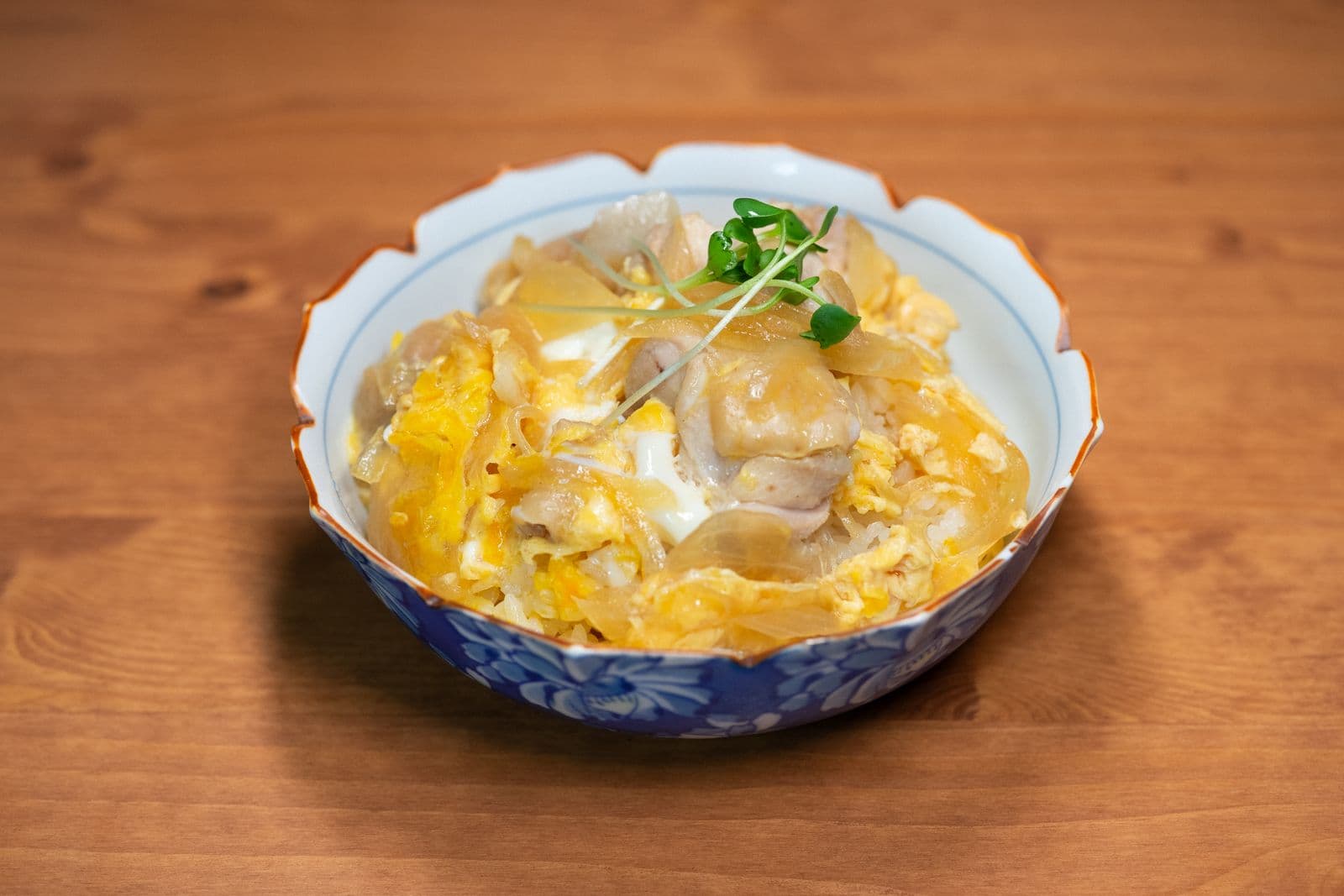
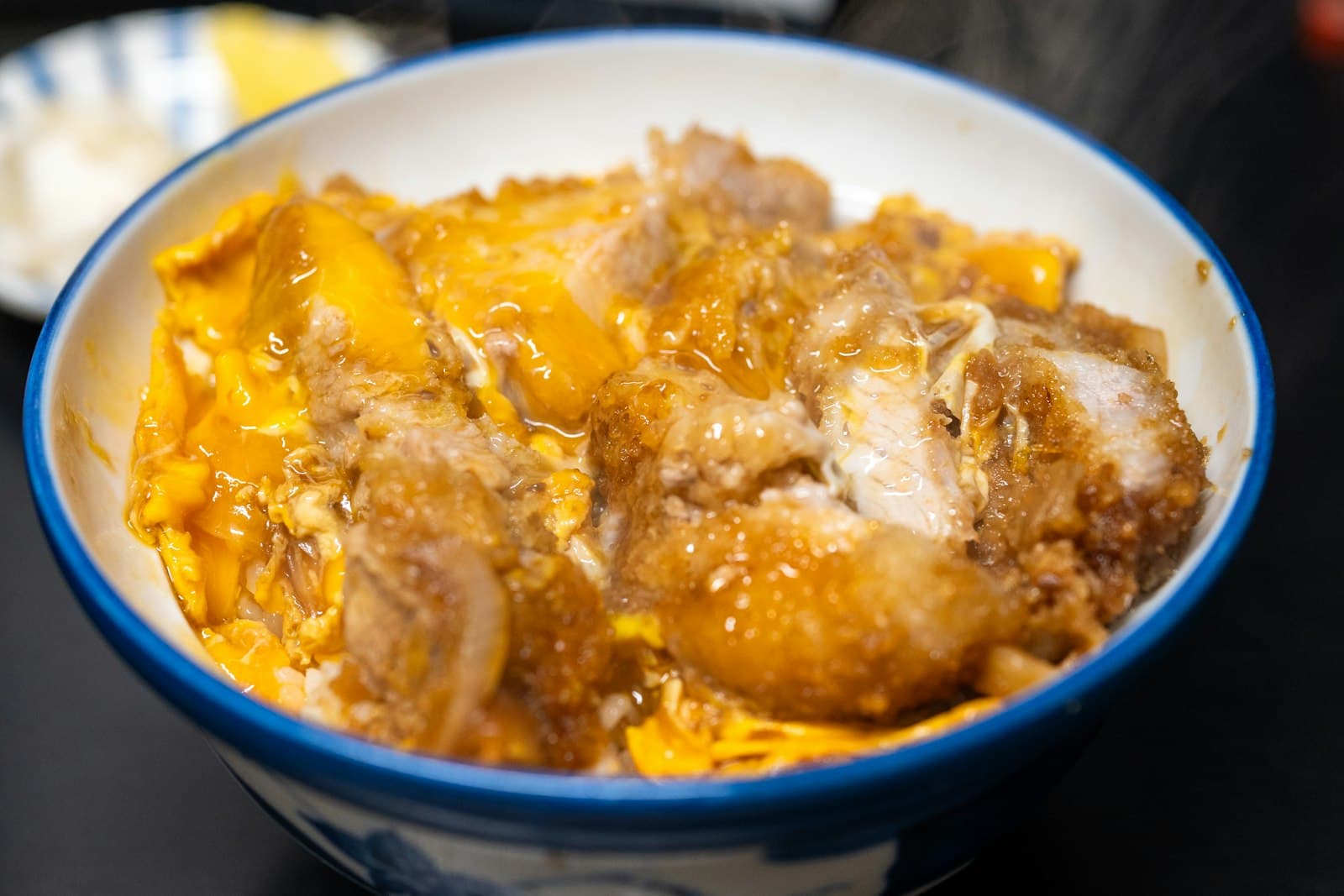
Katsudon is a donburi, a bowl of rice with a topping, and one of the most loved comfort dishes in Japan. A pork cutlet in a crisp panko coat is sliced, warmed for a minute in a sweet-savoury broth of dashi, soy sauce and mirin with soft onion, then bound with egg and spooned over hot rice. The broth soaks into the rice and the edges of the cutlet stay crunchy. It takes a little more work than a weeknight bowl, but nothing in it is difficult.
By Mei Lin Tan
Published
- Prep Time
- 20 mins
- Cook Time
- 30 mins
- Total Time
- 50 mins
- Servings
- 4 servings
How do you make Katsudon (Japanese Pork Cutlet Rice Bowl)?
Pound 4 pork loin chops to 1 cm, coat in flour, egg and panko, and shallow-fry in 1-2 cm of oil at 170°C (340°F) for 3-4 minutes per side, until golden and 71°C (160°F) inside. Slice. Simmer a sliced onion in 240 ml dashi, 3 tbsp soy sauce, 2 tbsp mirin and 1 tbsp sugar for 5 minutes, add the cutlets, pour in 4 beaten eggs and cover for 1-2 minutes until the eggs are set. Serve over hot rice.
- Total time
- 50 mins
- Calories
- 750 per serving
- Protein
- 43 g
- Yield
- 4 servings
- Difficulty
- Medium
- Method
- Pan-frying
Ingredients
Rice
Pork cutlets
Sauce and egg
To serve
Equipment
Medium saucepan with a tight-fitting lid · Large heavy skillet · Deep-fry or clip-on thermometer for the oil · Instant-read thermometer for the pork · Large skillet or wide shallow pan with a lid · Meat mallet or rolling pin · 3 shallow dishes · Wire rack or paper towels
Quick Directions
Cook the rice
Rinse the rice, then simmer covered for 13 minutes and rest for 10.
Pound and bread the pork
Pound the chops to 1 cm, season, and coat in flour, egg and panko.
Shallow-fry the cutlets
Fry at 170°C (340°F) for 3-4 minutes per side to 71°C (160°F), drain and slice.
Simmer the onion in the sauce
Simmer the onion in the sauce for 5 minutes until soft.
Add the cutlets and egg
Warm the cutlets, pour in the eggs and cover until the eggs are set.
Assemble the bowls
Fluff the rice and divide it among 4 deep bowls.
Step-by-Step Instructions
Follow these detailed steps to make the perfect katsudon (japanese pork cutlet rice bowl).
Cook the rice
Rinse the rice in a sieve under cold running water, swirling it with your hand, until the water runs almost clear, about 1 minute. Put it in the saucepan with the cold water and bring to the boil over high heat. Cover tightly, turn the heat to its lowest setting and cook for 13 minutes without lifting the lid. Turn off the heat and leave the rice covered to steam for 10 minutes.
Pound and bread the pork
Make a few small cuts through the fat along the edge of each chop so it does not curl. Lay one chop at a time between two sheets of plastic wrap and pound it with a mallet or rolling pin to an even 1 cm. Season both sides with the salt and pepper. Put the flour, the beaten egg and the panko in three shallow dishes. Coat each chop in flour, dip it in egg, then press it firmly into the panko on both sides.
Shallow-fry the cutlets
Pour 1-2 cm of oil (about 500 ml in a 26 cm skillet) into a heavy skillet just big enough to fit 2 cutlets, keeping it no more than half full, and heat over medium heat to 170°C (340°F) on a thermometer. Keep a lid nearby and never leave hot oil unattended. Lower in 2 cutlets at a time and fry for 3-4 minutes per side, until deep golden and the pork reaches 71°C (160°F). Drain on a rack or paper towels, fry the rest, then slice each cutlet into strips about 1.5 cm wide.
Simmer the onion in the sauce
Stir the dashi, soy sauce, mirin, sake and sugar together in a bowl until the sugar dissolves. Pour into a clean large skillet, bring to the boil, then add the onion. Lower the heat to a steady simmer and cook for 5 minutes, until the onion is soft and translucent.
Add the cutlets and egg
Lay the sliced cutlets over the onion in a single layer and simmer for 1 minute. Pour the beaten eggs evenly over the pan, cover with the lid and cook over medium-low heat for 1-2 minutes, until the eggs are set. Turn off the heat.
Assemble the bowls
Fluff the rice and divide it among 4 deep bowls. Slide a quarter of the cutlet, egg and onion over each, pouring on the sauce from the pan so it soaks into the rice. Top with green onions and a pinch of shichimi togarashi, if using. Serve hot.
Recipe Tips
- Don't leave the cutlets sitting in the sauce. Warm them for only a minute so the underside softens and the top stays crisp.
- Pounding the pork to an even thickness means it cooks through in the same few minutes the crumb takes to brown, and it makes the meat tender.
- Cook the egg until set. Katsudon is often served with a softer, runny egg in Japan, but raw and soft-set eggs are not recommended for young children, pregnant people, older adults or anyone with a weakened immune system. If you want it softer, use pasteurized eggs and take the pan off the heat after about 30 seconds of covered cooking.
- Hot oil causes serious burns. Use a thermometer, keep the skillet no more than half full, and let used oil cool completely before you strain it or throw it away.
Variations
- Use the cutlets from Savour's air fryer chicken katsu in place of the pork, and slice and simmer them the same way. Chicken must reach 74°C (165°F) before it goes in the sauce.
- Add 100 g sliced shiitake or button mushrooms with the onion for a deeper, earthier broth.
- Skip the shallow-frying, spray both sides of the breaded cutlets with oil and bake them on a rack at 220°C (425°F) for 15-18 minutes, turning once, until golden and the pork reaches 71°C (160°F).
Nutrition (per serving)
| Calories | 750 |
|---|---|
| Protein | 43 g |
| Carbs | 90 g |
| Fat | 21 g |
| Saturated fat | 5 g |
| Fibre | 2 g |
| Sugar | 9 g |
| Sodium | 1170 mg |
Estimated from the listed ingredients; values vary by brand.
Related Recipes
Storing & Reheating
- Fridge
- Katsudon is best eaten straight away. Cool leftover cutlet, egg and onion quickly and refrigerate them in an airtight container within 1 hour if you can, and no later than 2 hours after cooking. Refrigerate the rice separately, and eat everything within 2 days.
- Freezer
- Plain fried cutlets freeze well for up to 2 months. Freeze them cooled in a single layer, before they go in the sauce, and thaw overnight in the fridge. The cooked egg does not freeze well.
- Reheat
- Reheat the cutlet, egg and sauce in a covered pan over medium heat until steaming hot. Reheat rice only once, with a splash of water in the microwave, until it reaches 74°C (165°F).
Katsudon (Japanese Pork Cutlet Rice Bowl) FAQs
What is katsudon?
Katsudon is a Japanese rice bowl topped with a breaded, fried pork cutlet. Katsu is short for katsuretsu, meaning cutlet, and don is short for donburi, a bowl of rice with a topping. The cutlet is simmered briefly with onion and egg in a sweet dashi and soy sauce.
How do I keep the cutlet crisp in katsudon?
Fry the cutlet until deep golden, drain it well and add it to the sauce only for the last minute. Lay the slices on top of the onion instead of submerging them, so the crust on top stays crunchy while the underside soaks up the sauce.
Is the egg in katsudon cooked through?
In this recipe, yes. The eggs are cooked until set. Restaurants sometimes serve a runny egg, but raw and soft-set eggs are not recommended for young children, pregnant people, older adults or anyone with a weakened immune system, so use pasteurized eggs if you prefer it softer.
Can I make katsudon without dashi, mirin or sake?
Yes. Use instant dashi granules, or low-sodium chicken stock in a pinch. Replace the mirin with 2 tbsp water mixed with 2 tsp sugar, and the sake with dry white wine or extra dashi. The sauce is a little less complex but still sweet and savoury.
Disclaimer
- Nutrition information is an estimate based on the listed ingredients. It changes with the brands, portion sizes and swaps you use.
- Read ingredient labels for allergens and for diet claims such as gluten-free or vegan. Products and their ingredients can change.
- Cooking times are a guide, since ovens, air fryers and slow cookers all run differently. Use a food thermometer and cook meat, poultry and fish to the safe internal temperatures in government food safety guidance.
- This recipe is general information, not medical or nutrition advice. If you have an allergy, a health condition or a special diet, check with a qualified health professional.