Okonomiyaki (Japanese Cabbage Pancake)
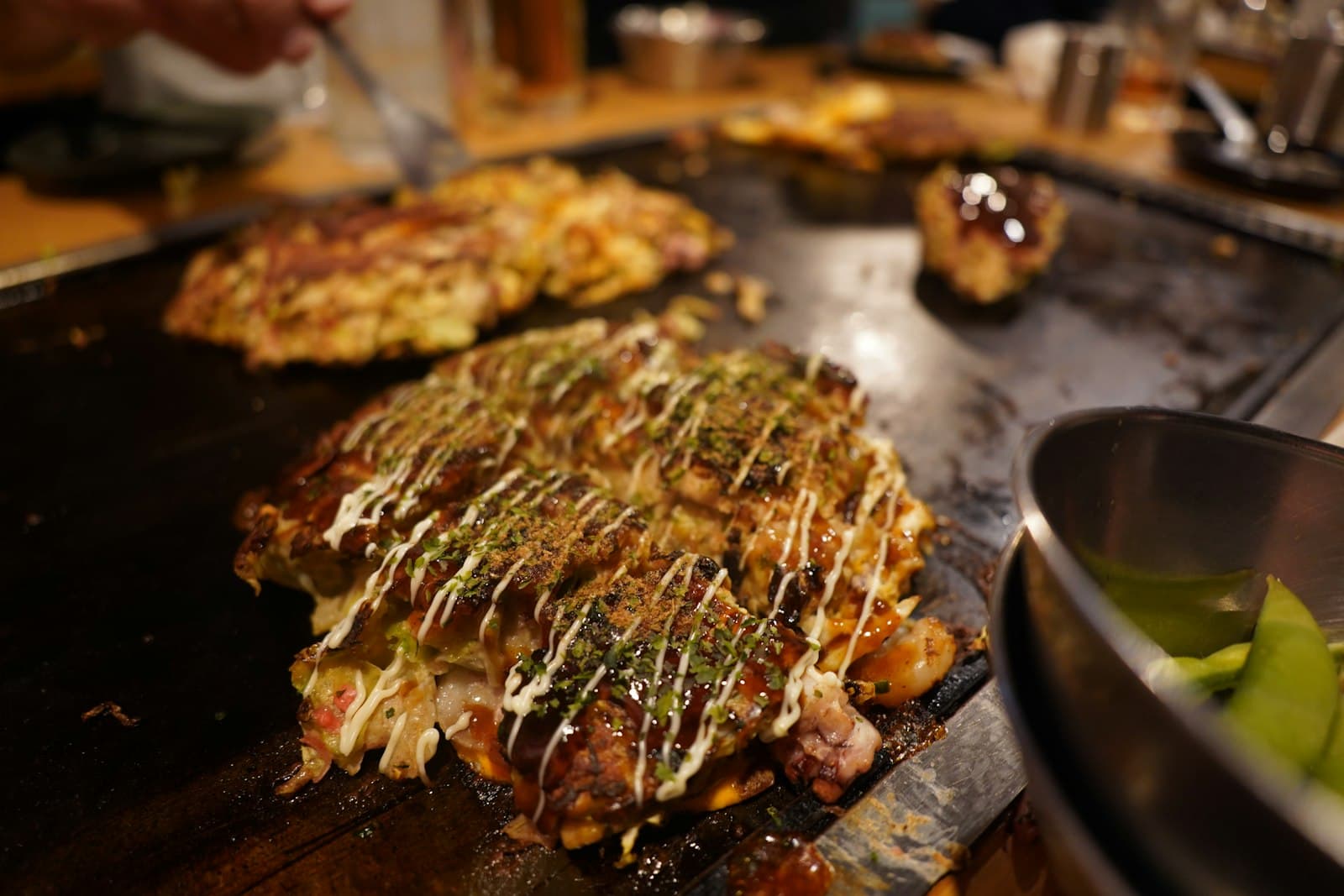
Okonomiyaki is a thick, savoury pancake from Osaka, made by stirring a lot of shredded cabbage into a loose batter of flour, dashi and eggs. Slices of pork belly go on top and the pancake is pan-fried until the edges are crisp and the middle is tender. It is finished with a glossy brown sauce, lines of mayonnaise and a shower of bonito flakes. The sauce here is made from ketchup, Worcestershire sauce, soy sauce and sugar, so there is nothing special to buy for it.
By Mei Lin Tan
Published
- Prep Time
- 20 mins
- Cook Time
- 45 mins
- Total Time
- 1 hr 5 mins
- Servings
- 4 servings
How do you make Okonomiyaki (Japanese Cabbage Pancake)?
Whisk 200 g flour, 200 ml cold dashi and 4 eggs into a batter, then fold in 450 g shredded cabbage and 4 sliced green onions. Cook one 15 cm pancake at a time in an oiled pan over medium-low heat, topped with 3 slices of pork belly, covered for about 5 minutes per side. It is done when the centre is set with no wet batter, reads 71°C (160°F) and the pork is browned. Brush with sauce and add mayonnaise.
- Total time
- 1 hr 5 mins
- Calories
- 700 per serving
- Protein
- 18 g
- Yield
- 4 servings
- Difficulty
- Medium
- Method
- Pan-frying
Ingredients
Pancake batter
Toppings and cooking
Okonomi sauce
To serve
Equipment
Large nonstick skillet, 26-28 cm, with a lid · Large mixing bowl · Whisk · Two wide spatulas (one to lift and flip, one to steady the pancake) · Instant-read thermometer · Small bowl and pastry brush for the sauce · Oven, for keeping cooked pancakes warm · Baking sheet with a wire rack, to keep cooked pancakes warm
Quick Directions
Make the sauce
Stir the four sauce ingredients together.
Mix the batter
Whisk the batter, rest it 10 minutes, then fold in the cabbage.
Cook the first side
Spoon in one portion, top with pork and cook covered for 5 minutes.
Flip and cook through
Flip, cook 5 minutes pork-side down, flip again and check the centre reaches 71°C (160°F).
Sauce and top
Keep cooked pancakes warm, cook the remaining 3, then sauce, mayonnaise and toppings.
Step-by-Step Instructions
Follow these detailed steps to make the perfect okonomiyaki (japanese cabbage pancake).
Make the sauce
Stir the ketchup, Worcestershire sauce, soy sauce and sugar together in a small bowl until the sugar dissolves. Set it aside with a pastry brush. Slice the pork belly slices in half crosswise if they are longer than 15 cm, so they fit on a pancake. Heat the oven to 90°C (195°F) for keeping the cooked pancakes warm.
Mix the batter
Whisk the flour, dashi and eggs in a large bowl until smooth. Leave it for 10 minutes while you shred the cabbage and slice the green onions. Fold the cabbage, green onions and pickled ginger, if using, into the batter just before you start cooking, so the cabbage does not release its water too early. The mixture will look mostly like cabbage held together by batter. That is correct.
Cook the first side
Heat 1/2 tbsp of the oil in the skillet over medium-low heat for 1 minute. Stir the batter, then scoop about 275 g (a generous 1 cup) into the pan and shape it into a round about 15 cm across and 2 cm thick, pressing it gently so it holds together. Lay 3 slices of pork belly on top. Cover and cook for 5 minutes, until the underside is golden and the batter is firm enough to lift.
Flip and cook through
Slide a spatula under the pancake, steady it with the second spatula and flip it in one quick motion, so the pork is now against the pan. Press lightly, cover and cook for 5 minutes, until the pork is browned and crisp at the edges. Flip once more and cook for 1 minute to firm the top. Check that it is done: push a thermometer into the centre of the pancake, and it should read 71°C (160°F) with the centre set and no wet batter on the probe or when you press it. If it is not there yet, cover and cook for another 1-2 minutes. Wash your hands and any utensil that touched the raw pork before you handle the finished pancake.
Sauce and top
Move the pancake to the rack on the baking sheet in the warm oven. Repeat with the remaining oil and batter for 4 pancakes in total, about 11 minutes per pancake. Keep the bowl of batter in the fridge between pancakes and stir it before each one. Brush each pancake with sauce, squeeze lines of mayonnaise over the top, then add bonito flakes and aonori, if using. Cut into wedges and serve hot.
Recipe Tips
- Shred the cabbage finely and evenly. Thick pieces stay raw and make the pancake fall apart when you flip it.
- Cold dashi and a 10-minute rest keep the batter tender. Do not whisk the batter once the cabbage is in, or the pancake turns dense.
- Medium-low heat matters: the pancake is about 2 cm thick, so high heat browns the outside before the centre sets. Keep the lid on for the first side and the pork side.
- Do not taste the batter, since the egg and flour in it are only safe to eat once the pancake is cooked through, and keep it chilled until each portion goes into the pan. Make sure the centre of the pancake reads 71°C (160°F) and the pork is browned and cooked through before eating.
- Brush the sauce on just before serving, since it softens the crisp edges.
Variations
- Modanyaki: spread 100 g cooked yakisoba or ramen noodles on the pan before the batter and cook as above.
- Kimchi and cheese: fold 80 g chopped kimchi into the batter and top each pancake with 15 g shredded mozzarella for the last 2 minutes.
- Add 2 tbsp tempura scraps (tenkasu) or 100 g corn kernels to the batter for extra crunch or sweetness.
Nutrition (per serving)
| Calories | 700 |
|---|---|
| Protein | 18 g |
| Carbs | 58 g |
| Fat | 44 g |
| Saturated fat | 12 g |
| Fibre | 5 g |
| Sugar | 14 g |
| Sodium | 800 mg |
Estimated from the listed ingredients; values vary by brand.
Related Recipes
Storing & Reheating
- Fridge
- Keep cooked pancakes without toppings in an airtight container in the fridge for up to 2 days. Refrigerate them within 1 hour if you can, and no later than 2 hours after cooking.
- Freezer
- Wrap cooled pancakes individually and freeze for up to 1 month. Thaw overnight in the fridge.
- Reheat
- Reheat in a lightly oiled skillet over medium-low heat, covered, for 3-4 minutes per side, until steaming hot and 74°C (165°F) throughout. Add the sauce and mayonnaise after reheating.
Okonomiyaki (Japanese Cabbage Pancake) FAQs
What is okonomiyaki?
Okonomiyaki is a Japanese savoury pancake. Okonomi means "what you like" and yaki means grilled or fried. A batter of flour, dashi and eggs holds a large amount of shredded cabbage, with pork or other toppings, and it is finished with a sweet-tangy sauce and mayonnaise.
What is the difference between Osaka-style and Hiroshima-style okonomiyaki?
Osaka style, used here, mixes the cabbage into the batter and cooks it as one thick pancake. Hiroshima style layers a thin crepe, a pile of cabbage, pork and often noodles, so it is built up rather than mixed.
How do I know okonomiyaki is cooked through?
The centre should be firm and set, with no wet batter when you press it or when a skewer goes in, and a thermometer in the centre of the pancake should read 71°C (160°F), with the pork browned and cooked through. If the outside is dark but the middle is soft, lower the heat, cover the pan and give it another 1-2 minutes.
Can I make okonomiyaki without dashi?
Yes. Use cold water in place of the dashi. The pancake will taste a little less savoury, but the sauce, mayonnaise and bonito flakes carry plenty of flavour. Instant dashi granules dissolved in water are the easiest way to get the traditional taste.
Disclaimer
- Nutrition information is an estimate based on the listed ingredients. It changes with the brands, portion sizes and swaps you use.
- Read ingredient labels for allergens and for diet claims such as gluten-free or vegan. Products and their ingredients can change.
- Cooking times are a guide, since ovens, air fryers and slow cookers all run differently. Use a food thermometer and cook meat, poultry and fish to the safe internal temperatures in government food safety guidance.
- This recipe is general information, not medical or nutrition advice. If you have an allergy, a health condition or a special diet, check with a qualified health professional.