Napa Cabbage Kimchi (Mak Kimchi)
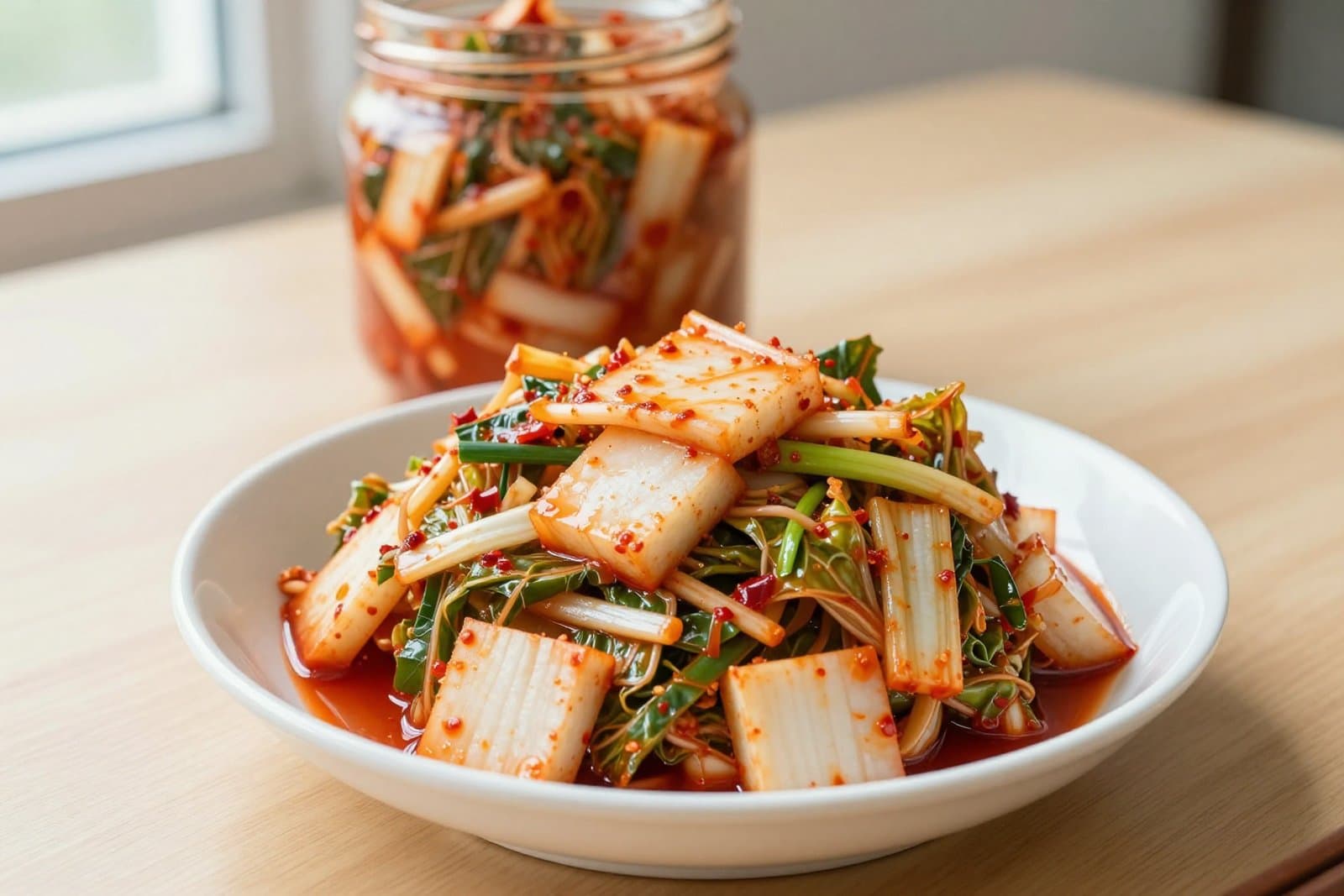
Mak kimchi is the everyday, cut-up way to make kimchi. Instead of rubbing paste between the leaves of whole cabbage halves, you cut the cabbage into bite-size pieces, salt it until it bends, then toss it in one big bowl with radish, green onions and a garlicky paste of gochugaru (Korean chili flakes), fish sauce and ginger. The cabbage salts for 2 hours; rinsing, mixing and packing take about 45 minutes more. Eat it crunchy and fresh the same day, or let it ferment for a day or two until it tastes sour and fizzy, then keep it in the fridge for up to 3 months. A batch makes about 2 litres, or 32 side-dish servings of 1/4 cup (60 ml).
By Mei Lin Tan
Published
- Prep Time
- 1 hr
- Cook Time
- 5 mins
- Salt
- 2 hrs
- Total Time
- 3 hrs 5 mins
- Servings
- About 2 litres (32 servings)
How do you make Napa Cabbage Kimchi (Mak Kimchi)?
Salt 1.5 kg bite-size napa cabbage pieces with 75 g coarse sea salt for 1 1/2-2 hours, turning every 30 minutes, until the thick pieces bend. Rinse 3 times and drain. Toss with radish, green onions and a paste of rice-flour porridge, gochugaru, fish sauce, garlic, ginger and sugar. Pack into jars under its own liquid, ferment at 18-21°C (64-70°F) for no more than 2 days, then refrigerate.
- Total time
- 3 hrs 5 mins
- Calories
- 18 per serving
- Protein
- 1 g
- Yield
- About 2 litres (32 servings)
- Difficulty
- Easy
- Method
- Fermenting
Ingredients
Cabbage
Rice porridge
Paste
Vegetables
Equipment
Very large non-reactive bowl (stainless steel, glass or plastic), at least 8 litres; or wash the cabbage in 2 batches · Medium mixing bowl · Large colander · Small saucepan and whisk · Food-safe gloves · Three 1-litre glass jars with tight lids (plastic lids, or line metal lids with baking paper), washed in hot soapy water and dried · Plate or tray to stand the jars on
Quick Directions
Cut and salt the cabbage
Cut the cabbage into 4-5 cm pieces and salt it for 1 1/2-2 hours, turning every 30 minutes.
Cook the rice porridge
Cook the rice flour and water for 3-4 minutes into a thin porridge and let it cool.
Make the paste
Stir the gochugaru, fish sauce, garlic, ginger and sugar into the porridge, then add the radish and green onions.
Rinse and drain the cabbage
Rinse the cabbage in 3 changes of cold water and drain for 20 minutes.
Mix the kimchi
Wearing gloves, rub the paste into the cabbage until every piece is red.
Pack, ferment and refrigerate
Pack under its own liquid with 3-4 cm headroom, ferment at 18-21°C (64-70°F) and refrigerate within 2 days at the most.
Step-by-Step Instructions
Every step for making napa cabbage kimchi (mak kimchi), written out in full.
Cut and salt the cabbage
Cut the cabbage in half lengthwise, then into quarters, and cut out the hard core. Cut the quarters crosswise into 4-5 cm pieces. Wash the pieces in the very large bowl filled with cold water, lift them into the colander and tip out the water; the water left on the leaves helps the salt stick. Layer the wet cabbage back in the bowl, sprinkling salt over each layer and a little extra on the thick white pieces. Leave it for 1 1/2-2 hours, turning everything over every 30 minutes so the top layer gets its turn in the brine that collects at the bottom. It's ready when a thick white piece bends without snapping.
Cook the rice porridge
While the cabbage salts, whisk the rice flour into the water in the small saucepan until smooth. Cook over medium heat, whisking all the time, for 3-4 minutes, until it bubbles and thickens to a thin, glossy porridge about the texture of gravy. Scrape it into the medium bowl and leave it to cool completely, about 20 minutes.
Make the paste
Stir the gochugaru, fish sauce, salted shrimp, if using, garlic, ginger and sugar into the cooled porridge until you have a thick, brick-red paste. Add the radish and green onions and mix well. Leave it while you rinse the cabbage, so the chili flakes soften and the colour deepens. If you skipped the porridge, stir the paste together in the medium bowl with 3-4 tbsp water.
Rinse and drain the cabbage
Rinse the cabbage 3 times: fill the bowl with cold water, swish the pieces around, lift them into the colander and change the water each time. Leave the cabbage to drain for 20 minutes, tossing it once or twice, until it stops dripping. Taste a thick piece. It should be pleasantly salty, not harsh; if it's very salty, soak it in fresh water for 10 minutes and drain it again.
Mix the kimchi
Put on gloves, because gochugaru stings the skin and stains. Wipe out the large bowl, put the drained cabbage back in and add the paste with the radish and green onions. Toss with your hands, rubbing the paste into every piece, until the cabbage is evenly red. Taste and add a splash more fish sauce if you'd like it saltier.
Pack, ferment and refrigerate
Pack the kimchi into the clean jars a handful at a time, pressing down hard with your fist or the back of a spoon to push out the air, until liquid rises over the cabbage. Leave 3-4 cm of headroom, because the kimchi bubbles up as it ferments. Wipe the rims, close the lids and stand the jars on the plate at cool room temperature, 18-21°C (64-70°F), out of direct sun, for 1-2 days: closer to 1 day at the warm end of that range, 2 at the cool end. If your kitchen is warmer than 21°C (70°F), taste it after 12 hours and refrigerate it within 24 hours. Once a day, open each lid to let the gas out, then press the kimchi back under its liquid with a clean spoon. Move the jars to the fridge once it smells pleasantly sour and you can see small bubbles, and after 2 days at the most even if it hasn't started bubbling; it keeps fermenting slowly in the fridge. You can also eat it fresh straight after mixing, as a crunchy, salad-like kimchi, and refrigerate the rest.
Recipe Tips
- Keep the kimchi under its liquid and take it out with a clean, dry spoon or chopsticks every time, never ones you've eaten from. Pieces left poking above the brine are where mould starts.
- Fizzing, small bubbles, a sour smell and a lid that bulges a little are all signs of normal fermentation. Throw the whole jar out if you see fuzzy mould, pink or slimy patches, or if it smells rotten rather than sour. If in doubt, throw it out.
- If the liquid doesn't quite cover the cabbage when you first pack the jars, close them anyway: the cabbage keeps releasing water. Each time you open the jars to let the gas out, press the kimchi back under the liquid with a clean spoon.
- Day-one kimchi tastes salty and sharp. After a week or two in the fridge it turns tangy and more rounded, and the radish softens.
Variations
- Vegan kimchi: leave out the fish sauce and salted shrimp and stir 3 tbsp soy sauce and 1 tbsp white miso into the paste instead.
- Add 1 small carrot, cut into matchsticks, and a handful of garlic chives cut into 4 cm lengths along with the radish.
- For a slightly sweeter, fruitier kimchi, grate half an Asian pear or a crisp apple into the paste.
Nutrition (per serving)
| Calories | 18 |
|---|---|
| Protein | 1 g |
| Carbs | 3 g |
| Fat | 0.3 g |
| Saturated fat | 0 g |
| Fibre | 1 g |
| Sugar | 1 g |
| Sodium | 380 mg |
Estimated from the listed ingredients; values vary by brand.
Related Recipes
Storing & Reheating
- Fridge
- Refrigerate the kimchi after 1-2 days of fermenting, or straight away if you want it to stay fresh and crunchy for longer. Keep it in sealed jars at 4°C (40°F) or below, with the cabbage pressed under its liquid, for up to 3 months. It keeps fermenting slowly and gets more sour each week; older, very sour kimchi is the one to use for kimchi jjigae and kimchi fried rice. Always use a clean utensil to take some out.
Napa Cabbage Kimchi (Mak Kimchi) FAQs
What is mak kimchi?
Mak kimchi is cut kimchi. Mak roughly means casually or any old way in Korean: instead of salting whole cabbage halves and spreading paste between every leaf, as for whole-leaf kimchi (pogi kimchi), you cut the cabbage into bite-size pieces first and toss everything in a bowl. It tastes the same and is quicker to make and to serve.
How long does homemade kimchi last?
Up to 3 months in the fridge, in a sealed jar with the cabbage pressed under its liquid. It gets more sour every week. Younger kimchi is the one to eat as a side dish; very sour, older kimchi is best cooked, in kimchi jjigae (kimchi stew) or kimchi fried rice.
How can I tell if kimchi has gone bad?
Fizzing, bubbles, a sour smell and a sharp tang are all normal. Throw the whole jar out if you see fuzzy mould of any colour, pink or slimy patches, or if it smells rotten rather than sour. Don't scrape mould off and keep the rest. A flat white film on the surface is usually harmless yeast, but if you can't tell it from fuzzy mould, throw the jar out. Keeping the kimchi under its liquid, using clean utensils and refrigerating it after 1-2 days prevents most problems.
Can I make kimchi without fish sauce?
Yes. Leave out the fish sauce and salted shrimp and use the soy sauce and miso swap in the variations. It ferments the same way and tastes a little less deep and savoury.
Disclaimer
- Nutrition information is an estimate based on the listed ingredients. It changes with the brands, portion sizes and swaps you use.
- Read ingredient labels for allergens and for diet claims such as gluten-free or vegan. Products and their ingredients can change.
- Cooking times are a guide, since ovens, air fryers and slow cookers all run differently. Use a food thermometer and cook meat, poultry and fish to the safe internal temperatures in government food safety guidance.
- This recipe is general information, not medical or nutrition advice. If you have an allergy, a health condition or a special diet, check with a qualified health professional.