Pastitsio (Greek Baked Pasta)
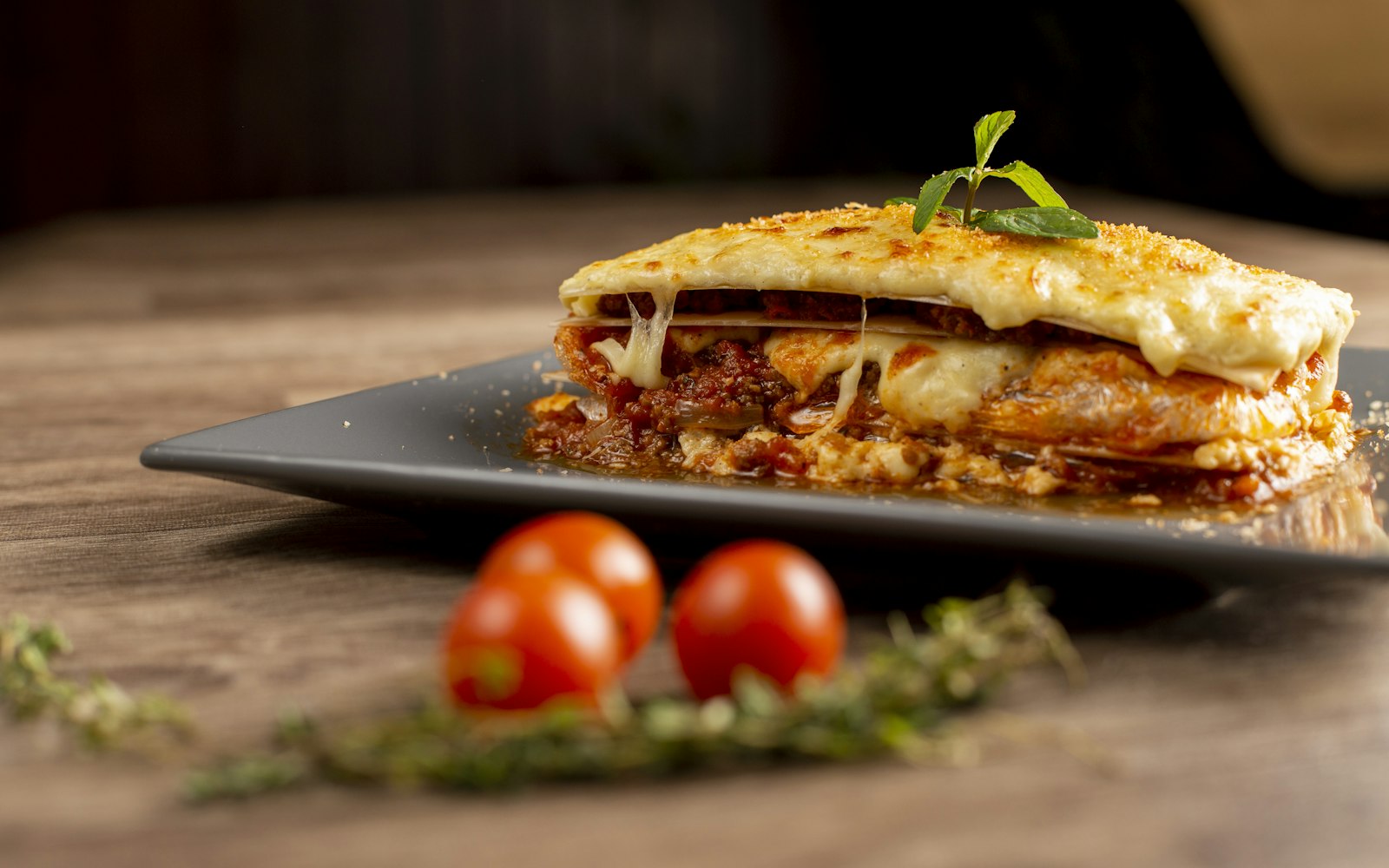
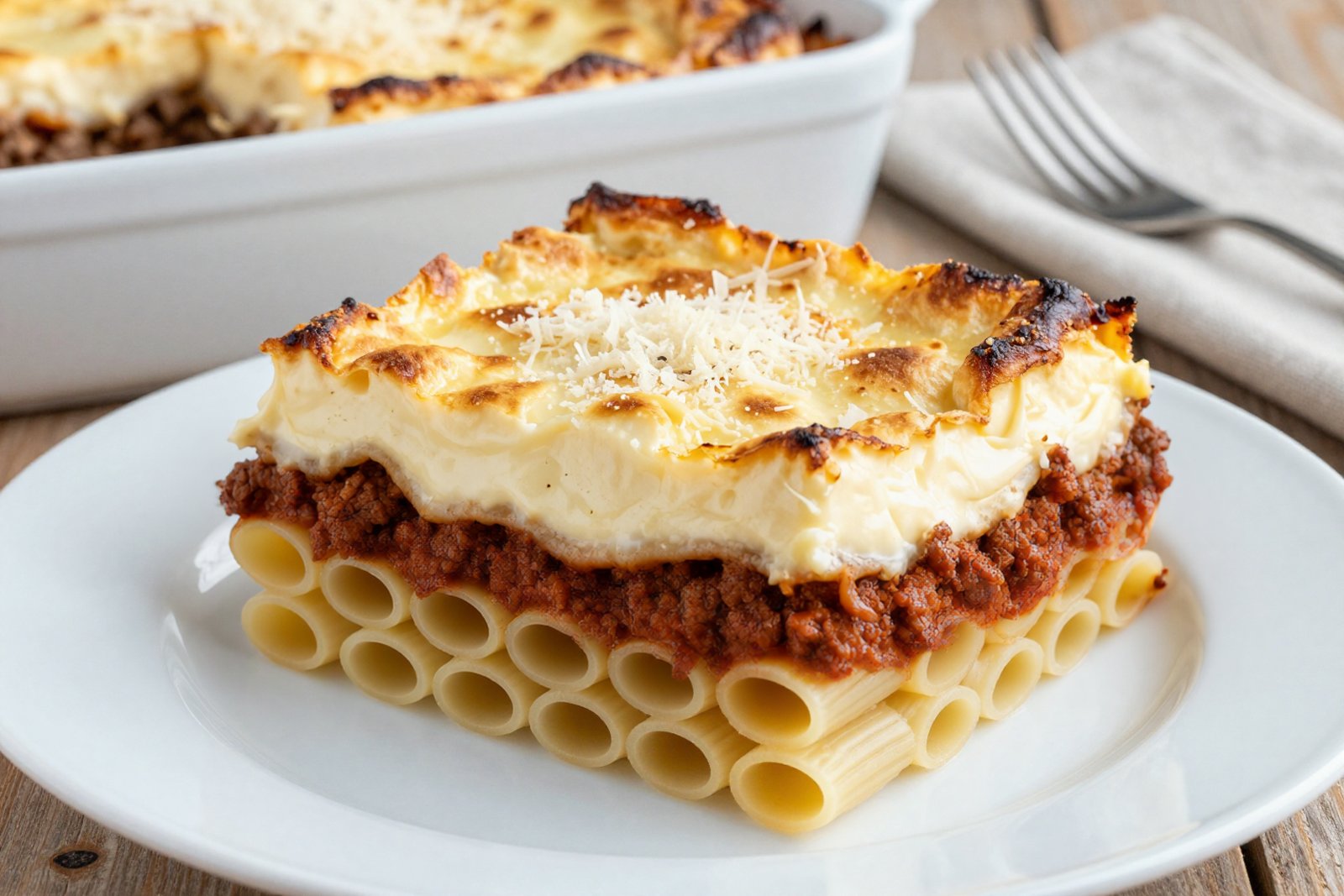
In Greece, pastitsio is a familiar dish at family gatherings and celebrations, and its name comes from the Italian pasticcio, a word for a baked pie or pasta dish. Long hollow tubes are tossed with egg white and grated cheese so they set into a firm base, then covered with ground beef simmered with a cinnamon stick and allspice, and finished with a thick béchamel enriched with yolks. Give it the full 30-minute rest after baking and it cuts into squares with three distinct layers: pasta, meat and béchamel.
By Luca Ferraro
Published
- Prep Time
- 30 mins
- Cook Time
- 1 hr 55 mins
- Rest
- 30 mins
- Total Time
- 2 hrs 55 mins
- Servings
- 10 servings
How do you make Pastitsio (Greek Baked Pasta)?
Pastitsio is a Greek bake of tube pasta, spiced beef and béchamel. Toss 500 g part-boiled bucatini with egg whites and cheese, cover it with 750 g ground beef simmered with tomato, cinnamon and allspice, then add a yolk-rich béchamel. Bake in a 23 x 33 cm dish at 180°C (350°F) for 45-50 minutes, until the centre reaches 74°C (165°F), then rest 30 minutes.
- Total time
- 2 hrs 55 mins
- Calories
- 670 per serving
- Protein
- 35 g
- Yield
- 10 servings
- Difficulty
- Medium
- Method
- Baking
Ingredients
Meat sauce
Pasta
Béchamel
Equipment
23 x 33 cm (9 x 13 in) baking dish, at least 7 cm deep · Large deep skillet or sauté pan · Large pot for the pasta · Medium heavy saucepan · Colander · Whisk · Rimmed baking sheet · Instant-read thermometer
Step-by-Step Instructions
Every step for making pastitsio (greek baked pasta), written out in full.
Start the meat sauce
Put a large pot of water on to boil with the 1 tbsp salt, ready for the pasta. Set a large deep skillet on medium heat with the olive oil. Let the onion soften in it for 6-7 minutes, until pale gold, then stir in the garlic for 30 seconds. Turn the burner up to medium-high, crumble in the beef and keep breaking it apart with a wooden spoon for 8-10 minutes, until it has browned and no pink shows anywhere; it should reach 71°C (160°F). Tip off any pooled fat.
Spice and simmer
Pour in the wine, if using, and let it bubble away for 2 minutes. Stir in the tomato paste for 1 minute. Add the crushed tomatoes, water, cinnamon stick, allspice, bay leaf, salt and pepper, turn the heat down to medium-low and let it cook gently without a lid for 30-35 minutes, stirring now and again, until thick and spoonable with no watery edge. Fish out the cinnamon stick and bay leaf.
Part-boil the pasta
While the sauce simmers, add the pasta to the boiling salted water and cook it 2 minutes short of the packet time; the tubes should still have some bite. Drain well, return the pasta to the empty pot, toss it with the melted butter and leave it for 5 minutes to cool slightly.
Bind the pasta
Beat the 3 egg whites with a fork until loose and foamy. Pour them over the warm pasta with the 50 g grated cheese and toss until every tube is coated. The whites set in the oven and hold the bottom layer together.
Cook the béchamel
While the sauce finishes simmering, heat the oven to 180°C (350°F) and start the béchamel. Melt the 120 g butter in the saucepan on medium heat, add the flour all at once and whisk for 2 minutes without letting the roux colour. Pour in the warm milk about 250 ml at a time, whisking each addition smooth before the next, then keep whisking for 8-10 minutes until the sauce falls from the whisk in heavy ribbons. Take the pan off the burner and stir in the 80 g cheese, the salt and the nutmeg. Wait 5 minutes for it to cool a little before beating in the 3 yolks, one at a time.
Assemble
Butter the baking dish. Spread the pasta over the base in an even layer; if you are using long tubes, line them up in rows running the same way so each slice shows neat rings. Press down lightly. Spoon the meat sauce over the pasta and level it. Pour the béchamel over the meat, push it out until it meets the sides of the dish and seals in the sauce, and finish with the last 30 g cheese.
Bake
Set the dish on a rimmed baking sheet and bake on the middle rack for 45-50 minutes. The top should be puffed and browned in places, with sauce bubbling up around the sides. Push an instant-read thermometer into the middle of the dish; it is ready at 74°C (165°F) or above.
Rest and cut
Leave the pastitsio on a rack for at least 30 minutes so the béchamel topping and the pasta base firm up. Cut it into 10 squares (two rows of five), slicing straight down through the pasta, and lift each piece out with a wide spatula.
Recipe Tips
- Look for packs labelled for pastitsio, often numbered no. 2, at Greek or Mediterranean grocers. Penne or ziti give the same layers but a rougher cut face.
- Cool the buttered pasta for a few minutes before adding the egg whites, or the whites can set in streaks before they coat the tubes.
- The béchamel should be noticeably thicker than one for a gratin. If it is still runny after 10 minutes, keep whisking over low heat for a few minutes more before the cheese goes in.
- Kefalotyri is a firm, salty Greek cheese made from sheep's milk, sometimes mixed with goat's milk. Pecorino Romano is the closest swap; Parmesan works too and tastes a little milder.
- To get ahead, make the meat sauce up to 2 days early and keep it covered in the fridge, or assemble the whole dish, refrigerate it within 2 hours and keep it unbaked for up to 24 hours. Bake it straight from the fridge for 60-70 minutes instead of 45-50, until the centre reaches 74°C (165°F), tenting it with foil if the top browns before the middle is hot.
Variations
- Beef and lamb: use 375 g ground beef and 375 g ground lamb for a richer, slightly gamier sauce, browned to 71°C (160°F).
- Short pasta: penne, ziti or rigatoni need no lining up; just spread them evenly and press them down before the sauce goes on.
- Pasta on both sides of the meat: spread half the pasta, all the meat sauce, then the rest of the pasta before the béchamel goes on. Bake it as written, until the centre reaches 74°C (165°F).
Nutrition (per serving)
| Calories | 670 |
|---|---|
| Protein | 35 g |
| Carbs | 57 g |
| Fat | 33 g |
| Saturated fat | 16 g |
| Fibre | 3 g |
| Sugar | 10 g |
| Sodium | 1000 mg |
Estimated from the listed ingredients; values vary by brand.
Related Recipes
Storing & Reheating
- Fridge
- Cool the pastitsio and refrigerate it within 2 hours, either covered in its dish or cut into portions in airtight containers. It keeps for up to 4 days, and cold squares cut with the cleanest edges.
- Freezer
- Wrap the cooled dish or single squares in plastic wrap and then foil, and freeze for up to 3 months. Thaw in the fridge before reheating: overnight for squares, 1-2 days for a whole dish.
- Reheat
- Cover with foil and reheat at 180°C (350°F), allowing 25-30 minutes for squares or 60-70 minutes for a whole thawed dish, until the centre reaches 74°C (165°F). To microwave a single square, cover it, heat it for 3-4 minutes and let it stand for 1 minute, then check that the middle is at 74°C (165°F).
Pastitsio (Greek Baked Pasta) FAQs
Is pastitsio the same as Greek lasagna?
Pastitsio often gets called Greek lasagna, but it is built differently. Long pasta tubes bound with egg white take the place of flat sheets, and the beef sauce is warmed with cinnamon and allspice. Lasagna stacks several thin layers, with ricotta and mozzarella in American-style versions or béchamel in lasagna alla bolognese, while pastitsio has just two or three thick layers under a deep béchamel set with egg yolks.
What kind of pasta is used for pastitsio?
In Greece cooks use pastitsio pasta, a long, thick hollow tube often labelled no. 2. Bucatini is the closest substitute outside Greece. Penne, ziti or rigatoni also work, though the cut slices look less tidy.
Why do you mix egg white into the pasta for pastitsio?
The egg white coats the tubes and sets in the oven, gluing them into a firm base that holds its shape when you cut and lift a square. The grated cheese tossed in with it adds salt and helps the binding. Without it, the pasta layer tends to slide out from under the meat.
Can pastitsio be assembled the day before?
Yes. Assemble it, cover it tightly and refrigerate it within 2 hours, then keep it for up to 24 hours. Bake it straight from the fridge at 180°C (350°F) for 60-70 minutes, until the top is golden and the middle reaches 74°C (165°F), then rest it for 30 minutes as usual.
Why is my pastitsio béchamel runny or curdled?
A runny topping usually means the béchamel was not cooked long enough to thicken before the yolks went in, or the pastitsio was cut before resting. Curdled or grainy béchamel comes from adding the yolks while the sauce is still very hot, so let it stand for 5 minutes and whisk them in one at a time.
Disclaimer
- Nutrition information is an estimate based on the listed ingredients. It changes with the brands, portion sizes and swaps you use.
- Read ingredient labels for allergens and for diet claims such as gluten-free or vegan. Products and their ingredients can change.
- Cooking times are a guide, since ovens, air fryers and slow cookers all run differently. Use a food thermometer and cook meat, poultry and fish to the safe internal temperatures in government food safety guidance.
- This recipe is general information, not medical or nutrition advice. If you have an allergy, a health condition or a special diet, check with a qualified health professional.