Beef Youvetsi (Greek Baked Orzo)
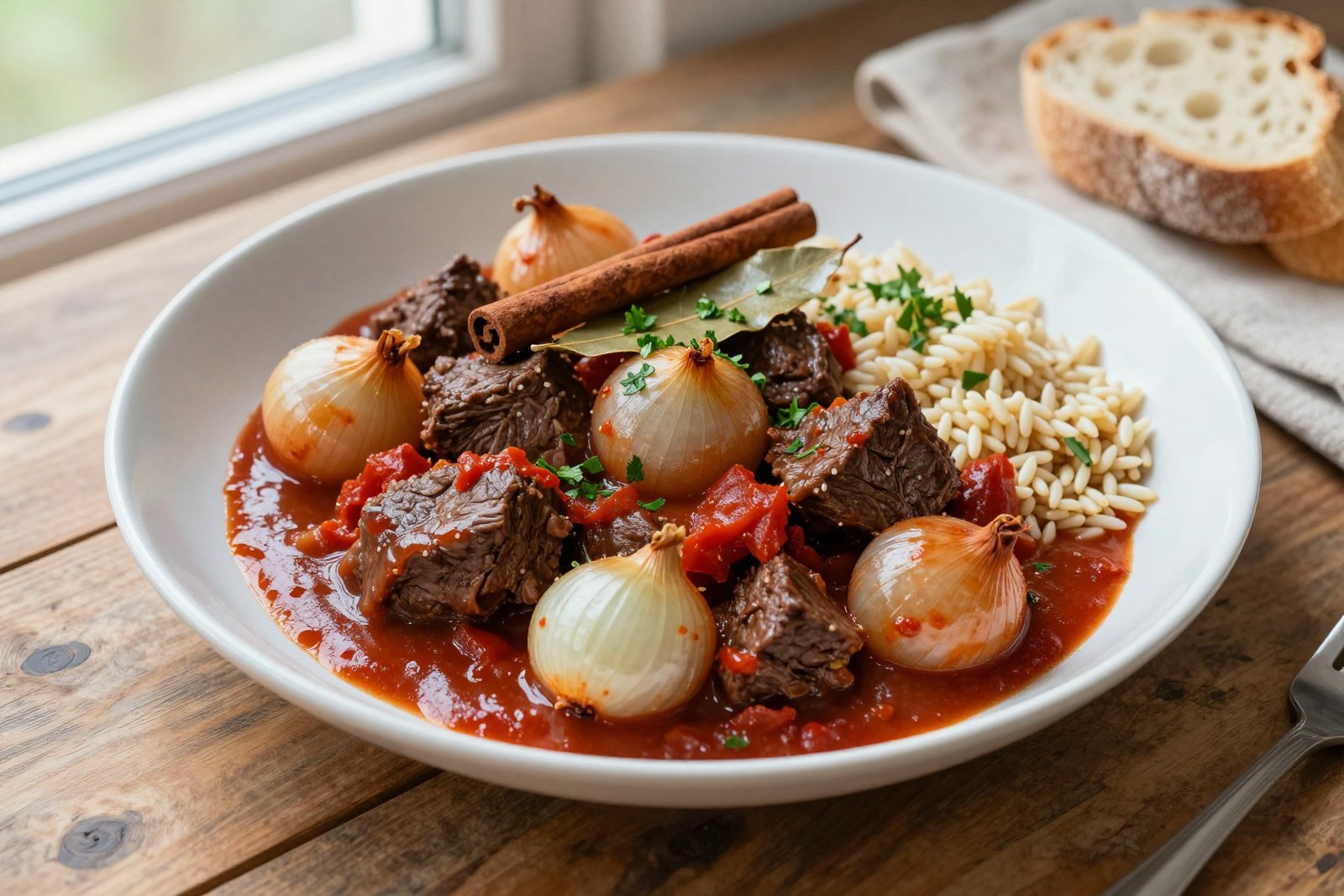
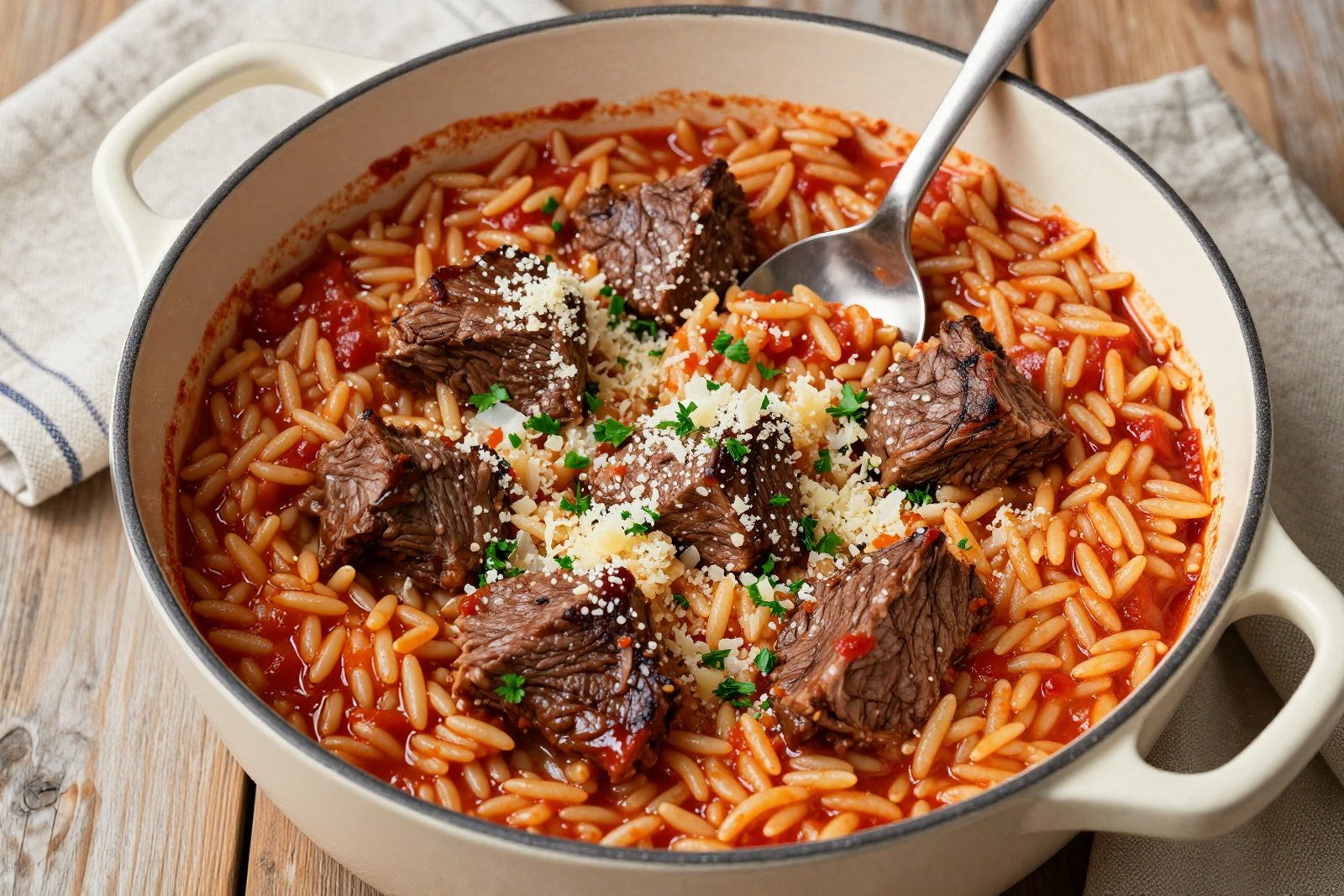
Youvetsi, also spelled giouvetsi, is a Greek oven dish of meat and orzo cooked together in tomato sauce, made with beef, lamb or chicken. Here, chunks of beef chuck braise slowly with tomato, a cinnamon stick, allspice and bay until they break apart under a spoon, then dry orzo and stock go straight into the same pot and bake until the pasta has drunk up most of the sauce. A heavy Dutch oven stands in for the traditional clay pot, and a handful of grated kefalotyri or dried myzithra goes over each bowl just before serving.
By Luca Ferraro
Published
- Prep Time
- 20 mins
- Cook Time
- 3 hrs 10 mins
- Rest
- 10 mins
- Total Time
- 3 hrs 40 mins
- Servings
- 6 servings
How do you make Beef Youvetsi (Greek Baked Orzo)?
Beef youvetsi is a Greek bake of braised beef and orzo. Brown 1.2 kg cubed chuck in a Dutch oven, add onion, garlic, tomato, wine, a cinnamon stick, allspice and bay, then braise covered at 160°C (325°F) for 1 hour 45 minutes to 2 hours. Boil 750 ml stock in the pot, stir in 400 g orzo and bake uncovered at 200°C (400°F) for 25-30 minutes until tender.
- Total time
- 3 hrs 40 mins
- Calories
- 780 per serving
- Protein
- 53 g
- Yield
- 6 servings
- Difficulty
- Easy
- Method
- Braising
Ingredients
Beef braise
Orzo
To serve
Equipment
5.5-6 litre (6 qt) oven-safe Dutch oven with a lid · Tongs · Wooden spoon · Paper towels · Fine grater
Step-by-Step Instructions
Every step for making beef youvetsi (greek baked orzo), written out in full.
Season the beef
Heat the oven to 160°C (325°F) with a rack in the lower third. Pat the beef cubes dry with paper towels and season them on all sides with the salt and pepper.
Brown in batches
Pour 2 tbsp of the olive oil into the Dutch oven and set it on medium-high heat. Brown the beef in 3 batches, about 4-5 minutes per batch, turning the cubes with tongs until they are dark brown on several sides. Leave space between the pieces, since a crowded pot steams the meat instead of browning it. Set each batch aside on a plate.
Build the base
Turn the heat to medium, add the remaining 1 tbsp oil and the onion and cook for 6 minutes, scraping up the brown crust from the bottom as the onion softens. Stir in the garlic and tomato paste for 2 minutes, until the paste turns brick red. Pour in the wine, if using, and boil it for 2 minutes.
Braise in the oven
Return the beef and any juices on the plate to the pot. Add the crushed tomatoes, 500 ml water, cinnamon stick, allspice and bay leaves, bring to a simmer, then put the lid on and move the pot to the oven. Braise for 1 hour 45 minutes to 2 hours, stirring once halfway, until the beef is tender enough to split with the side of a spoon.
Bring the stock to a boil
Lift the pot out and turn the oven up to 200°C (400°F). Pick out the cinnamon stick, bay leaves and allspice berries, and spoon off any fat floating on top. Set the pot over medium-high heat, pour in the stock and bring it to a full, rolling boil. Taste the liquid and add a pinch more salt if it needs it.
Bake the orzo
Stir in the orzo so every grain is under the liquid; the sauce should sit about 2 cm above the orzo, so add some of the boiling water if the braise has cooked down further. Return the pot to the oven without its lid. Bake for 25-30 minutes, stirring once after 15 minutes and adding more boiling water if the surface looks dry, until the orzo is tender and has taken in most of the sauce but the youvetsi still looks loose.
Rest and serve
Let the pot stand for 10 minutes; the orzo keeps absorbing sauce as it sits. Spoon into shallow bowls and finish each one with grated cheese and a little parsley, if using.
Recipe Tips
- Chuck is the cut to use: its connective tissue softens into the sauce over the long braise. Lean cuts such as sirloin turn dry and stringy when cooked this long.
- A clay giouvetsi pot is traditional, but a heavy enamelled or cast-iron Dutch oven does the same job and can go from burner to oven without the risk of cracking.
- Make sure the stock is boiling before the orzo goes in. If it starts in lukewarm liquid, the pasta sits and turns gummy before it begins to cook.
- Take the pot out while there is still visible sauce between the grains of orzo. It tightens a lot during the rest and more again on the plate.
Variations
- Lamb youvetsi: use 1.2 kg boneless lamb shoulder in 4 cm pieces and braise it the same way, until it pulls apart easily.
- Chicken youvetsi: brown 1.2 kg bone-in, skinless chicken thighs, braise them covered for 35-40 minutes until they reach 74°C (165°F), then add the stock and orzo as written.
- Feta finish: scatter 100 g crumbled feta over the orzo for the last 5 minutes of baking instead of grating cheese over the bowls.
Nutrition (per serving)
| Calories | 780 |
|---|---|
| Protein | 53 g |
| Carbs | 59 g |
| Fat | 35 g |
| Saturated fat | 13 g |
| Fibre | 4 g |
| Sugar | 6 g |
| Sodium | 1050 mg |
Estimated from the listed ingredients; values vary by brand.
Related Recipes
Storing & Reheating
- Fridge
- Cool and refrigerate within 2 hours in airtight containers for up to 3 days. The orzo keeps soaking up the sauce, so leftovers become much thicker.
- Freezer
- Finished youvetsi does not freeze well, because the orzo turns mushy once thawed. The beef braise freezes well on its own for up to 3 months: thaw it overnight in the fridge, bring it back to a boil in the Dutch oven and carry on from the stock step.
- Reheat
- Loosen each portion with a few spoonfuls of water or stock, cover and microwave, stirring halfway, or warm it in a covered pan over low heat until steaming hot, 74°C (165°F) in the centre.
Beef Youvetsi (Greek Baked Orzo) FAQs
What does youvetsi mean?
The dish is named after the giouvetsi, the clay baking pot it was traditionally cooked in, and the word was borrowed from the Turkish güveç, which means the same kind of earthenware vessel. You will see it spelled youvetsi, giouvetsi or yiouvetsi. The name stays the same when the dish is baked in a metal pan or a Dutch oven.
What is kritharaki, and can I use regular orzo?
Kritharaki is the Greek name for small rice-shaped pasta; it means little barley, after krithari, the Greek word for barley. It is the same shape sold as orzo or risoni, so any brand of orzo works here. Some cooks make youvetsi with hilopites, small square egg noodles, instead.
Can I make youvetsi with lamb instead of beef?
Yes, lamb is a classic choice in Greece too. Use boneless lamb shoulder cut into large chunks and braise it for the same time, until it pulls apart easily, then add the stock and orzo as written. Lamb shanks also work but need longer in the oven before the orzo goes in.
Why is the orzo in my youvetsi still hard?
Either the liquid was not boiling when the orzo went in, or there was too little of it and it cooked off before the pasta softened. Bring the pot to a rolling boil on the stove first, check that the sauce covers the orzo by about 2 cm, stir once halfway through baking and add 125-250 ml boiling water if the top looks dry. Give it another 5 minutes in the oven and taste a few grains before taking it out.
Can youvetsi be made ahead?
Braise the beef up to 2 days ahead, cool it and refrigerate it, covered, within 2 hours. On the day, bring it back to a boil with the stock and bake the orzo for 25-30 minutes. Fully finished youvetsi thickens a lot overnight, so the pasta stage is best done just before serving.
Disclaimer
- Nutrition information is an estimate based on the listed ingredients. It changes with the brands, portion sizes and swaps you use.
- Read ingredient labels for allergens and for diet claims such as gluten-free or vegan. Products and their ingredients can change.
- Cooking times are a guide, since ovens, air fryers and slow cookers all run differently. Use a food thermometer and cook meat, poultry and fish to the safe internal temperatures in government food safety guidance.
- This recipe is general information, not medical or nutrition advice. If you have an allergy, a health condition or a special diet, check with a qualified health professional.