Shrimp Saganaki with Tomato and Feta
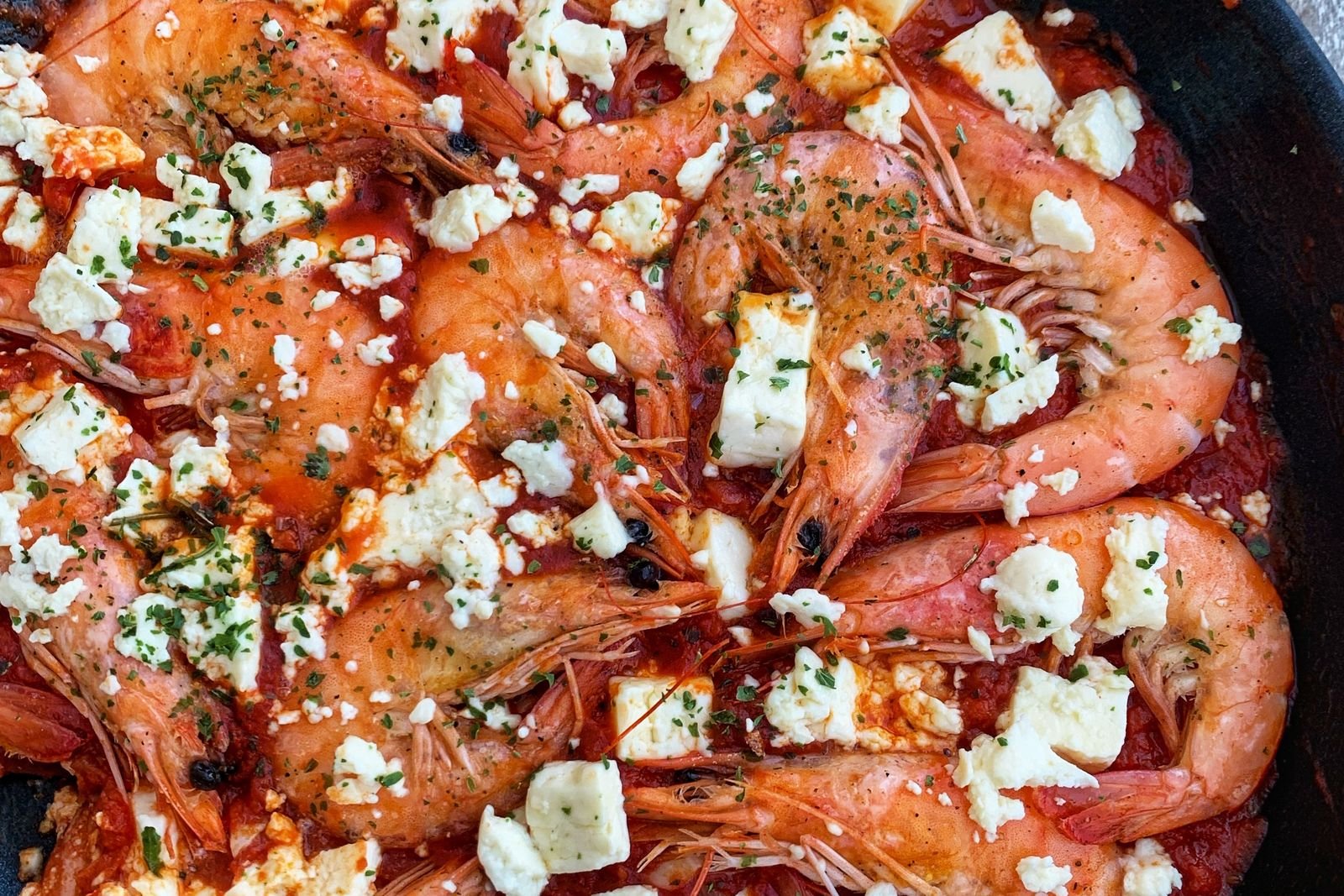
Shrimp saganaki, or garides saganaki, is a Greek taverna dish of shrimp simmered in a tomato sauce sharp with garlic and chili, covered in feta and brought to the table in the pan it cooked in. In this version one oven-safe skillet does everything: the sauce reduces on the stove, the shrimp poach in it for a few minutes and a short spell under the broiler softens the feta. Buy the shrimp already peeled and it all fits in 30 minutes.
By Mei Lin Tan
Published
- Prep Time
- 10 mins
- Cook Time
- 20 mins
- Total Time
- 30 mins
- Servings
- 4 servings
How do you make Shrimp Saganaki with Tomato and Feta?
For shrimp saganaki, soften onion, garlic and chili flakes in olive oil in an oven-safe skillet, add an optional splash of ouzo, then simmer a 796 ml (28 oz) can of diced tomatoes for 7-8 minutes. Nestle in 600 g large peeled shrimp for 2 minutes, scatter 150 g feta on top and broil for 3-4 minutes, until the shrimp are pink, opaque and curled into a C.
- Total time
- 30 mins
- Calories
- 385 per serving
- Protein
- 37 g
- Yield
- 4 servings
- Difficulty
- Easy
- Method
- Simmering and broiling
Ingredients
Shrimp
Sauce
Topping
To serve
Equipment
30 cm (12 in) oven-safe skillet (cast iron or stainless steel) · Wooden spoon · Tongs · Oven mitt
Step-by-Step Instructions
Every step for making shrimp saganaki with tomato and feta, written out in full.
Heat the broiler
Set an oven rack about 15 cm (6 in) below the broiler element and turn the broiler to high. Pat the shrimp dry with paper towels so they do not water down the sauce.
Soften the aromatics
Heat the olive oil in the oven-safe skillet over medium heat. Cook the onion for 3 minutes, stirring, until soft and translucent. Add the garlic and chili flakes and stir for 1 minute, until fragrant but not browned, then stir in the tomato paste for 30 seconds.
Add the ouzo
If using ouzo or wine, take the skillet off the heat before pouring it in, as alcohol can flare near a flame. Return the pan to the heat and let it bubble for about 1 minute, until the sharp smell of alcohol fades. Skip this step if you are leaving it out.
Simmer the tomatoes
Tip in the diced tomatoes with their juice and add the oregano, salt and pepper. Simmer briskly over medium-high heat for 7-8 minutes, stirring now and then, until the sauce has thickened enough that a spoon dragged across the pan leaves a trail that closes slowly.
Poach the shrimp
Turn the heat to medium. Nestle the shrimp into the sauce in a single layer, pressing them in so they are half covered. Cook for 1 minute, turn them with tongs and cook for 1 minute more. They should be pink on the outside but still a little grey at the thickest point, since they finish cooking under the broiler.
Top with feta and broil
Scatter the feta over the shrimp and slide the skillet under the broiler for 3-4 minutes, until the cheese has softened and browned in spots and the sauce bubbles at the edges. The shrimp are ready once the flesh has turned opaque right to the centre, the tails are pink and each one has curled into a loose C. If any are still translucent in the middle, set the skillet over medium heat for another minute.
Finish and serve
Move the skillet to the stovetop with an oven mitt and keep the mitt over the handle, which stays very hot. Sprinkle with parsley and serve straight from the pan with lemon wedges, and bread for the sauce if you like.
Recipe Tips
- Shrimp sold already peeled and deveined keep this within 30 minutes. Peeling and deveining 600 g yourself adds about 10 minutes.
- Move the skillet under the broiler while the shrimp are still a touch grey at the thickest part. The hot sauce and the broiler finish them, and only a few extra minutes separate juicy shrimp from rubbery ones.
- Block feta stored in brine softens and browns better than pre-crumbled feta, which is drier. Break it into uneven chunks so some pieces stay creamy while the edges colour.
- Taste the sauce before adding more salt. Feta and canned tomatoes are both salty already.
Variations
- In Greece the dish is often made with whole head-on shrimp, which give the sauce a deeper seafood flavour. Use about 1 kg, simmer them for 4-5 minutes before adding the feta, and put out a bowl for the shells.
- Instead of ouzo, use dry white wine, or leave the alcohol out and cook 1/4 tsp lightly crushed fennel seeds with the garlic for a soft aniseed note.
- For a fuller dinner, spoon it over orzo, or over rice to keep it gluten-free. As part of a meze spread with bread, it stretches to 6 small servings.
Nutrition (per serving)
| Calories | 385 |
|---|---|
| Protein | 37 g |
| Carbs | 15 g |
| Fat | 20 g |
| Saturated fat | 7 g |
| Fibre | 4 g |
| Sugar | 8 g |
| Sodium | 1100 mg |
Estimated from the listed ingredients; values vary by brand.
Related Recipes
Storing & Reheating
- Fridge
- Refrigerate leftovers in an airtight container within 2 hours and eat them within 2 days.
- Freezer
- The finished dish does not freeze well: the shrimp turn rubbery and the feta grainy. The tomato sauce on its own, cooked through the simmering step, freezes for up to 3 months.
- Reheat
- Warm gently in a covered skillet over low heat for 4-5 minutes, stirring once, until the sauce bubbles and everything is steaming hot, 74°C (165°F). A hard boil turns the shrimp tough, so keep the heat low.
Shrimp Saganaki with Tomato and Feta FAQs
What does saganaki mean?
Saganaki refers to the sagani, a small, shallow frying pan with two handles. Anything cooked and served in one can carry the name, which is why a Greek menu may list fried cheese saganaki alongside shrimp or mussel saganaki in tomato and feta. Garides is the Greek word for shrimp.
What can I use instead of ouzo in shrimp saganaki?
Dry white wine is the simplest swap and adds acidity without the aniseed taste. Plenty of traditional versions skip the alcohol entirely, so you can too; a pinch of crushed fennel seeds cooked with the garlic brings back a little of the anise.
Can I make shrimp saganaki with frozen shrimp?
Yes, as long as they are raw rather than precooked. Move them to the fridge the night before, or for a faster thaw, seal them in a zip-top bag and submerge it in a bowl of cold water for 15-20 minutes. Blot them on paper towels before they go into the sauce: shrimp added frozen or wet release water, thin the sauce and cook unevenly.
Is shrimp saganaki a main course or a meze?
Both. In tavernas it usually arrives as a meze to share, with bread for the sauce and other small plates around it. With orzo, rice or a big salad on the side, this amount makes a main course for 4.
Why doesn't the feta melt into the sauce?
Feta is a brined, fairly acidic cheese, so heat softens it rather than turning it into the stretchy strings you get from mozzarella. Under the broiler it turns soft and creamy and browns at the edges while keeping its shape, which is how it should look on top of saganaki.
Disclaimer
- Nutrition information is an estimate based on the listed ingredients. It changes with the brands, portion sizes and swaps you use.
- Read ingredient labels for allergens and for diet claims such as gluten-free or vegan. Products and their ingredients can change.
- Cooking times are a guide, since ovens, air fryers and slow cookers all run differently. Use a food thermometer and cook meat, poultry and fish to the safe internal temperatures in government food safety guidance.
- This recipe is general information, not medical or nutrition advice. If you have an allergy, a health condition or a special diet, check with a qualified health professional.