Tom Kha Gai (Thai Coconut Chicken Soup)
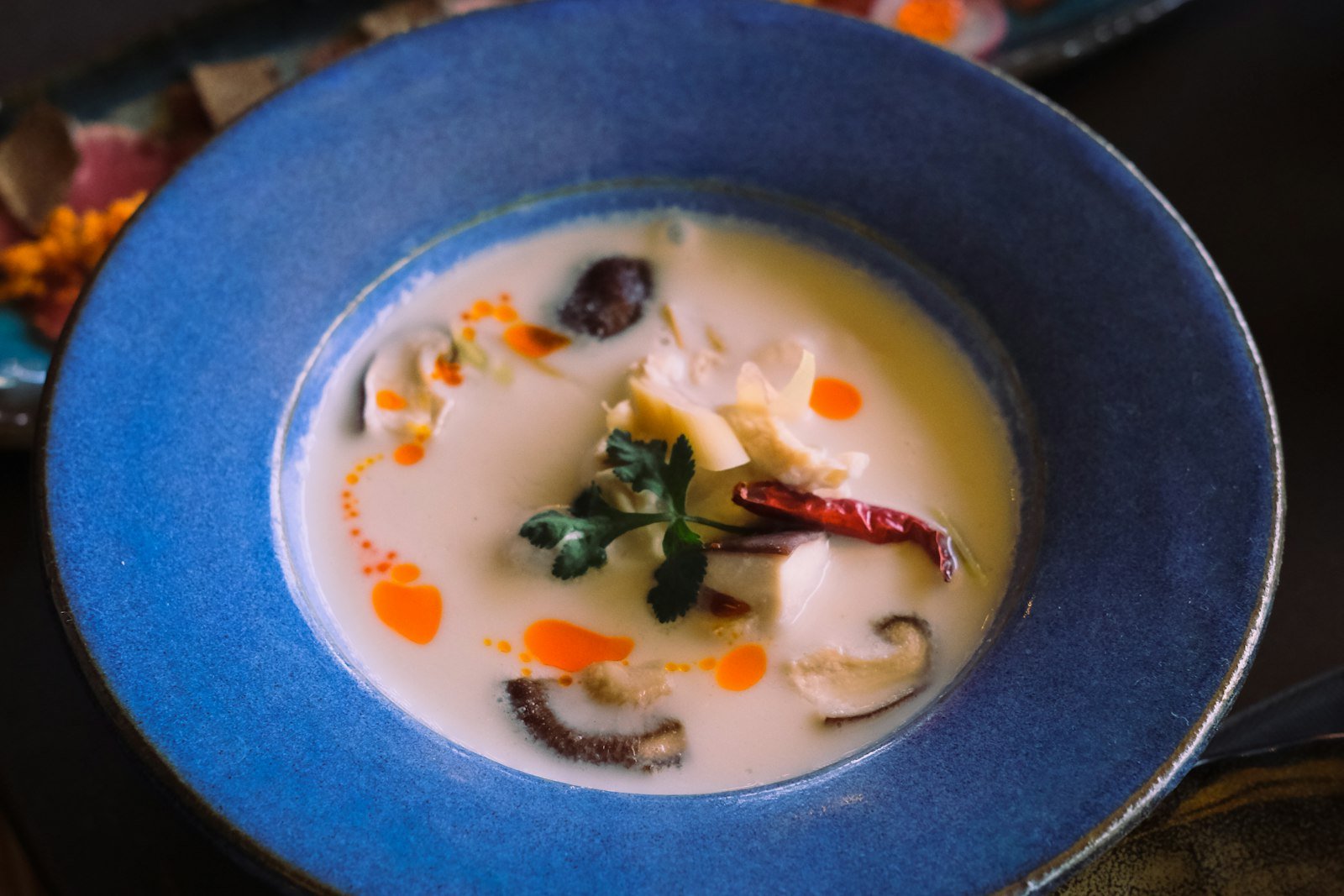
Tom kha gai takes its name from kha, the Thai word for galangal, and gai, chicken. Thin slices of chicken poach in coconut milk that has steeped with galangal, lemongrass and makrut lime leaves, and the soup is seasoned with fish sauce, a little palm sugar and fresh lime. It tastes creamy, sour and salty, with the chilli heat kept in the background. For a home kitchen, just over half the liquid is chicken stock, which keeps the broth lighter than an all-coconut version, any mushroom you can buy will do, and fresh ginger can stand in for galangal, though the soup tastes warmer and less piney.
By Mei Lin Tan
Published
- Prep Time
- 15 mins
- Cook Time
- 22 mins
- Total Time
- 37 mins
- Servings
- 4 servings
How do you make Tom Kha Gai (Thai Coconut Chicken Soup)?
Simmer 500 ml chicken stock with sliced galangal, bruised lemongrass, makrut lime leaves and chillies for 5 minutes. Add 400 ml coconut milk, keep it at a gentle simmer and poach 450 g thinly sliced chicken thighs and 200 g mushrooms for 6-8 minutes, until no pink remains (74°C (165°F) for thicker pieces). Season with fish sauce and palm sugar, then stir in lime juice off the heat.
- Total time
- 37 mins
- Calories
- 360 per serving
- Protein
- 27 g
- Yield
- 4 servings
- Difficulty
- Easy
- Method
- Simmering
Ingredients
Broth
Soup
To serve
Equipment
Medium saucepan (3 L or larger) · Sharp knife and cutting board · Rolling pin or the back of a heavy knife, for bruising the lemongrass · Slotted spoon or sieve (optional) · Instant-read thermometer (optional)
Step-by-Step Instructions
Every step for making tom kha gai (thai coconut chicken soup), written out in full.
Prepare the aromatics
Cut the root end and the dry upper third off each lemongrass stalk and peel off the tough outer layer. Lay the stalks flat and hit them along their length with a rolling pin or the back of a heavy knife until they split and smell lemony, then cut them into 4 cm pieces. Slice the galangal into thin coins; thin, clean skin can stay on. Tear the lime leaves into pieces, discarding the stiff centre rib. Press the chillies with the flat of the knife until they crack. Two chillies give a gentle warmth and each extra one adds noticeable heat; for the mildest soup, leave them out and offer chilli oil at the table. Wash your hands after handling the chillies.
Slice the chicken
Cut the chicken across the grain into slices about 5 mm thick and 3-4 cm long, so they cook quickly and evenly in the broth. Keep the chicken in the fridge until you need it, and afterwards wash your hands and everything the raw chicken touched.
Steep the stock
Pour the chicken stock into a medium saucepan and bring it to a boil. Drop in the prepared lemongrass, galangal, lime leaves and chillies, turn the heat down and let it bubble gently for 5 minutes, until the stock smells strongly of galangal and citrus.
Add the coconut milk
Pour in the coconut milk and heat over medium heat for 2-3 minutes, until small bubbles form around the edge and only the odd bubble breaks the surface. Turn the heat down to keep it there. A rolling boil can make coconut milk separate into an oily layer and grainy curds; it is still safe to eat, but the broth loses its smooth, creamy look.
Poach the chicken and mushrooms
Add the chicken, stirring to separate the slices, and poach at a gentle simmer for 3 minutes. Add the mushrooms and simmer for 3-5 minutes more, until the mushrooms are tender and the chicken is white all the way through, showing no pink when the thickest slice is cut open. If you cut the chicken into chunks rather than thin slices, push an instant-read thermometer into the biggest chunk; it needs to reach 74°C (165°F).
Season and add the lime
Stir in the fish sauce and palm sugar until the sugar dissolves, then move the pan off the heat and add 3 tbsp of the lime juice. Taste: the broth should be rich and creamy first, then sour and salty, with a little sweetness and the heat behind. Add more fish sauce or the remaining lime juice a teaspoon at a time until it tastes right to you. The lime goes in once the pan is off the heat because simmering makes its juice taste flat and slightly bitter.
Serve
If you are using the dried chillies, toast them in a small dry pan over medium heat for about 1 minute, turning them, until they darken slightly and smell smoky. Ladle the soup into bowls, scatter with coriander and add a toasted chilli and a few drops of chilli oil to each bowl if you like, with jasmine rice on the side. The galangal, lemongrass and lime leaves are there for flavour only and are too woody to eat: leave them in the bowl, or lift them out with a slotted spoon, or pour the soup through a sieve, before serving.
Recipe Tips
- Galangal is firmer and sharper than ginger, with a piney, citrus smell, and it is the flavour the soup is named for. Look for it fresh or frozen at Asian grocers; frozen slices and lime leaves go straight into the pot without thawing.
- Use full-fat coconut milk. Light coconut milk makes a thin broth that tastes more of stock than coconut.
- Chicken slices more neatly when it is very cold. If it is soft, 15 minutes in the freezer firms it up enough to cut thin, even slices.
- Fish sauce brands differ a lot in saltiness. Start with 2 tbsp, taste after the lime goes in, and add the rest only if the soup needs it.
- Avoiding gluten? Read the fish sauce, stock, chilli oil and nam prik pao labels: a few brands of each use wheat.
Variations
- Nam prik pao swirl: stir 1-2 tsp roasted chilli jam into each bowl for a sweet, smoky heat and an orange colour. Most brands contain dried shrimp or shrimp paste, so check the label for a vegetarian or gluten-free soup.
- Tom kha goong: use 400 g peeled raw shrimp in place of the chicken, adding them with the mushrooms for the last 2-3 minutes, until pink, opaque and curled.
- Chicken breast: slice it the same way and poach for 4-5 minutes in total, until white through with no pink in the thickest slice.
- Vegetarian tom kha: use vegetable stock, 400 g mixed mushrooms and 200 g cubed firm tofu, and season with a vegan fish sauce or light soy sauce (tamari if you need it gluten-free).
Nutrition (per serving)
| Calories | 360 |
|---|---|
| Protein | 27 g |
| Carbs | 10.5 g |
| Fat | 24 g |
| Saturated fat | 17.5 g |
| Fibre | 1.5 g |
| Sugar | 6 g |
| Sodium | 1090 mg |
Estimated from the listed ingredients; values vary by brand.
Related Recipes
Storing & Reheating
- Fridge
- Refrigerate within 2 hours in an airtight container for up to 3 days. Take out the lemongrass, galangal and lime leaves first, or the broth keeps getting stronger and more bitter.
- Freezer
- Freeze for up to 2 months. Coconut milk often turns slightly grainy after freezing and the mushrooms soften, so it is at its best fresh; thaw overnight in the fridge.
- Reheat
- Reheat gently over medium-low heat, stirring, until steaming hot, 74°C (165°F). Keep it below a boil so the coconut milk stays smooth, and add a squeeze of fresh lime before serving.
Tom Kha Gai (Thai Coconut Chicken Soup) FAQs
How is tom kha gai different from tom yum?
Tom kha gai is built on coconut milk and led by galangal, so it is creamy, gently sour and only mildly hot. Tom yum is a clear, sharper hot-and-sour broth, usually made with shrimp and often with Thai chilli paste; its creamy version adds only a little milk. Both use lemongrass, makrut lime leaves, fish sauce and lime juice.
What does tom kha gai mean?
Tom means boiled, kha is galangal and gai (also spelled kai) is chicken, so the name reads as boiled galangal chicken. It names the soup's main aromatic rather than its coconut milk, which is why galangal is worth finding for it.
Can I make tom kha gai with ginger instead of galangal?
Yes, but it is a second-best swap. Use a 3 cm piece of fresh ginger, sliced thin, in place of 5 cm of galangal, because ginger is hotter and stronger. The soup will taste warmer and sweeter and lose some of its citrus and pine notes. Frozen or dried galangal slices from Asian grocers are closer to fresh than ginger is.
Why did the coconut milk split in my soup?
It was most likely boiled hard. Fast boiling makes the fat in coconut milk separate, leaving oily pools and small curds. The soup is still fine to eat. Next time keep it at a bare simmer once the coconut milk goes in, and use full-fat coconut milk, which holds together better than light.
Is tom kha gai dairy-free and gluten-free?
It is dairy-free, since the creaminess comes from coconut milk, not cream. As written it contains no gluten, though a few fish sauce, stock and chilli paste brands add wheat; read those labels when cooking for someone who must avoid it.
Disclaimer
- Nutrition information is an estimate based on the listed ingredients. It changes with the brands, portion sizes and swaps you use.
- Read ingredient labels for allergens and for diet claims such as gluten-free or vegan. Products and their ingredients can change.
- Cooking times are a guide, since ovens, air fryers and slow cookers all run differently. Use a food thermometer and cook meat, poultry and fish to the safe internal temperatures in government food safety guidance.
- This recipe is general information, not medical or nutrition advice. If you have an allergy, a health condition or a special diet, check with a qualified health professional.