Thai Fish Cakes (Tod Mun Pla)
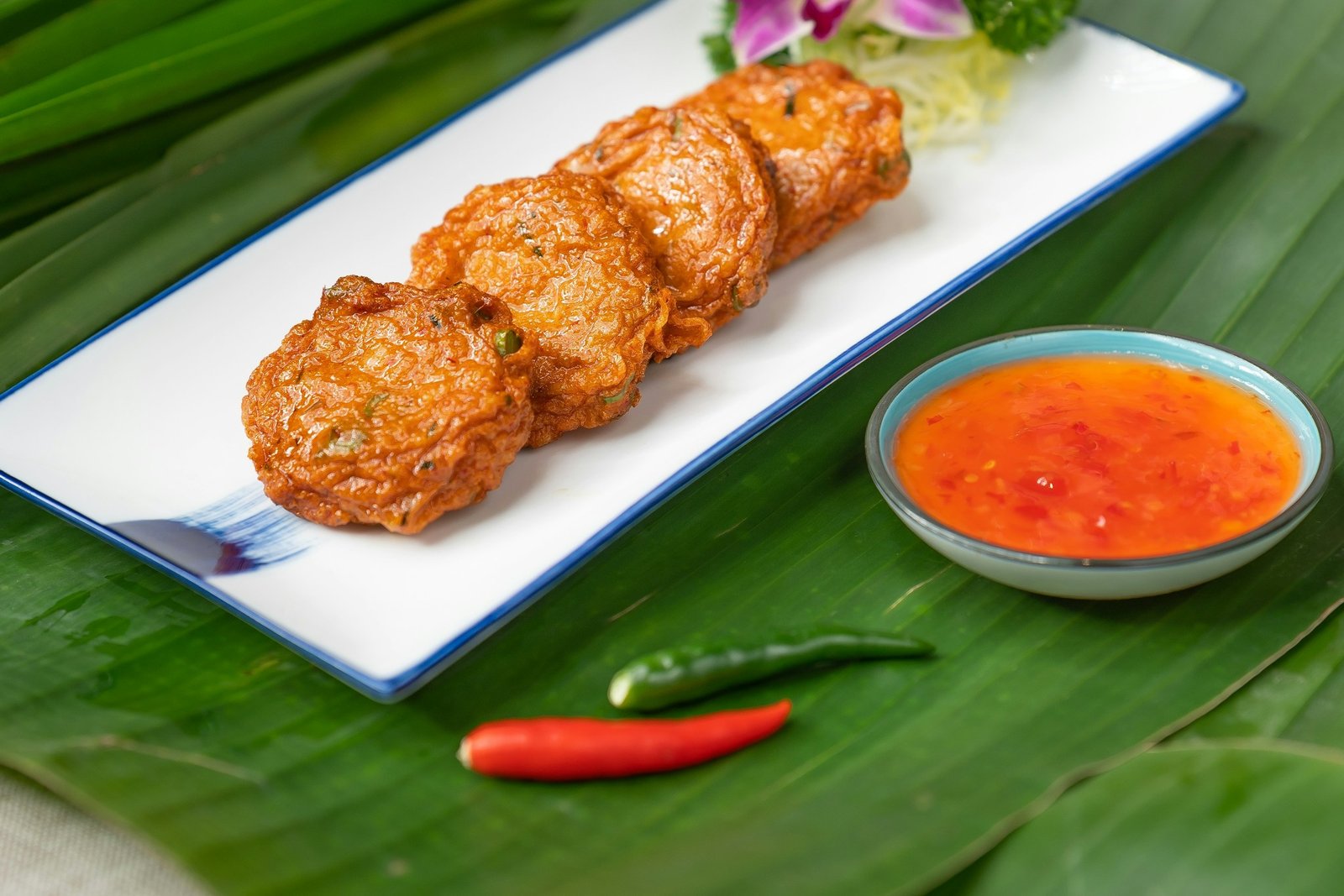
Tod mun pla, also written thot man pla, are the springy fried fish cakes sold as a snack and starter all over Thailand. Raw fish is ground with red curry paste, fish sauce and egg, then thrown against the bowl until it turns sticky and elastic, which gives the cakes their bouncy bite. Thin coins of long bean and slivers of makrut lime leaf go in last. The classic Thai fish is clown knifefish (pla krai); this version swaps in cod or another firm white fillet and a food processor for the mortar, and keeps ajad, the sweet-sour cucumber relish that comes alongside.
By Mei Lin Tan
Published
- Prep Time
- 30 mins
- Cook Time
- 25 mins
- Total Time
- 55 mins
- Servings
- About 20 fish cakes
How do you make Thai Fish Cakes (Tod Mun Pla)?
Process 500 g firm white fish with 2 tbsp red curry paste, fish sauce, an egg and sugar until smooth, then knead for 2-3 minutes until sticky and springy. Fold in sliced long beans and shredded makrut lime leaves, shape 20 patties 5-6 cm wide and 1 cm thick, and fry in 2.5 cm of oil at 175°C (350°F) in 4 batches, 3-4 minutes each, until puffed and golden.
- Total time
- 55 mins
- Calories
- 275 per serving
- Protein
- 25 g
- Yield
- About 20 fish cakes
- Difficulty
- Medium
- Method
- Frying
Ingredients
Ajad (cucumber relish)
Fish cakes
For frying
To serve
Equipment
Food processor · Small saucepan · Heavy saucepan, 20 cm (8 in) wide and at least 10 cm deep · Deep-fry or instant-read thermometer · Slotted spoon or spider · Tray lined with paper towels
Step-by-Step Instructions
Every step for making thai fish cakes (tod mun pla), written out in full.
Make the ajad syrup
Put the vinegar, sugar, salt and water in a small saucepan and bring to a simmer over medium heat, stirring for 1-2 minutes until the sugar dissolves. Pour it into a serving bowl and let it cool completely, about 20 minutes, while you make the fish cakes.
Slice the beans and lime leaves
Cut the long beans into thin rounds about 3 mm thick. Fold each lime leaf in half along its centre rib, tear out the rib, stack the halves, roll them tightly and slice into the thinnest shreds you can; larger pieces are tough to chew.
Process the fish
Pat the fish dry and cut it into 3 cm chunks. Put it in a food processor with the curry paste, fish sauce, egg and sugar and process for 1-2 minutes, scraping down the sides once or twice, until it forms a smooth, thick paste. Cold fish makes a firmer paste, so keep it in the fridge until this point.
Knead until springy
Scrape the paste into a large bowl. With a wet hand, scoop it up, lift it 15-20 cm and throw it back into the bowl, or press and knead it hard against the side of the bowl, for 2-3 minutes, until it turns sticky, glossy and slightly elastic. Fold in the beans and lime leaves until evenly spread.
Heat the oil
Pour the 750 ml oil into the heavy 20 cm (8 in) saucepan; it should be about 2.5 cm (1 in) deep, with the pan well under half full. Heat it over medium heat to 175°C (350°F), checking with the thermometer. Line a tray with paper towels, and stay with the hot oil the whole time it is on the heat.
Shape the patties
Rub a little oil on your hands. Take about 1 1/2 tbsp of paste (about 30 g), roll it into a ball and flatten it into a round patty 5-6 cm across and 1 cm thick. Set the patties on an oiled plate; you should have about 20.
Fry in batches
Slide 5 patties into the oil, lowering them in away from you. Fry for 3-4 minutes, turning once, until they puff up, turn deep golden brown and feel firm, then lift them onto the paper towels. Fry the rest in 3 more batches, 4 in all, letting the oil come back to 175°C (350°F) between batches. Break the first cake open: it should be opaque and springy right through, with no glassy, wet centre. Fish is cooked at 70°C (158°F), but these patties are too thin for a reliable thermometer reading, so go by the inside of that first cake; if it is still glassy, fry the remaining batches a minute longer.
Finish the ajad and serve
Slice the chilies, then wash your hands (or wear gloves while you cut them). Stir the cucumber, shallot and chilies into the cooled syrup and scatter the peanuts on top just before serving so they stay crunchy. Serve the fish cakes hot with the ajad, and sweet chili sauce on the side if you like.
Recipe Tips
- Fry one test cake first, then adjust the rest of the paste with a little more fish sauce or curry paste before frying the others.
- Lean, firm fish gives the springiest cakes. Oily or soft fish, such as salmon, makes denser cakes that do not puff as much.
- Curry pastes vary a lot in heat and salt. For a milder batch, use 1 tbsp paste and add 1 tsp more fish sauce.
- Asian grocers sell long beans and makrut lime leaves; the leaves freeze well for months. Green beans work in place of long beans.
- For a peanut allergy, leave the peanuts off the ajad; the relish works without them.
Variations
- Shrimp and fish: swap 200 g of the fish for peeled raw shrimp, processed with the rest. Fry as written, until the cakes are puffed, golden and opaque inside.
- Air fryer: brush the patties with oil, set them on parchment in the basket and air fry at 200°C (400°F) for 8-10 minutes in batches, turning halfway, until golden, firm and opaque when broken open. They puff less than fried cakes.
- Herb version: fold 2 tbsp finely sliced Thai basil in with the beans and lime leaves.
Nutrition (per serving)
| Calories | 275 |
|---|---|
| Protein | 25 g |
| Carbs | 16 g |
| Fat | 12 g |
| Saturated fat | 1.8 g |
| Fibre | 1.5 g |
| Sugar | 12 g |
| Sodium | 950 mg |
Estimated from the listed ingredients; values vary by brand.
Related Recipes
Storing & Reheating
- Fridge
- Refrigerate fried fish cakes within 2 hours, covered, for up to 3 days. The ajad syrup keeps in a jar in the fridge for up to 1 week; add the cucumber, shallot, chili and peanuts on the day you serve it, because the cucumber goes limp.
- Freezer
- Open-freeze the fried, cooled cakes in a single layer until hard, then bag them; they keep for up to 2 months and reheat straight from frozen.
- Reheat
- Reheat on a baking sheet in a 200°C (400°F) oven for 8-10 minutes (12-15 minutes from frozen), or in an air fryer at 180°C (350°F) for 4-6 minutes, until steaming hot all the way through, 74°C (165°F).
Thai Fish Cakes (Tod Mun Pla) FAQs
What fish is best for Thai fish cakes?
Any firm, lean white fish that grinds to a smooth paste works: cod, haddock, pollock, tilapia and basa are all good choices. In Thailand the classic choice is clown knifefish, called pla krai, valued for its springy texture. Oily or very soft fish make dense, heavy cakes.
Why are my fish cakes not bouncy?
The springy texture comes from working the paste after it is ground. Throwing or kneading it against the bowl for 2-3 minutes develops the fish proteins until the paste turns sticky and elastic. Warm fish, extra egg or skipping that step leaves the cakes soft and crumbly.
Are Thai fish cakes gluten-free?
These are, as long as the labels check out. The recipe uses no flour or breadcrumbs, but some red curry pastes and fish sauces contain wheat or other additives, so read both labels, and the sweet chili sauce label if you serve it. The ajad relish is made from rice vinegar, sugar, salt, cucumber, shallot, chili and peanuts.
Can I air fry tod mun pla?
Yes, though the cakes puff less and the outside is drier than when fried. Brush the patties with oil, set them on parchment and air fry at 200°C (400°F) for 8-10 minutes, turning halfway, until golden and firm and opaque in the middle when you break one open.
Can I make Thai fish cakes ahead?
Yes. Fry and cool them, then refrigerate for up to 3 days or freeze for up to 2 months, and reheat in a hot oven or air fryer until steaming hot. The ajad syrup can be made a week ahead; add the cucumber, shallot, chili and peanuts on the day.
Disclaimer
- Nutrition information is an estimate based on the listed ingredients. It changes with the brands, portion sizes and swaps you use.
- Read ingredient labels for allergens and for diet claims such as gluten-free or vegan. Products and their ingredients can change.
- Cooking times are a guide, since ovens, air fryers and slow cookers all run differently. Use a food thermometer and cook meat, poultry and fish to the safe internal temperatures in government food safety guidance.
- This recipe is general information, not medical or nutrition advice. If you have an allergy, a health condition or a special diet, check with a qualified health professional.